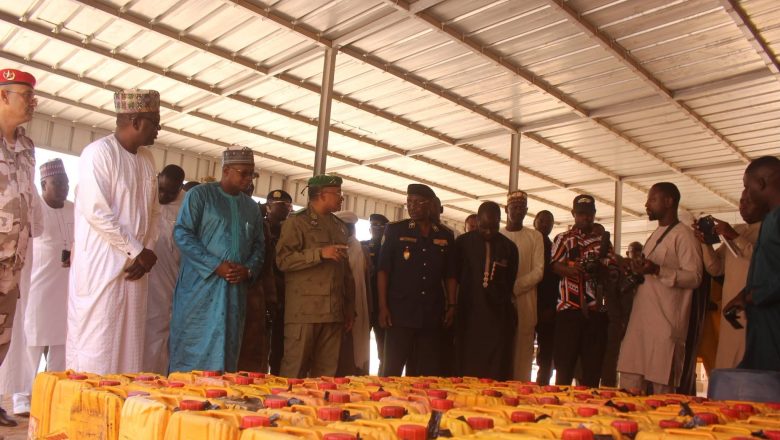
Agadez authorities seized more than 3,000 liters of gasoline destined for smuggling circuits on Friday, July 17, 2026, following unannounced inspections in the city. Major General Ibra Boulama Issa, the governor of Agadez region, personally led these visits to several service stations as part of a concerted crackdown effort. The operation aimed specifically to disrupt the illegal distribution of fuel, which has been a persistent challenge for regional security forces and economic stability. This significant seizure shows the authorities' commitment to enforcing regulations and combating illicit trade within the region.
Details of the Operation
During an operation conducted from the night of Thursday, July 16, to Friday, July 17, security forces discovered over 3,000 liters of gasoline. The fuel was stored in various containers, specifically 25-liter and 60-liter capacities, clearly indicating its preparation for illicit distribution rather than legitimate retail sale. This seizure was part of a broader, intensified effort to curb fuel smuggling in the Agadez region, which often serves as a transit point for various forms of contraband. The careful planning and execution of the operation allowed authorities to intercept a substantial quantity of fuel before it could enter clandestine channels.
Security forces also located 22 empty containers hidden within a service station's storage room. The presence of these concealed empty containers, designed for 25 and 60-liter volumes, further suggested an organized attempt to circumvent regulations regarding fuel storage and sale, pointing towards a sophisticated network involved in illegal activities. These findings contribute significantly to the ongoing investigation into illegal fuel networks operating in the area, providing key evidence of their methods and scale. The discovery notes the lengths to which illicit traders go to evade detection and exploit the fuel supply chain.
Governorate's Stance and Mission
The regional authorities in Agadez announced that state services will reinforce controls across the entire regional territory. This full approach signifies a proactive stance against illicit activities. The governorate stated that service stations have a public service mission and must strictly adhere to regulations governing the sale of petroleum products, emphasizing their responsibility to the community. This reinforcement of controls aims to ensure compliance and effectively disrupt illegal fuel distribution networks within the region, thereby safeguarding the legitimate market and consumer interests. Authorities emphasized the importance of these measures to maintain order in the fuel supply chain and prevent the diversion of essential resources.
Recognition and Future Controls
The governorate is relying on both strict controls and the responsibility of sector actors to dry up clandestine channels, according to regional authorities. This dual approach acknowledges that effective enforcement requires both governmental oversight and the cooperation of legitimate businesses. The regional executive also paid tribute to the Defense and Security Forces, commending their professionalism and vigilance during the operation. This recognition serves to boost morale and acknowledge the critical role these forces play in maintaining security and order. These measures collectively show the authorities' unwavering commitment to regularizing the distribution of petroleum products in the Agadez region, ensuring that fuel reaches legitimate consumers through proper channels. The ongoing vigilance and reinforced controls are expected to have a lasting impact on illicit trafficking.
Context of Illicit Trafficking
The crackdown in Agadez notes ongoing efforts to combat illicit trafficking, a persistent challenge in the region. Authorities have frequently targeted unauthorized fuel sales and smuggling routes that often extend across borders, connecting various illicit trade networks. Such operations are part of a broader strategy by regional authorities to stabilize markets and ensure regulated distribution of essential goods, preventing them from falling into the hands of criminal organizations. The illegal trade in petroleum products often fuels other illicit activities, including organized crime and even terrorism, prompting heightened vigilance from security forces. This context shows the profound significance of seizures like the more than 3,000 liters of gasoline recently confiscated, as they represent a direct blow to the economic underpinnings of these dangerous networks. The sustained pressure from authorities aims to dismantle these operations and protect the region from their destabilizing influence.