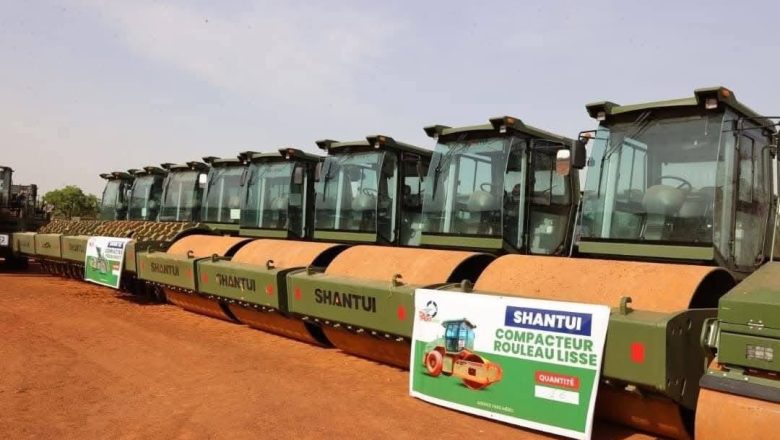
On Monday, May 4, 2026, the Burkinabe head of state presided over a ceremony in Ouagadougou for the handover of large-scale equipment to the Agence Faso Mêbo. The equipment, intended for national infrastructure development, included various trucks, construction machinery, and liaison vehicles. This full delivery encompasses a range of vehicles key for modern infrastructure projects, from heavy-duty trucks capable of transporting materials to specialized construction machinery designed for road building and earthworks, alongside essential liaison vehicles for coordination and logistics. This initiative aims to bolster the agency's capabilities for civilian projects. The government explicitly stated that this equipment is intended solely for national infrastructure development and will not be deployed for military operations, addressing concerns about resource allocation. The ceremony underlined Burkina Faso's commitment to enhancing its national infrastructure through the Agence Faso Mêbo, marking a significant step in the country's development strategy.
Boosting National Development Efforts
The stated objective of the equipment acquisition is to facilitate the immediate deployment of new brigades across the national territory. This strategic move is designed to ensure that the Agence Faso Mêbo can rapidly mobilize resources and personnel to various project sites. Burkina Faso's government is relying on the Agence Faso Mêbo to ensure state continuity through the implementation of critical infrastructure projects. This focus is particularly directed towards regions that currently experience complex access, where the establishment of strong infrastructure is vital for connectivity and stability. The agency's enhanced capacity is intended to address developmental needs in these areas, supporting broader national development goals by improving connectivity, facilitating trade, and enhancing the delivery of public services. This proactive approach aims to bridge developmental gaps and integrate all parts of the country into the national economic framework.
Addressing Past Limitations
The Agence Faso Mêbo previously faced operational constraints due to disparate resources, according to reports. These limitations were compounded by the reluctance of private contractors to undertake projects in high-risk zones within Burkina Faso, often due to security concerns or logistical challenges. The acquisition of this new, standardized equipment is expected to overcome these historical hurdles, providing the agency with the necessary tools to operate independently and efficiently. The handover event on May 4 is presented as a political demonstration of the transition authorities' ability to effectively manage the national modernization agenda, showcasing their capacity to deliver tangible progress. This initiative comes despite international pressure and the ongoing presence of armed groups affecting various regions of the country, noting the government's determination to pursue its development objectives amidst complex challenges. The investment is a clear signal of the authorities' commitment to national self-reliance in critical sectors.
Strategic Autonomy and Continuity
The Burkinabe presidency aims to enhance the Agence Faso Mêbo's operational capabilities to bypass administrative complexities and reduce external dependencies. This strategy is intended to ensure the continuity of state functions, particularly in infrastructure development, by giving the agency the means to execute projects without bureaucratic delays or reliance on foreign assistance. By strengthening its own agency, Burkina Faso seeks to achieve greater strategic autonomy in executing national projects. The move comes as the country navigates various challenges, including security concerns and international relations, by focusing on self-reliance for critical development initiatives. This approach is designed to streamline project implementation and ensure that essential infrastructure work can proceed without relying heavily on external partners or facing bureaucratic hurdles, fostering a more resilient and self-sufficient national development framework. This emphasis on internal capacity building is central to the nation's long-term vision for stability and progress.
Presidential Vision for Territory
Captain Ibrahim Traoré views the construction of roads, bridges, and dams as essential for the reconquest of national territory. This infrastructure development is seen as key for establishing state presence and facilitating movement in regions previously difficult to access, which are often vulnerable to instability. The initiative supports the broader goal of governmental control and stability by enabling easier access for security forces, humanitarian aid, and essential services. The President's vision shows the belief that physical infrastructure is not merely about connectivity but is a fundamental tool for asserting sovereignty and ensuring the well-being of all citizens across the nation. These projects are therefore integral to the full strategy for securing and developing Burkina Faso.