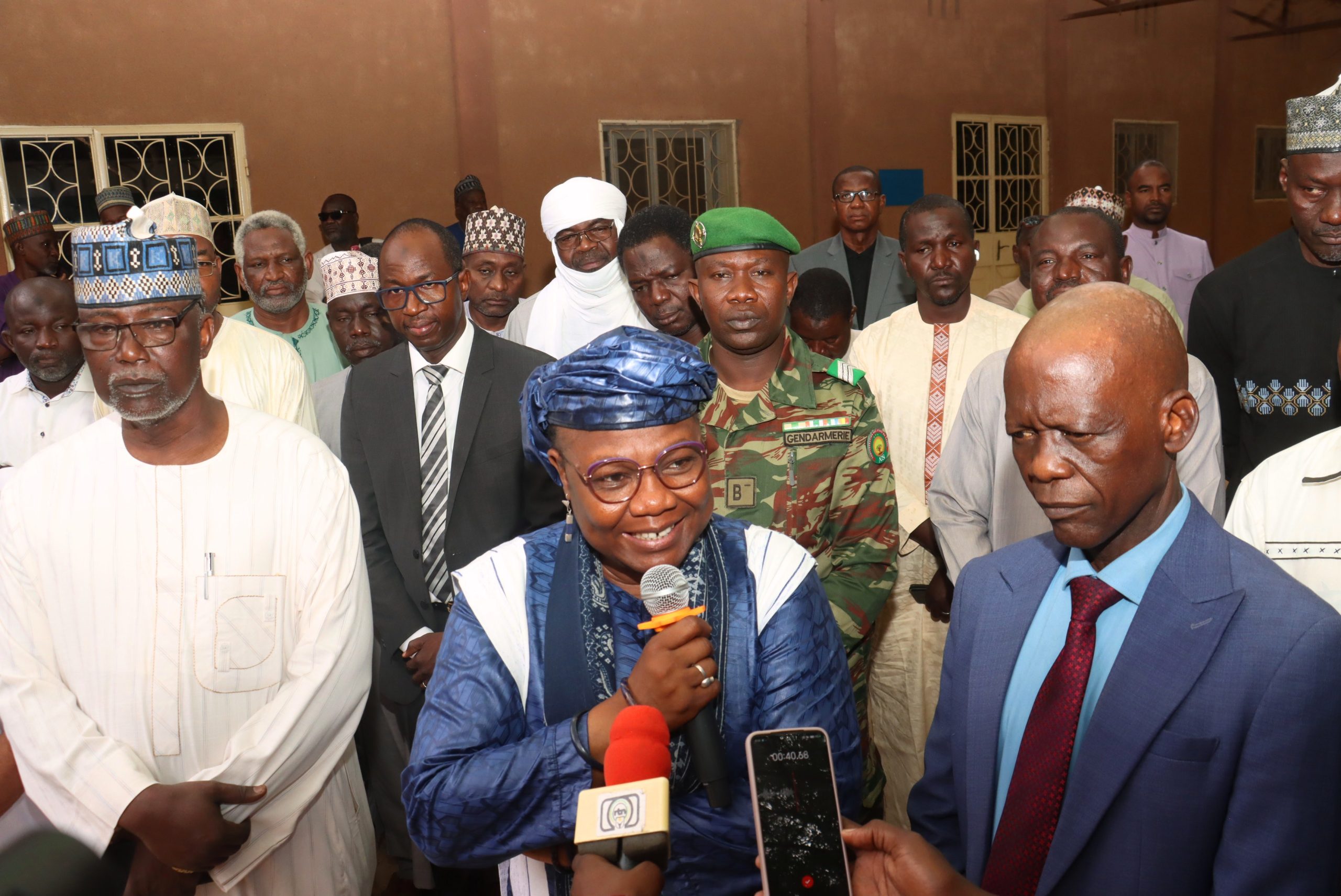
Niger is set to implement new infrastructure projects aimed at enhancing the capacity of its higher education institutions, according to official reports. The initiative, officially championed under the claim "Enseignement supérieur : De nouvelles infrastructures pour améliorer les capacités d’accueil," seeks to accommodate a larger number of students within the country's universities and colleges. These developments are part of a broader national effort to strengthen the education sector and address the growing demand for higher learning opportunities among the youth. The focus on infrastructure improvements is expected to create more conducive learning environments and expand access to tertiary education across various disciplines. Officials anticipate that the new facilities will support academic growth and contribute to the overall development of human capital in Niger, ultimately fostering a more skilled and knowledgeable workforce essential for national progress.
The strategic investment in higher education infrastructure shows the government's recognition of education as a cornerstone for socio-economic advancement. By proactively addressing the challenges of student accommodation and facility modernization, Niger aims to cultivate a strong academic ecosystem. This full approach is designed not only to meet immediate enrollment pressures but also to lay the groundwork for sustainable educational development, ensuring that future generations have access to high-quality learning resources. The commitment to expanding and upgrading facilities reflects a forward-looking vision for the nation's intellectual and professional landscape.
New Infrastructure Projects Detailed
New infrastructure projects in Niger will focus on expanding facilities at various higher education institutions, aiming to increase student capacity. The initiative includes the construction of new teaching blocks, lecture halls, and laboratories designed to accommodate a larger student body. These purpose-built structures are being planned with modern educational standards in mind, incorporating flexible learning spaces and advanced technological integrations. Additionally, plans involve upgrading existing academic buildings and introducing modern learning technologies to support diverse educational programs. This dual approach of constructing new facilities while renovating current ones ensures a full enhancement of the learning environment. The expansion efforts are intended to address the rising demand for university placements across the country, particularly as the population of secondary school graduates continues to grow.
The scope of these infrastructure projects extends beyond mere physical expansion. It encompasses the integration of advanced pedagogical tools and digital resources, such as advanced computer labs, multimedia classrooms, and high-speed internet connectivity. These technological enhancements are key for supporting contemporary teaching methods and facilitating access to global academic resources. The projects will include the development of student support facilities, such as expanded libraries, study areas, and administrative offices, all designed to create a more holistic and supportive academic experience. The detailed planning process for these projects has involved extensive consultations with educational experts and institutional leaders to ensure that the new and upgraded facilities meet the specific needs of various academic disciplines and foster an environment conducive to both learning and research. The goal is to create spaces that inspire innovation and collaborative learning among students and faculty alike.
Goals for Capacity Expansion
The capacity expansion initiative in Niger's higher education sector aims to address the increasing demand for university access and improve the overall quality of academic offerings. Projections indicate a significant rise in student enrollment over the next decade, necessitating a proactive approach to infrastructure development. This surge in demand is driven by demographic trends, increased access to secondary education, and a growing societal value placed on tertiary qualifications. The core objective is to ensure that a greater number of qualified secondary school graduates can pursue tertiary education within the country, reducing reliance on overseas institutions and fostering local talent. By providing ample opportunities domestically, Niger seeks to retain its brightest minds and channel their skills directly into national development.
This strategic expansion also seeks to enhance the learning environment for current and future students. Modern facilities, including advanced laboratories and digital learning centers, are central to this goal. These advanced labs will be equipped with specialized instrumentation to support scientific research, engineering experiments, and practical vocational training, catering to a wide array of fields. Digital learning centers will provide access to online courses, research databases, and collaborative platforms, enabling students to engage with a broader spectrum of knowledge and develop essential digital literacy skills. By providing up-to-date resources and comfortable spaces, the initiative intends to support diverse pedagogical methods and encourage research activities across all disciplines. The government's long-term vision includes positioning Nigerien universities as regional hubs for specialized studies, attracting both domestic and international scholars and establishing a reputation for academic excellence. This ambition is underpinned by the belief that strong research capabilities are vital for addressing national challenges and contributing to global knowledge.
The expansion endeavors to diversify the academic programs available to students. New departments and faculties are planned in high-demand fields such as technology, engineering, and sustainable development. This diversification is expected to align educational outcomes more closely with the country's economic development priorities, preparing graduates for emerging job markets and fostering innovation within key sectors. For instance, new engineering programs will focus on areas critical to Niger's infrastructure development, while sustainable development courses will address environmental challenges and resource management pertinent to the region. Enhancing student capacity is viewed as a critical step towards building a skilled workforce capable of contributing to national growth and innovation. The initiative emphasizes creating a more inclusive higher education system, ensuring equitable access for students from all regions of Niger, including those from historically underserved areas. This commitment to inclusivity involves not only physical access but also the development of support systems to ensure student success, regardless of their background.
The drive to expand capacity also reflects a broader commitment to educational equity and social mobility. By making higher education more accessible within Niger, the government aims to empower a larger segment of its youth population, providing them with the tools and knowledge necessary to improve their livelihoods and contribute meaningfully to society. This approach is expected to have a ripple effect, stimulating local economies through increased educational attainment and fostering a more engaged and informed citizenry. The development of specialized programs, particularly in areas like agricultural science and renewable energy, directly supports Niger's national development strategies, which prioritize food security and sustainable resource utilization. These programs are designed to produce graduates who can immediately apply their skills to local contexts, driving innovation and self-sufficiency.
Project Timeline and Key Dates
The full project to enhance higher education infrastructure in Niger is slated for completion by 25 mai 2026. This timeline shows the government's commitment to swiftly addressing the growing demand for university placements and improving academic facilities across the nation. The initiative encompasses various construction and renovation phases, designed to be executed efficiently to minimize disruption to academic calendars. Preparatory work is already underway, focusing on site assessments, detailed architectural designs, and logistical planning to ensure a smooth progression of activities. This initial phase is key for laying a solid foundation for the subsequent construction and upgrade works, ensuring that all projects are meticulously planned and executed according to international best practices.
The target completion date of 25 mai 2026 applies to the full rollout of new teaching blocks, lecture halls, laboratories, and upgraded academic buildings. These facilities are central to the strategy of increasing student capacity and modernizing the learning environment. Project managers have outlined a detailed schedule that includes concurrent construction efforts at multiple institutions to meet this ambitious deadline. This synchronized approach is intended to maximize efficiency and accelerate the overall project delivery, ensuring that the benefits of the new infrastructure are realized as quickly as possible. Regular reviews and progress reports are anticipated to monitor the project's adherence to its timeline, allowing for timely adjustments and problem-solving to keep the initiative on track. Stakeholders from the Ministry of Higher Education, university administrations, and construction firms are collaborating closely to ensure smooth coordination and effective resource allocation.
Achieving the 25 mai 2026 completion goal is considered critical for Niger's long-term educational objectives. The expanded infrastructure is expected to immediately impact student enrollment figures, allowing a greater number of secondary school graduates to pursue higher education within the country. This accelerated development is also intended to support the introduction of new academic programs aligned with national economic priorities, ensuring that the educational system remains responsive to the evolving needs of the job market. The focused deadline reflects the urgency placed on strengthening the higher education sector as a foundation for national development and human capital formation. The timely delivery of these facilities will also enhance Niger's capacity to host international academic events and collaborations, further integrating its higher education system into the global academic community. The government views this deadline not merely as an administrative target but as a key moment for transforming the educational landscape and empowering its youth.
The adherence to this ambitious timeline is also a testament to the government's strategic planning and resource mobilization capabilities. Significant financial and human resources have been allocated to ensure that the project progresses without undue delays. This includes engaging experienced local and international construction companies, employing skilled labor, and implementing strong project management frameworks. The successful completion by the specified date will send a strong signal of Niger's commitment to educational reform and its ability to execute large-scale development projects. It will also provide tangible evidence of progress to the student population and their families, who are eagerly awaiting enhanced educational opportunities. The project's completion is expected to create numerous employment opportunities during the construction phase and subsequently, through the expansion of faculty and support staff positions within the upgraded institutions.
Context and Future Implications
The infrastructure boost in Niger's higher education sector is anticipated to have significant long-term implications for the nation's development trajectory. By expanding student capacity and modernizing facilities, the initiative aims to cultivate a more skilled and educated workforce, which is considered foundational for economic growth and diversification. This strategic investment is poised to address critical skill gaps within various industries, fostering a more dynamic and competitive economy. The government's focus on increasing access to tertiary education is expected to address the growing aspirations of young Nigeriens, potentially reducing the need for students to seek educational opportunities abroad. This localized approach to higher learning is poised to retain talent within the country, fostering domestic innovation and research capabilities, which are key for self-sustaining development.
Officials believe that the enhanced educational infrastructure will also play a role in strengthening Niger's position as a regional hub for specialized studies, particularly in fields aligned with national development priorities such as agriculture, renewable energy, and public health. The introduction of new academic programs, supported by modern learning environments, is designed to produce graduates equipped with relevant skills for emerging job markets, both domestically and regionally. The project's timely completion by 25 mai 2026 shows the government's commitment to these objectives, demonstrating a clear vision for the future of higher education in Niger. The expanded system is projected to absorb a greater number of secondary school graduates, thereby improving overall educational attainment rates and contributing to human capital formation across Niger, elevating the nation's intellectual capital.
The long-term implications extend to fostering a culture of research and innovation. With improved laboratory facilities and digital resources, Nigerien universities will be better positioned to conduct impactful research that addresses local challenges and contributes to global scientific knowledge. This research capacity is vital for developing homegrown solutions in areas like climate change adaptation, disease prevention, and sustainable resource management. The increased student capacity and diversified academic offerings are expected to enhance social cohesion by providing equitable opportunities for youth from diverse backgrounds, promoting national unity through shared educational experiences. The investment is seen as a catalyst for broader societal transformation, empowering individuals and communities to participate more fully in the nation's development.
Ultimately, the initiative to improve higher education infrastructure is a testament to Niger's commitment to investing in its future. By prioritizing education, the government is laying the groundwork for a more prosperous, innovative, and resilient nation. The "Enseignement supérieur : De nouvelles infrastructures pour améliorer les capacités d’accueil" initiative is not merely about constructing buildings; it is about building futures, fostering intellectual growth, and empowering a generation of Nigeriens to drive their country's progress on the global stage. The sustained impact of these efforts will be measured in the quality of graduates, the relevance of research, and the overall contribution of the higher education sector to national development goals for decades to come.