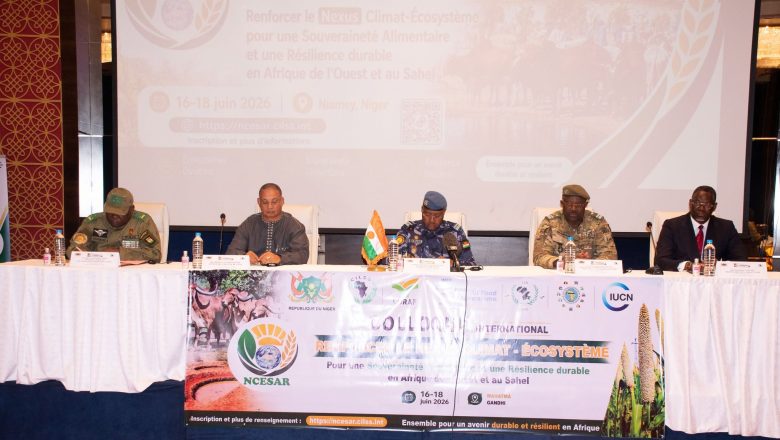
The Colloque international N-CESAR commenced in Niamey on June 16, 2026, bringing together participants to address the Sahel's climate-ecosystem-food nexus. The international colloquium, a key event for regional development and environmental sustainability, is scheduled to last for three days, facilitating extensive discussions on critical regional challenges. Its primary objective is to foster a deeper understanding of the complex interdependencies between climate change, ecosystem health, and food security across the Sahel. SNV Niger confirmed its active participation in the colloquium, contributing significantly to the dialogue and seeking collaborative solutions for the region's pressing issues. The event aims to foster understanding and cooperation among various stakeholders regarding the interconnected issues affecting the Sahel region, promoting a unified approach to resilience.
SNV Niger's Sahelian Solutions
SNV Niger is sharing results and lessons learned from its Pro-ARIDES and ABC Sahel programs at the colloquium. These initiatives are deployed across Niger, Burkina Faso, and Mali, focusing on improving local food systems and promoting sustainable agricultural practices. The programs also aim to foster innovation for vulnerable producers in these Sahelian nations, empowering them with tools and knowledge to adapt to changing environmental conditions. By showcasing these successful models, SNV Niger seeks to inspire similar efforts and facilitate knowledge exchange among participants. Mr. Bachir, the country coordinator for the Pro-ARIDES program in Niger, participated in Panel 2, which focused on innovative solutions for territorial resilience. During his participation, SNV's experiences in sustainable land management, agroecology, and regenerative agriculture were presented, offering practical insights into effective climate adaptation strategies. The organization's contributions highlight practical approaches to address the interconnected challenges of climate change, ecosystem degradation, and food insecurity in the region, emphasizing community-led and ecologically sound interventions.
Broader Context and Participants
The international colloquium in Niamey drew a diverse group of participants, including researchers, public decision-makers, technical partners, and various development actors. Their presence showed the multi-faceted approach required to address the Sahel's complex challenges, reflecting a commitment from various sectors to contribute to sustainable solutions. The discussions emphasized the critical role of localized strategies and community-driven initiatives in fostering resilience across the region, recognizing that top-down approaches often fall short in addressing specific local needs. Organizers noted that building a more resilient Sahel relies heavily on understanding and implementing solutions tailored to specific local contexts, acknowledging the unique environmental and socio-economic conditions of different communities. This focus on local solutions aims to empower communities and integrate their traditional knowledge with modern scientific approaches to climate adaptation and food security, creating a hybrid model for sustainable development. The colloquium's structure facilitated engagement from a broad spectrum of stakeholders, ensuring varied perspectives contributed to the dialogue on the climate-ecosystem-food nexus and enriched the proposed strategies.
Key Takeaways and Future Focus
The colloquium in Niamey largely centered on the Nexus Climat-Écosystèmes-Alimentation, addressing the interconnected challenges of climate change, ecosystem degradation, and food security within the Sahel region. This integrated approach is key for developing holistic and effective interventions. Discussions during the event noted the urgency of developing integrated strategies to tackle these complex issues simultaneously, recognizing that addressing one challenge in isolation can inadvertently exacerbate others. Participants emphasized that effective solutions must consider the intricate relationships between environmental shifts, ecological health, and the availability of food resources across the Sahel, advocating for a systems-thinking approach. The focus aimed to foster a deeper understanding of how these elements collectively impact regional stability and livelihoods, providing a foundation for informed policy-making and practical implementation. Identifying sustainable pathways for adaptation and resilience was a primary objective throughout the proceedings, with a strong emphasis on actionable recommendations. The event sought to lay groundwork for collaborative actions that could mitigate the adverse effects of these challenges on vulnerable populations, promoting long-term stability and well-being in the Sahel.