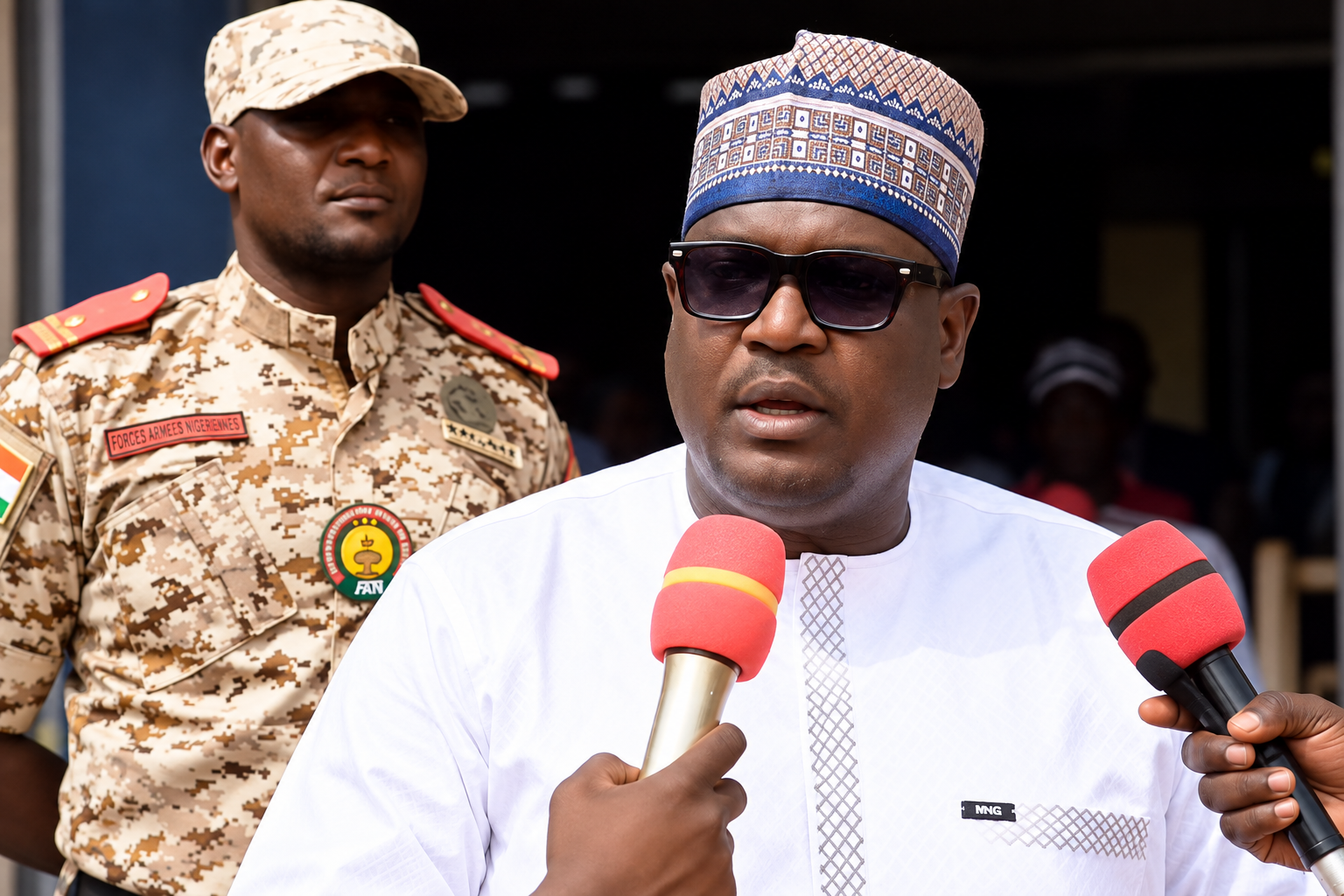
A cohort of 1317 new national guards, identified as the 2026 cohort, was formally presented to the flag. This ceremony marks a significant milestone for the recruits as they officially join the national service, embarking on a career dedicated to the security and stability of the nation. The event took place as part of the ongoing process to integrate new personnel into the country's security forces, ensuring a strong and well-staffed National Guard. The presentation signifies the official recognition and induction of the new guards, who will now commence their duties after completing their rigorous training. The ceremony shows the commitment to strengthening national security capabilities and ensuring a continuous pipeline of trained personnel ready to serve across various critical functions. The new guards will be deployed to various regions, including Niamey, Tillabéry, Tahoua, Agadez, Zinder, Diffa, Dosso, and Maradi, to bolster security efforts across the country and respond to diverse challenges.
Ceremony Notes
The formal presentation of the 2026 cohort to the flag occurred on September 8, 2026, a date now etched in the careers of these new recruits. This ceremony marked the official induction of 1317 new national guards, signifying their integration into the country's security forces and their readiness to assume vital responsibilities. The event served as a key step in their military careers, transitioning them from recruits undergoing training to active members of the national service, fully prepared for deployment. The presentation showed the ongoing commitment to bolstering national security capabilities and ensuring a consistent supply of trained personnel, capable of addressing the evolving security landscape. The solemn occasion was a testament to the dedication of the recruits and the nation's investment in its defense infrastructure.
The newly inducted guards are slated for deployment across various regions within Niger, including the capital Niamey, and the regions of Tillabéry, Tahoua, Agadez, Zinder, Diffa, Dosso, and Maradi. Their assignments are intended to reinforce security efforts nationwide, addressing diverse operational needs ranging from urban security to border protection and anti-banditry operations in remote areas. This strategic distribution aims to enhance the presence and effectiveness of the National Guard in critical areas, providing a visible and active security force where it is most needed. The ceremony represents a key moment for the recruits as they prepare to undertake their duties in service of the nation, upholding peace and order. Each deployment is carefully planned to maximize the impact of the new personnel on regional security dynamics.
The presentation to the flag is a deeply symbolic act, representing the recruits' pledge of allegiance and their formal acceptance into the ranks of the National Guard. It is a moment of pride for the guards and their families, acknowledging the sacrifices made during their training and the responsibilities they are about to embrace. This tradition reinforces the values of discipline, loyalty, and service that are fundamental to the National Guard's mission. The event also serves as a public demonstration of the government's ongoing efforts to invest in and strengthen its security forces, ensuring they are adequately equipped and staffed to protect the country's citizens and borders. The atmosphere of the ceremony reflected the gravity and importance of this transition, marking the beginning of a new chapter for these 1317 individuals and for the nation's security posture.
National Guard's Role
The National Guard in Niger plays a multifaceted role in the nation's security architecture, extending its operations beyond traditional military functions to include law enforcement and humanitarian support. Its responsibilities encompass maintaining public order within communities, actively combating banditry that threatens rural populations and trade routes, and securing national borders, particularly in remote and vulnerable regions susceptible to illicit activities. The force is instrumental in protecting civilian populations and critical infrastructure, often operating in areas where other security forces may have limited presence, thus serving as a vital first responder and guarantor of stability. This broad mandate notes the versatility and critical importance of the National Guard to national security.
Members of the National Guard are frequently deployed to support counter-terrorism efforts, working in conjunction with other security agencies to neutralize threats and prevent extremist activities. They also play a key role in disrupting organized crime networks, including those involved in trafficking of various forms, which often exploit the country's vast and porous borders. Their presence is particularly vital in regions like Tillabéry, Tahoua, Agadez, Zinder, and Diffa, which have faced significant security challenges due to their geographical location and socio-economic dynamics. In these areas, the National Guard contributes significantly to stability operations and works diligently to deter illicit activities that undermine national sovereignty and public safety. Beyond security operations, the guards also participate actively in search and rescue missions during emergencies and provide assistance during natural disasters, demonstrating their adaptability to various emergency scenarios and their commitment to public welfare.
The National Guard's involvement in securing key economic assets and transit routes is also a critical aspect of its mandate, directly contributing to the nation's economic stability. This includes patrolling areas around vital resources such as mines and agricultural centers, and ensuring the safe movement of goods and people across the country's extensive road networks. Through these actions, the National Guard aims to foster an environment conducive to economic development and social cohesion, providing the necessary security framework for commerce and daily life to thrive. The integration of new cohorts, such as the 2026 group, into these diverse roles shows the ongoing need for a versatile and responsive security force capable of addressing the evolving demands of national security and public safety across Niger. Their training prepares them for a wide array of operational environments, from urban centers to arid borderlands, making them indispensable to the nation's defense strategy.
The scope of the National Guard's duties extends to community engagement, often serving as a bridge between the state and local populations. This involvement helps build trust and gather intelligence, which is key for effective security operations. By being present and accessible in various communities, the National Guard contributes to a sense of security and stability, encouraging cooperation from citizens in maintaining peace. This community-centric approach is particularly effective in regions where traditional security forces might be perceived with apprehension, allowing the National Guard to foster better relations and achieve its objectives more effectively. Their role in upholding the rule of law in remote areas where judicial presence is limited further cements their importance as a multifaceted state institution.
Significance for Future
The integration of the 2026 cohort into Niger's National Guard represents a strategic reinforcement of the nation's security apparatus, designed to meet both current and emerging threats. This influx of 1317 new national guards is anticipated to significantly enhance the National Guard's capacity to address diverse security challenges across the country, from localized crime to transnational threats. The systematic deployment of these personnel to regions including Niamey, Tillabéry, Tahoua, Agadez, Zinder, Diffa, Dosso, and Maradi aims to bolster both urban and remote area security operations, ensuring a full security blanket across the national territory. This strategic distribution is meticulously designed to strengthen the National Guard's presence in areas prone to banditry, illicit trafficking, and other security threats that destabilize communities and impede development.
The expanded force is expected to improve the National Guard's ability to maintain public order and secure national borders, particularly in vulnerable zones such as those near N’Gourti, Falmey, and Tamaské. These areas, often characterized by vast, open spaces and limited infrastructure, present unique challenges that require a strong and agile security presence. Increased personnel can facilitate more full patrolling, allowing for greater coverage of critical areas and quicker response times to incidents, thereby contributing to greater stability and deterring criminal elements. The continuous training and integration of new cohorts are vital for sustaining the National Guard's operational effectiveness in an evolving security landscape, which demands constant adaptation and readiness. This ongoing process helps to ensure that the force remains adequately staffed and prepared to fulfill its mandate with efficiency and professionalism.
The new cohort's deployment will support existing efforts in counter-terrorism and the disruption of organized crime networks, enhancing the overall resilience of the nation against these widespread threats. Their presence in critical areas like Hiro and other border regions is specifically intended to deter illegal activities, such as smuggling and human trafficking, and to protect civilian populations from exploitation and violence. The National Guard's role extends beyond military functions, encompassing vital law enforcement and humanitarian support, including responses to natural disasters and other civil emergencies. The additional personnel will augment the National Guard's capacity to provide aid and support during emergencies, enhancing its versatility and responsiveness in times of crisis and demonstrating its commitment to the welfare of the populace.
The formal presentation of the 2026 cohort shows a long-term commitment to national security and the protection of key economic assets and transit routes throughout Niger, recognizing their importance for sustained national growth. By reinforcing the National Guard, the nation aims to foster an environment conducive to economic development and social cohesion, creating conditions where communities can prosper without fear. The strategic allocation of these new guards across various regions is a proactive measure to address both current and anticipated security demands, ensuring a strong and adaptive security presence nationwide. This initiative reflects an ongoing investment in the capabilities and reach of the National Guard, ensuring it remains a cornerstone of national defense and public safety for years to come. The readiness of these 1317 new guards signifies a strengthened resolve to safeguard the nation's future.