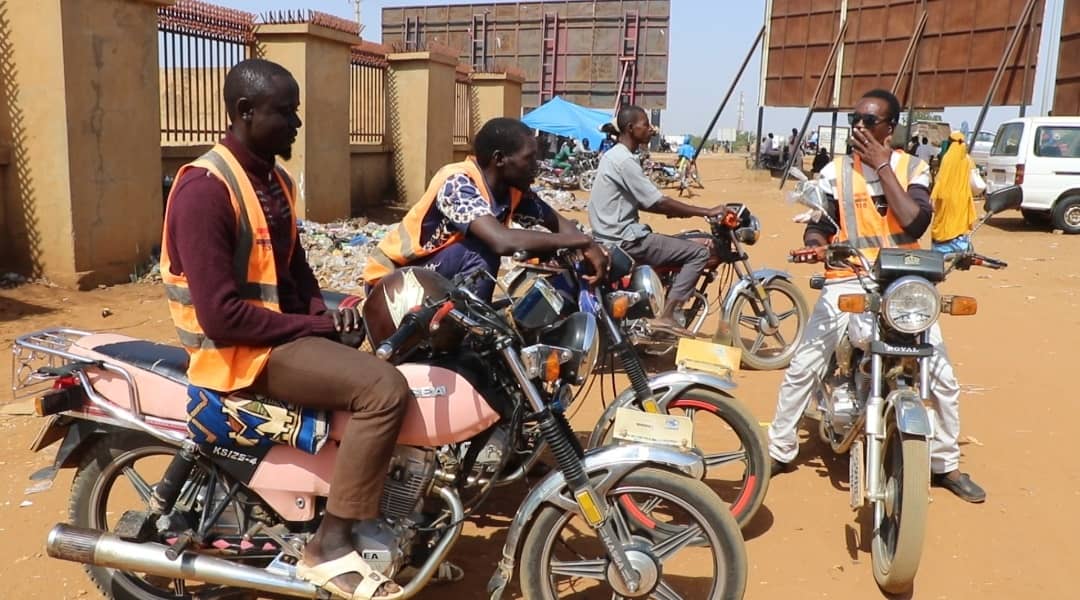
In several peripheral neighborhoods of Niamey, many young people are engaged in the taxi-moto activity, providing a vital service to the community. This sector is particularly significant as urban and interurban transport forms an essential link for population mobility and economic exchanges across Niger, underpinning the daily lives of countless citizens. The prevalence of taxi-motos notes their key role in daily life and commerce within the capital and beyond, facilitating movement and economic activity.
Organizing the Streets
Taxi-moto drivers in Niamey are progressively adopting safety vests as standard work attire, a measure intended to better organize the transport activity and strengthen driver identification within the city. This initiative aims to streamline operations and enhance security for both drivers and passengers, fostering a more structured and reliable transportation system. The wearing of these vests is progressively being adopted as work attire to better organize the activity and strengthen driver identification, contributing to a more formal and recognizable service. However, not all drivers have embraced the new requirement, with some still refusing to wear the vest for personal reasons. This resistance presents a challenge to the full implementation of the identification and organization efforts, as universal adoption is key to the system's effectiveness. The adoption of vests is seen by authorities as a key step towards formalizing the sector and improving public safety, ensuring greater accountability and trust.
Client and Driver Perspectives
Taxi-moto drivers operating in Niamey are a common sight, particularly visible at key locations such as the Aéroport roundabout, Escadrille, and across numerous streets within the capital, making them an integral part of the urban landscape. Clients have expressed appreciation for the new vest initiative, viewing it as an additional method to identify drivers, especially in the event of any incidents, which enhances their sense of security. This improved identification is seen as a positive step for passenger safety and accountability, providing a tangible benefit to the public. The standard fares for taxi-moto services in Niamey typically range between 200 and 300 FCFA, reflecting the accessible nature of this mode of transport for residents, making it an affordable option for many. The visibility and affordability of these services contribute to their widespread use across the city, cementing their role in the daily commute.
Broader Mobility Context
Taxi-motos play an important role in population mobility within Niamey, facilitating travel between different neighborhoods and connecting various parts of the sprawling city. This mode of transport is especially key for residents moving across the city's various districts, providing an accessible and flexible option for daily commutes and errands, particularly in areas less served by traditional public transport. The widespread availability of taxi-motos helps connect peripheral areas with central business zones, underpinning the city's daily rhythm and ensuring economic integration. Their operational flexibility allows them to navigate diverse urban terrains, making them a preferred choice for many residents seeking efficient local transit solutions that can adapt to varying road conditions and traffic. In Niger, urban and interurban transport is an essential link for population mobility and economic exchanges, and taxi-motos are a significant component of this vital network.
Addressing Security Concerns
Wearing a vest helps distinguish authorized taxi-moto drivers, contributing to a more professional image for their activity in Niamey and elevating the perception of the service. This visibility aids in identifying legitimate operators and enhancing public trust, providing reassurance to passengers that they are engaging with recognized service providers. The taxi-moto association is currently conducting awareness campaigns to further this initiative, noting the benefits of vest adoption for both drivers and the public. These campaigns invite users to favor taxi-motos whose drivers are wearing vests, reinforcing the security measures and promoting the new identification system among the public, thereby encouraging widespread compliance. This collective effort aims to improve both safety and the overall perception of the taxi-moto service, creating a more secure and organized transport environment for everyone.