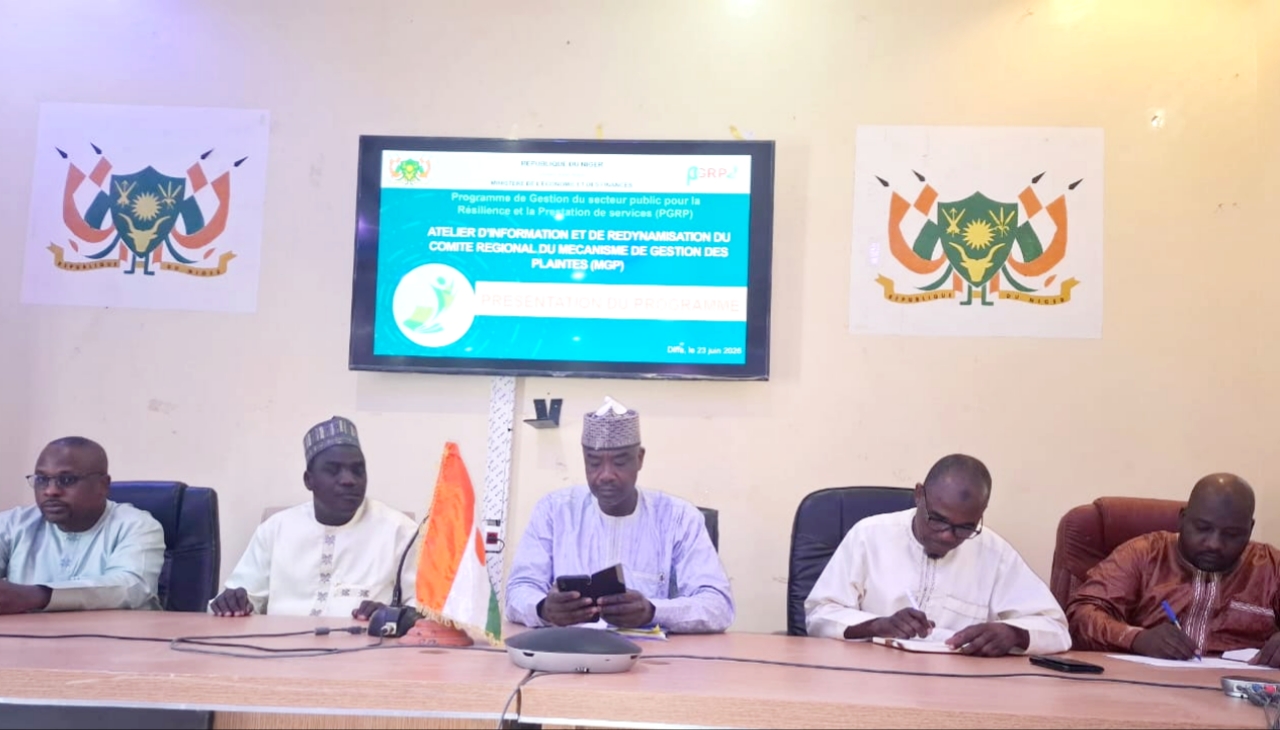
The Program for Public Sector Management for Resilience and Service Delivery in Niger (PGRP) initiated an information and revitalization workshop for the Regional Committee of the Complaint Management Mechanism (MGP) in Diffa. The event took place on Tuesday, June 23, 2026. This workshop aimed to strengthen the mechanism designed to address public service grievances within the Diffa region. The PGRP’s initiative focuses on improving local governance and service delivery by ensuring the complaint mechanism is operational and responsive to community needs. It represents a concrete step towards enhancing accountability and citizen participation in public administration. This revitalization effort is a key component of broader strategies to improve public service delivery across the region.
Workshop Details and Attendees
The workshop's opening ceremony was conducted in the meeting room of the Governorate of Diffa, providing a formal and central location for the important proceedings. Mr. Mamane Gouzae, the Deputy Secretary General of the region, presided over the ceremony, representing the Governor of the region and showing the high-level commitment to the initiative. His presence noted the regional administration's support for strengthening public service governance.
Attendees at the event included a wide array of administrative officials and representatives from several critical sectors. The Defense and Security Forces sent representatives, acknowledging the importance of security and stability in effective governance. Various technical services were also present, contributing their specialized expertise to the discussions. Civil society organizations and unions, integral voices of the community, were also present, ensuring that citizen perspectives were well-represented. Additionally, traditional leaders participated in the workshop, alongside representatives from the PGRP coordination unit, bringing their invaluable community insights and influence. This broad participation aimed to ensure diverse perspectives were included in the revitalization efforts for the complaint mechanism, fostering a full and inclusive approach to its implementation and operation.
Mechanism's Purpose and Scope
The initiative to revitalize the complaint mechanism is combined with the broader Niger-lire project, signifying a coordinated effort to achieve strong public sector improvements. A primary objective of the workshop was to inform stakeholders about the mechanism itself, ensuring that all participants had a clear and shared understanding of its function and importance. Participants received detailed information on its operational framework, including how complaints are submitted, processed, and resolved within various public service sectors. The session also clarified the specific roles and responsibilities of the various entities involved in the complaint management process, aiming to ensure a standardized and efficient approach across the entire Diffa region. This informational aspect sought to build a shared understanding among all parties regarding the mechanism's function and its potential to enhance public service delivery in Diffa, thereby promoting greater trust and transparency between citizens and public administration.
Broader Context and Goals
The primary goal of revitalizing the Diffa complaint mechanism is to strengthen transparency, accountability, and efficiency within the implementation of public reforms. This initiative specifically targets improvements in the key health and education sectors, recognizing their direct impact on the well-being and future of the population. By enhancing the mechanism, authorities aim to ensure that public services in these critical areas are delivered more effectively and respond directly to the needs of the population. The focus on transparency seeks to make governmental processes more open to public scrutiny, allowing citizens to better understand how decisions are made and resources are utilized. Accountability measures are designed to hold public officials responsible for their actions and decisions, fostering a culture of responsibility and responsiveness. Efficiency improvements are expected to streamline service delivery, reducing delays and improving the overall quality of health and education provisions across the Diffa region, ultimately leading to better outcomes for its residents.