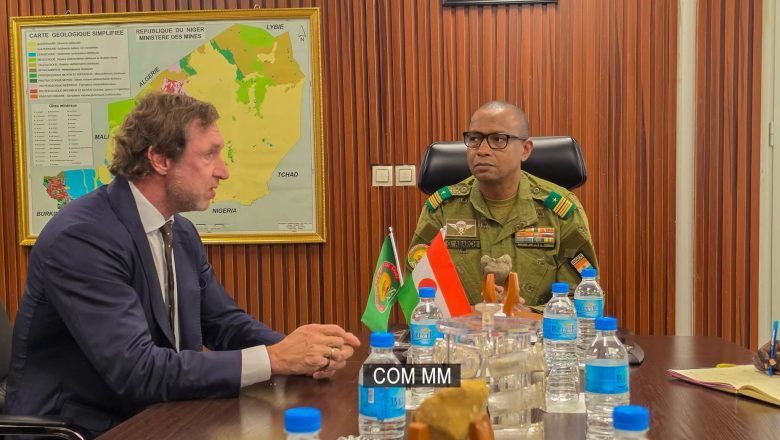
Minister of Mines of Niger Abarchi Ousmane held formal negotiations in Niamey with the OKTO consortium, led by Alexey Tolokonnikov, to explore a potential mining partnership. These discussions center on the government's objective to increase fiscal revenue from the extractive sector through new international agreements.
Government officials stated that the administration requires foreign partners to implement local mineral transformation processes within Niger. As part of these requirements, the state expects firms to facilitate technology transfer to local operations. Officials intend to use these partnerships to expand the domestic capacity of the extractive industry.
The meeting between Abarchi Ousmane and the OKTO consortium marks a significant step in the government's strategy to engage with international entities. By inviting the OKTO consortium to the capital, the Ministry of Mines of Niger has initiated a formal dialogue aimed at aligning foreign investment with the specific economic goals of the state. These negotiations, led on the corporate side by Alexey Tolokonnikov, focus on the specific terms under which the OKTO consortium would operate within the country.
A primary pillar of the government’s current economic platform is the requirement that all foreign partners commit to the implementation of local mineral transformation. Under this mandate, the Nigerien government is moving away from the simple extraction of raw materials. Instead, the administration requires that the OKTO consortium and any other potential partners build the necessary infrastructure to process minerals directly within the borders of Niger. This policy is designed to ensure that the value-added stages of production occur domestically, thereby maximizing the economic benefits retained by the state.
The government requires that foreign partners facilitate technology transfer to local operations. This requirement is intended to bridge the technical gap between international firms and the domestic workforce. By mandating that the OKTO consortium shares technical expertise and operational knowledge, the government aims to enhance the skills of local personnel. Officials believe that this transfer of technology will improve the long-term efficiency and capability of the domestic extractive industry.
The overarching goal of these negotiations is to increase fiscal revenue from the extractive sector. By securing new partnerships that adhere to these strict requirements, the government seeks to create a more strong and profitable mining landscape. The Ministry of Mines of Niger, led by Abarchi Ousmane, is evaluating how the proposed partnership with the OKTO consortium can contribute to these fiscal objectives.
As the talks continue in Niamey, the focus remains on the specific obligations of the OKTO consortium to support the industrialization of the sector. The government maintains that the extractive industry must serve as a catalyst for broader economic development. Through the leadership of Alexey Tolokonnikov, the OKTO consortium is currently reviewing the government’s mandates regarding mineral transformation and technology transfer. The outcome of these discussions will determine the future role of the OKTO consortium in the domestic mining landscape of Niger. Officials are prioritizing agreements that guarantee both a direct increase in fiscal revenue and a sustainable improvement in the technical capacity of the nation’s extractive operations.