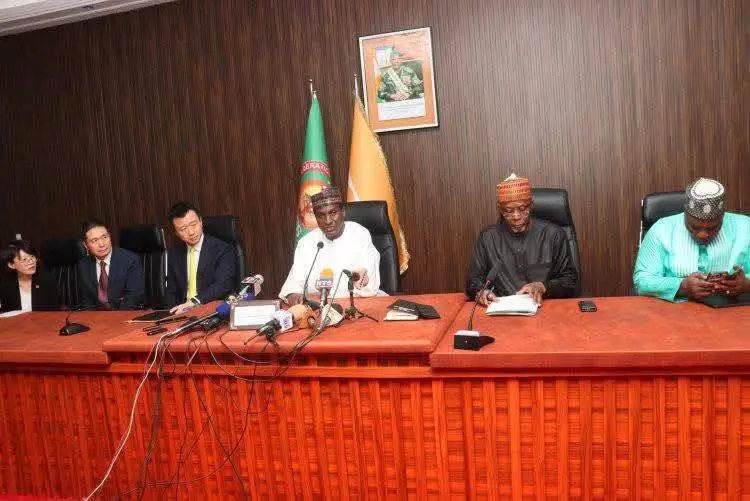
The Republic of Niger and China Oil and Gas Exploration and Development Corporation (COGEDC) initialed new oil agreements on Monday, May 18, 2026, in Niamey, marking what Nigerien authorities describe as substantial advancements for the country's oil sector. These significant agreements were formally initialed during a ceremony held in the capital, Niamey, solidifying a new chapter in the partnership between Niger and COGEDC. Prime Minister Ali Mahaman Lamine Zeine oversaw the signing of these agreements, showing the strategic importance of the deal for the West African nation. The negotiation process for these new terms commenced on June 11, 2025, in China, setting the stage for nearly a year of intricate discussions and diplomatic efforts. This extended period of negotiation notes the complexity and the mutual commitment of both parties to reach a full and beneficial resolution. A key provision of the renegotiated agreements includes the repatriation of revenues generated from crude oil exports directly to Niger, ensuring that the financial benefits of its natural resources remain within the country. This development follows extensive discussions aimed at securing more favorable conditions for the West African nation, reflecting a strategic move by Nigerien authorities to maximize the economic returns from their oil sector. The agreements are poised to reshape Niger's involvement in the global oil market, promising enhanced financial sovereignty and operational control.
Key Financial and Operational Gains
The revised agreements include a significant reduction in the transport tariff for the export pipeline. This critical adjustment addresses a long-standing concern regarding the cost of moving crude oil to international markets. The tariff has been lowered from 27 to 15 dollars per barrel, representing a substantial decrease that will directly impact the profitability of Niger's oil exports. This decrease is anticipated to generate significant savings for Niger, exceeding 106 million dollars over a twelve-month period. Such a saving will provide a substantial boost to the national budget, allowing for increased investment in other key sectors of the economy. Additionally, an agreement in principle has been reached regarding the WAPCO company, granting the Nigerien state a 45% stake. This increased ownership stake in WAPCO provides Niger with greater leverage and a more substantial share in the profits and strategic direction of the company, further enhancing national control over its oil infrastructure and operations. The financial implications of these changes are expected to be profound, strengthening Niger's economic position and contributing to its long-term development goals.
The new terms also outline the relaunch of projects for the Dinga Deep and Abolo-Yogou oil fields. These initiatives are expected to involve a global investment estimated at one billion dollars, signaling a major commitment to expanding Niger's oil production capabilities. The relaunch of these projects is a critical step towards realizing the full potential of Niger's oil reserves, bringing previously underdeveloped assets into full production. These developments are projected to significantly increase Niger’s national oil production. Current production of 110,000 barrels per day is forecast to rise to 145,000 barrels per day by 2029, according to the agreements. This projected increase of 35,000 barrels per day represents a substantial boost in output, which will naturally lead to higher export volumes and increased revenue for the state. The concessions aim to provide Niger with greater financial benefits and operational control within its oil sector, ensuring that the country plays a more direct and profitable role in the extraction and export of its valuable resources. The strategic importance of these operational gains cannot be overstated, as they lay the groundwork for sustained economic growth and energy independence.
Employment and Revenue Benefits
The new oil agreements are projected to create 452 jobs for Nigeriens by 2030 across various oil companies and their subcontractors. These employment opportunities are part of broader efforts to enhance local participation in the oil sector, ensuring that the benefits of resource extraction are distributed widely among the population. The creation of these jobs will not only reduce unemployment but also foster skill development and professional growth within the national workforce.
Within CNPC, Nigeriens are expected to fill 60% of management positions and comprise 90% of the overall workforce. This ambitious target demonstrates a clear commitment to localizing expertise and leadership within major oil operations. Similarly, at WAPCO, nationals will represent 60% of management positions and 80% of execution positions, indicating a significant push for local talent development and utilization. These quotas are designed to empower Nigerien professionals and reduce reliance on expatriate labor, building a sustainable and self-sufficient oil industry workforce. The emphasis on local employment extends beyond mere numbers, aiming to cultivate a highly skilled and experienced national workforce capable of managing and operating complex oil and gas facilities.
The agreements also set a target for the SORAZ refinery to achieve 85% operationalization by Nigerien personnel. This objective aims to increase the involvement of the national workforce in key operational aspects of the refinery, from technical roles to administrative functions. Achieving this target will enhance operational efficiency and knowledge transfer, making the refinery a truly national asset operated by Nigeriens. Additionally, the concessions include provisions for salary harmonization between expatriate and Nigerien employees, addressing a long-standing concern regarding equitable compensation within the industry. This measure seeks to eliminate disparities in pay for similar roles, promoting fairness and boosting morale among the Nigerien workforce. These measures collectively aim to maximize the socio-economic benefits for Nigerien citizens from the country's oil resources, ensuring that the wealth generated contributes directly to improving living standards and fostering national development.
Future Energy Exploration
Looking ahead, plans are in place to initiate a feasibility study focusing on Niger's gas potential. This study is scheduled to commence within the next six months, indicating a proactive approach to diversifying the nation's energy portfolio. The estimated gas potential for Niger stands at 23 billion cubic meters, indicating a significant, untapped resource for future energy development. This substantial volume suggests that natural gas could become another major pillar of Niger's energy economy, complementing its crude oil production. The launch of this study forms part of broader efforts to diversify Niger's energy sector beyond crude oil, reducing reliance on a single commodity and enhancing energy security. It aims to provide a full assessment of the viability and pathways for developing these natural gas reserves, including potential extraction methods, infrastructure requirements, and market opportunities. This initiative could potentially open new avenues for energy production and export for the nation, attracting further foreign investment and creating additional revenue streams. The development of natural gas resources would also contribute to meeting domestic energy demands and potentially facilitating industrial growth within Niger.
