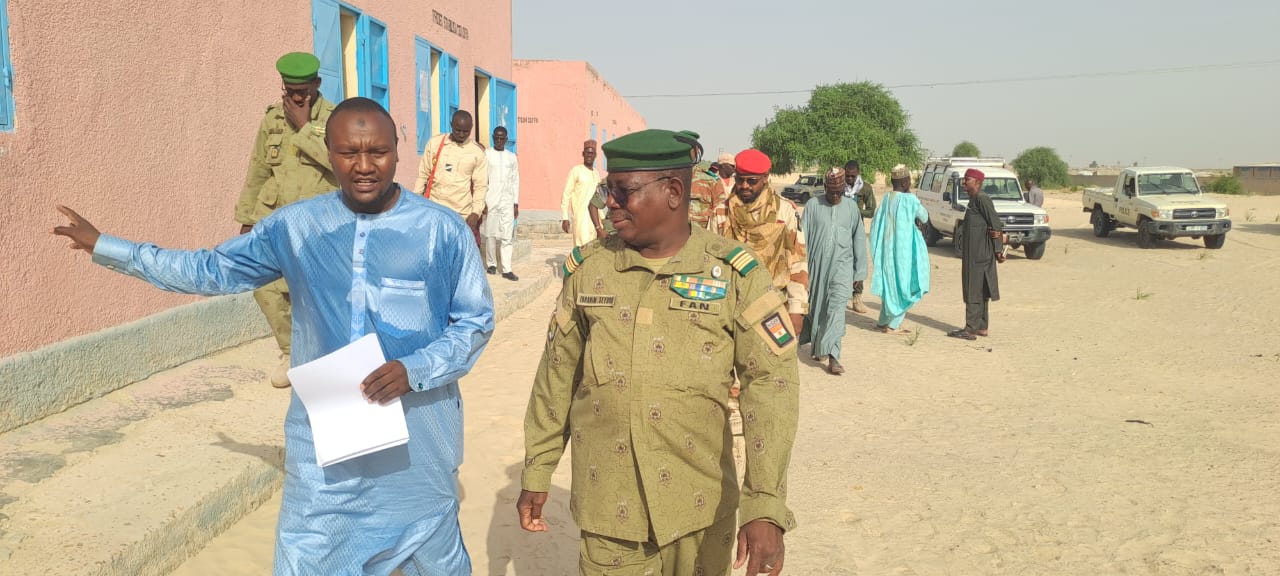
Niger has expressed keen interest in leveraging Algeria's extensive experience in rehabilitating degraded land. This initiative seeks to address pressing environmental challenges within Niger by drawing on established Algerian methods, technical knowledge, and proven strategies. The proposed collaboration aims to facilitate a direct transfer of expertise from Algeria to Niger, specifically focusing on advanced techniques for ecological restoration and effective land management in arid and semi-arid environments. This strategic partnership shows Niger's proactive approach to combating desertification and enhancing its environmental resilience, recognizing Algeria as a regional leader in these critical areas.
Algeria's Rehabilitation Successes
Algeria has demonstrated considerable success in land rehabilitation efforts over several decades, firmly establishing itself as a regional leader in the fight against desertification and the restoration of degraded ecosystems. The country has systematically implemented various large-scale initiatives focused on environmental recovery, particularly within its vast arid and semi-arid regions. These full programs have involved significant and sustained investment in key areas such as afforestation, strong soil conservation measures, and innovative water management techniques. The consistent application of these strategies has yielded demonstrably positive outcomes in areas historically prone to severe land degradation, transforming once barren landscapes into more productive and ecologically stable zones.
Algerian strategies frequently incorporate the use of specially selected drought-resistant vegetation species, which are key for re-establishing plant cover in harsh climates. The construction of anti-erosion structures, such as contour bunds, terraces, and gabions, plays a vital role in preventing soil loss and promoting water infiltration. The nation has also focused on the development and promotion of sustainable agricultural practices that minimize environmental impact while maximizing productivity. Algeria's experience extends significantly to managing water resources efficiently in challenging environments, including the development of rainwater harvesting systems and the optimization of irrigation methods. This expertise in integrated water management is a critical component of successful land rehabilitation in drylands, where water scarcity is a constant challenge. The practical application of these methods provides a valuable blueprint for other nations facing similar environmental pressures, such as Niger.
The long-standing commitment of Algeria to environmental protection is evidenced by its continuous efforts to expand its green belts, such as the Great Green Wall initiative, and to restore biodiversity in vulnerable areas. These ambitious endeavors are often supported by rigorous scientific research and the development of specialized techniques meticulously adapted to local ecological conditions. Through sustained initiatives and dedicated resources, Algeria has accumulated a vast repository of valuable practical knowledge and technical skills in ecological restoration, making it a prominent reference point for effective land rehabilitation. This dedication has allowed the country to refine its approaches, ensuring that interventions are both environmentally sound and economically viable for local communities.
For nations like Niger, which are grappling with severe land degradation and the widespread effects of desertification, Algeria's proven track record offers a compelling and actionable model for intervention. The methods employed by Algeria have not only directly addressed pressing environmental concerns but have also been designed to improve the livelihoods of local populations. This is achieved through enhanced agricultural productivity, the creation of new economic opportunities, and the promotion of sustainable resource management practices. This holistic approach, which intricately integrates environmental restoration with socio-economic development, forms a key and distinguishing aspect of Algeria's rehabilitation successes. The profound shared environmental challenges between the two countries, including similar climatic conditions and land use pressures, further show the direct applicability and potential effectiveness of Algeria's experience for Niger.
Niger's Land Degradation Challenges
Niger faces significant and escalating environmental challenges, particularly severe land degradation and widespread desertification, which profoundly impact its agricultural productivity and, consequently, the livelihoods of its predominantly agrarian population. The country's acute vulnerability stems from a complex interplay of climatic factors, including low and highly irregular rainfall patterns, and various human activities. These activities encompass unsustainable practices such as overgrazing, extensive deforestation for fuel and agriculture, and farming methods that deplete soil nutrients and structure. These combined conditions contribute to widespread soil erosion, the alarming loss of fertile land, and a general deterioration of vital ecosystems. The arid and semi-arid regions of Niger are especially susceptible to desertification, with vast areas experiencing a continuous decline in vegetative cover, diminishing water resources, and increasing soil infertility. This environmental decline directly threatens the food security and economic stability of millions.
The Ministry of Environment, Urban Health, and Sustainable Development in Niger has explicitly identified land rehabilitation as a critical national priority for sustainable development. Addressing land degradation is seen as absolutely essential not only for environmental protection and biodiversity conservation but also for ensuring long-term food security and achieving significant poverty reduction targets. A substantial portion of Niger's population relies heavily on rain-fed agriculture and livestock rearing, making them exceptionally vulnerable to even minor changes in land quality and productivity. The ongoing and accelerating loss of arable land exacerbates chronic food insecurity, contributes to internal displacement, and can fuel social instability within communities dependent on natural resources. The urgency of these issues shows the imperative for effective and scalable solutions.
Efforts to combat land degradation in Niger often involve localized initiatives such as community-led tree planting campaigns, the construction of anti-erosion barriers using local materials, and the promotion of sustainable land management techniques among local communities through awareness programs and training. While these efforts are valuable, the sheer scale and complexity of the problem necessitate more full, integrated, and technologically advanced approaches. The government of Niger has recognized the urgent need for enhanced technical expertise and the adoption of proven methodologies to effectively restore degraded lands and prevent further environmental decline. This recognition forms the basis of its outreach to countries with demonstrated success in this field.
Hamza Harouna Adamou, the Minister of Environment, Urban Health, and Sustainable Development for Niger, has consistently emphasized the extreme urgency of these environmental concerns. The Minister's focus is squarely on identifying and implementing effective and scalable solutions to reverse the alarming trend of degradation and to foster ecological resilience across the entire nation. This strategic focus aligns smoothly with Niger's broader commitment to achieving sustainable development goals, particularly those related to responsible land management, climate change adaptation, and biodiversity conservation. The country's proactive stance in seeking international collaboration and expertise, especially from a regional partner like Algeria, shows the profound severity of its environmental challenges and its unwavering determination to implement strong, evidence-based rehabilitation strategies that can deliver tangible results for its citizens and its natural heritage.
Potential for Bilateral Cooperation
The shared environmental challenges between Niger and Algeria create a strong and compelling foundation for strong bilateral cooperation in the critical field of land rehabilitation. Niger's Minister of Environment, Urban Health, and Sustainable Development, Hamza Harouna Adamou, has explicitly sought Algeria's expertise, recognizing its internationally acknowledged success in combating desertification and effectively restoring degraded lands. This deep interest stems directly from Algeria's proven track record in meticulously planning and implementing large-scale environmental recovery programs that are specifically tailored for arid and semi-arid regions, conditions highly analogous to those found in Niger. Niger is particularly interested in Algeria's experience in rehabilitating degraded spaces, understanding that practical application of proven methods is key.
Algeria's extensive experience encompasses a full range of critical techniques that are directly applicable and highly beneficial to Niger's specific needs. These include advanced afforestation methods utilizing drought-resistant species, sophisticated soil conservation practices designed to prevent erosion and improve soil fertility, and highly efficient water management strategies key for challenging dryland environments. The methods meticulously employed by Algeria, such as the strategic use of drought-resistant vegetation for revegetation and the construction of various anti-erosion structures, could offer practical, effective, and sustainable solutions for Niger, which currently faces severe soil erosion and a significant loss of fertile land. Algeria's holistic approach, which skillfully integrates environmental restoration with socio-economic development to directly improve local livelihoods, aligns perfectly with Niger's broader goals of fostering ecological resilience and significantly enhancing food security for its population.
The systematic transfer of knowledge, technical skills, and practical experience from Algeria to Niger could significantly bolster Niger's ongoing efforts to reverse land degradation and prevent further environmental decline. This invaluable collaboration would enable Niger to adopt and adapt methodologies that have been rigorously tested, refined, and proven effective in ecological conditions remarkably similar to its own. The potential for cooperation extends far beyond mere technical assistance; it encompasses policy exchanges, joint research initiatives focused on innovative solutions, and capacity-building programs for local experts and communities. Such full cooperation would further strengthen both nations' capacities to address the multifaceted challenges of climate change and to achieve their respective sustainable development goals. By drawing on Algeria's long-standing commitment, its specialized techniques, and its wealth of practical experience, Niger aims to implement more full, integrated, and ultimately more effective approaches to land restoration, which will directly benefit its agricultural productivity, enhance its environmental stability, and significantly improve the well-being of its population for generations to come.