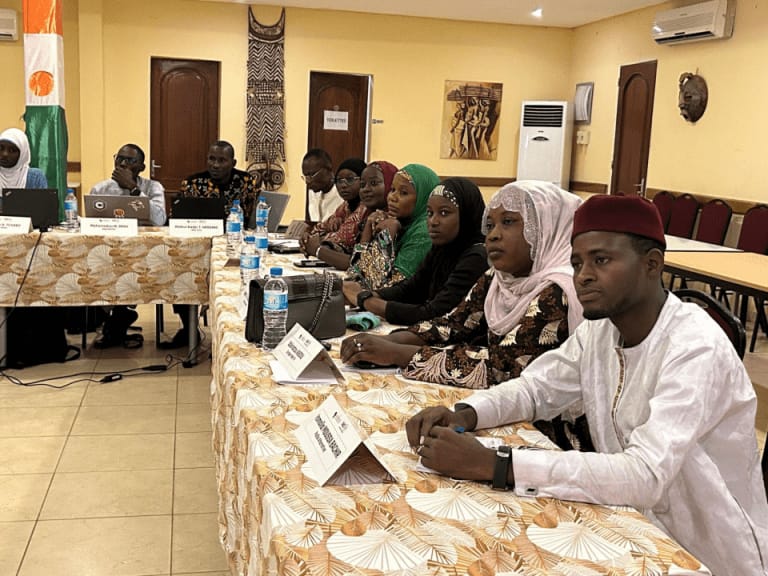
The Cellule Norbert Zongo pour le journalisme d’investigation en Afrique de l’Ouest (CENOZO), in collaboration with International Media Support (IMS), organized a training workshop for twenty Nigerien journalists at the Hôtel Terminus in Niamey. Held from May 4 to May 6, 2026, the workshop focused on equipping participants with open source intelligence (OSINT) tools to combat disinformation. The general objective aimed to strengthen journalists' capacities to detect, document, and deconstruct disinformation campaigns prevalent in the Sahel region. This initiative shows a concerted effort to enhance media literacy and accuracy in a region frequently targeted by misinformation.
Skills and Techniques Taught
Training sessions were structured to include both theoretical learning and practical case study applications. Participants were instructed in a range of open-source intelligence skills essential for identifying and countering false narratives. The curriculum was meticulously designed to provide actionable knowledge. Key techniques covered during the workshop included verifying images and videos, conducting reverse image searches, and analyzing networks involved in the propagation of false information. Journalists also learned to detect content generated or manipulated by artificial intelligence, a growing challenge in the digital landscape. Further instruction focused on broader open-source analysis methods and understanding the dynamics of disinformation ecosystems. These practical skills aimed to enhance the journalists' ability to scrutinize and report on information with greater accuracy, providing them with a strong toolkit for investigative journalism. The hands-on approach ensured that the twenty Nigerien journalists could immediately apply the techniques learned to real-world scenarios.
Objectives and Standards
The training adhered to the professional standards established by the International Fact-Checking Network (IFCN). This commitment to IFCN standards aimed to ensure that the methodologies taught were strong and internationally recognized for verifying information. The workshop’s primary objective was to improve the quality of journalistic production among the participants. By equipping Nigerien journalists with advanced OSINT techniques, the initiative sought to strengthen the reliability of information disseminated across the Sahel region. This focus on enhancing journalistic rigor is intended to help counter the widespread issue of disinformation, fostering a more informed public sphere. The organizers believe that consistent application of these standards will lead to more accurate reporting and increased public trust in media outlets operating in the region. The training’s emphasis on IFCN principles ensures that the fact-checking processes employed by these journalists are credible and transparent, vital for maintaining public confidence in the media.
Broader Impact in the Sahel
The training initiative for Nigerien journalists aligns with broader efforts to enhance media integrity across the Sahel region. Disinformation poses significant challenges to stability and public discourse in West Africa, making accurate and verified reporting key. Organizations like the Cellule Norbert Zongo pour le journalisme d’investigation en Afrique de l’Ouest (CENOZO) and International Media Support (IMS) recognize the necessity of equipping local journalists with advanced tools to counter these narratives effectively. Strengthening the capacity of media professionals in Niger contributes to a more informed citizenry capable of discerning reliable information from false content. This sustained effort is critical in building media resilience against the sophisticated tactics used to spread false narratives.
Developing strong fact-checking skills among journalists helps to build resilience against the spread of propaganda and misinformation, which often exacerbates existing tensions in the Sahel. The application of open source intelligence (OSINT) techniques, as taught in the Niamey workshop, provides a standardized methodology for verifying information, consistent with the principles upheld by the International Fact-Checking Network (IFCN). This approach aims to foster a media environment where journalists can independently scrutinize information, thereby reinforcing public trust in local news sources and contributing to regional stability. The full training received by the twenty Nigerien journalists is expected to have a lasting positive impact on the quality and reliability of news reporting throughout the region.