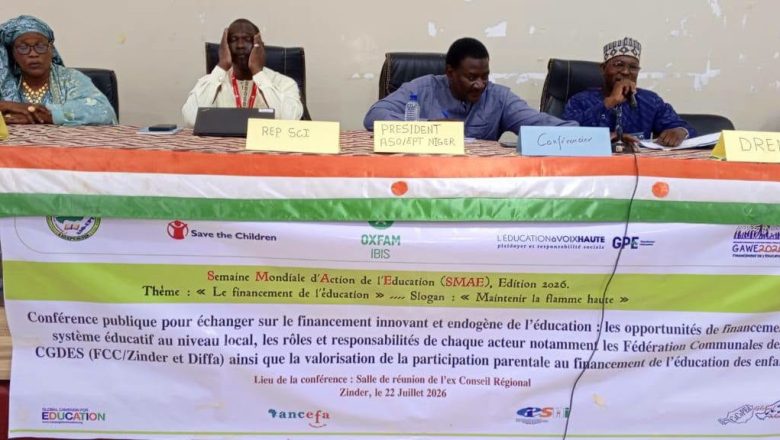
The Semaine mondiale d’action pour l’éducation (SMAE 2026) was recently launched in Zinder, Niger, aiming to address critical funding gaps in the country's education sector. This significant initiative comes as concerns grow that Sustainable Development Goal 4 (SDG 4), which targets quality education for all by 2030, will not be met without significant and swift mobilization of national and local resources. Indeed, the campaign emphasizes that SDG 4 will remain out of reach without such rapid and concerted efforts. This local funding drive is seen as essential given the declining international aid available for education in Niger. The launch shows a key shift towards domestic responsibility for educational development and financing, acknowledging the vital role that internal resources must play in securing the future of education in the nation.
Mobilizing Local Resources for Education
Participants at the recent event advocated for increased commune involvement in educational investments, noting the need for local administrative bodies to play a more active role in funding and overseeing education. They also called for the more systematic use of participatory budgets for education, a mechanism designed to give communities a direct say in how funds are allocated for schools and educational programs. Attendees sought stronger support for local elected officials to prioritize education within communal policies, ensuring that educational needs are at the forefront of local governance agendas. The overall goal of these proposals is to strengthen citizen control over the mobilization and use of resources, which aims to improve transparency in school budget management. This enhanced oversight is expected to lead to more efficient and equitable allocation of funds. The initiative further seeks to foster a culture of shared responsibility centered on schools, encouraging communities, parents, and local authorities to collaborate actively in supporting educational institutions.
Context and Challenges Ahead
The region of Zinder recently reported varied success rates in key examinations, indicating ongoing educational challenges that necessitate focused interventions. Statistics show Zinder recorded a 73.42% success rate in the Certificat de Fin d’Études du Premier Degré (CFEPD) exams, a critical benchmark for primary education completion. In parallel, the Brevet d’Études du Premier Cycle (BEPC) exams in the same region saw a 56% success rate, which is a key indicator for progression to secondary education. These figures highlight specific areas where educational outcomes may require further attention as national and local efforts intensify to improve overall performance. ASO-EPT Niger is actively involved in these efforts, stating its aim is to go beyond a simple awareness campaign with the 24th edition of the Semaine mondiale d’action pour l’éducation (SMAE). This approach suggests a focus on tangible, implementable strategies to improve educational performance and resource management throughout Niger, moving from mere recognition of problems to concrete solutions.
Advocacy for Sustainable Financing
The Semaine mondiale d’action pour l’éducation (SMAE 2026) campaign is centered on strategies to sustainably finance education primarily through the mobilization of local resources. The SMAE 2026 campaign specifically focuses on how to sustainably finance education by mobilizing local resources first, emphasizing self-reliance. This approach aims to build self-sufficiency in funding educational initiatives across Niger, reducing dependence on external aid and fostering greater national ownership. Concurrently, Niger's authorities have indicated a prioritization of increased education funding, drawing from the state's own resources. This commitment is articulated as a key component of a broader refoundation policy, signaling a shift towards greater domestic responsibility for the sector's financial stability. The dual focus on local resource generation and state investment shows a full strategy to address the educational funding gaps, ensuring that education remains a top national priority. This concerted effort is critical for achieving the ambitious goals set for quality education by 2030.