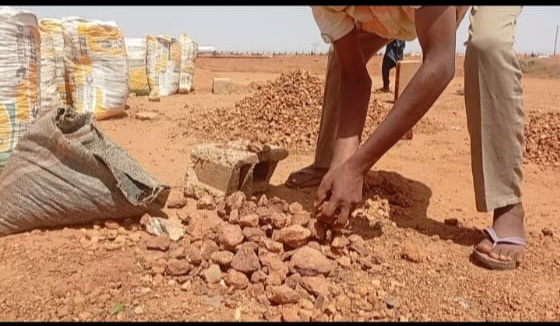
Hadjo, a 65-year-old widow and mother of five children, works daily in the gravel pits of Niamey to support her family. Her labor involves breaking stones by hand, a task she performs to provide for her five children despite the physical demands of the trade. As a widow, she relies exclusively on the income generated from the gravel production to cover the household expenses. She remains a permanent fixture at the site, where the work continues under the heat of the sun.
The daily routine for Hadjo is defined by the relentless cycle of physical exertion required to extract value from raw stone. Each morning, she arrives at the site, preparing for the hours of labor ahead. As a 65-year-old widow and mother of five children, her commitment to this work is driven by the necessity of sustaining her household. The environment is harsh, with the sun beating down on the open pits, yet the work persists without interruption.
The Daily Labor Process
Hadjo spends her days in Niamey engaged in the manual labor of collecting, crushing, and sieving gravel and aggregates. She processes the raw material at the site, transforming large stones into smaller, usable pieces of gravel for construction purposes. This process requires significant physical stamina, as every stone must be manually handled and reduced to the required size through repetitive impact.
The transformation of raw stone into gravel follows a systematic approach. First, the raw material is collected from the surrounding area. Once the stones are gathered, the crushing phase begins, where Hadjo uses tools to break the larger rocks into manageable fragments. After the crushing is complete, the sifting or sieving phase ensures that the final product meets the specifications required by those purchasing the materials for construction projects. By meticulously sieving the aggregates, she separates the finer material from the larger chunks, creating a consistent product that is ready for transport and use.
Buyers purchase the finished product from the workers in various quantities. A bag of gravel is sold for between 750 and 1,000 FCFA. Larger quantities are also available for purchase, as piles of stones are sold for 1,500 FCFA depending on the quantity and conditions of sale. These prices fluctuate based on the volume of material provided and the specific terms agreed upon between the workers and the customers at the site.
The economic reality of the gravel pits in Niamey is tied directly to these sales. For Hadjo, the transition from raw stone to a sellable bag of gravel represents the culmination of her daily efforts. Because she works daily in Niamey collecting, crushing, and sieving gravel and aggregates, her income is entirely dependent on the volume of material she can successfully process and sell to the customers who frequent the site. The market for these materials is localized, with construction projects in the surrounding area serving as the primary demand for the gravel she produces. As she continues her work, the physical toll of the labor remains a constant factor in her life, yet the necessity of providing for her children ensures that she returns to the pits to repeat the process each day.