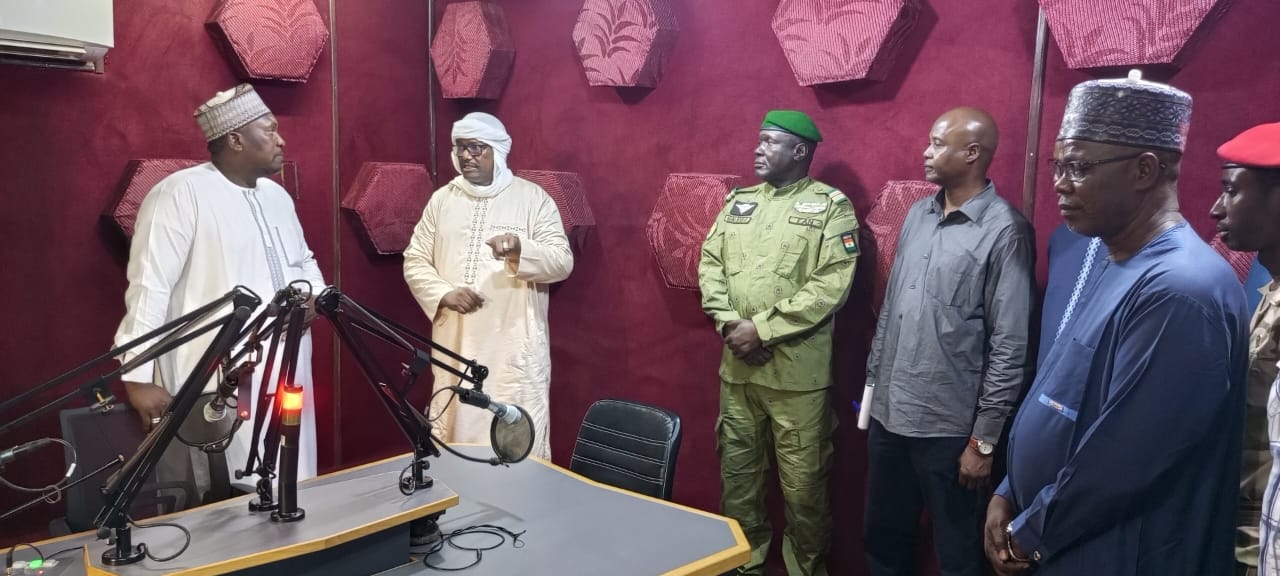
A workshop is underway to validate the provisional report concerning the state of water management bodies within the Goulbi N'Kaba and Goulbi N'Maradi sub-basins. This significant event addresses water resource governance in the region, aiming to refine and confirm the findings of a key assessment. The gathering brings together various stakeholders, including government officials, technical experts, and community representatives, to meticulously review the document. Their collective input is vital for ensuring the report's comprehensiveness and its practical relevance for future policy development and implementation in these critical areas of Niger.
Agence Nigérienne de Presse (ANP) reported on the workshop, detailing its purpose regarding the assessment of water management structures in Niger's Goulbi basins. The news agency noted the collaborative nature of the validation process, emphasizing its role in fostering a shared understanding of the challenges and opportunities in water governance. The validation process aims to ensure accuracy and relevance of the findings before the report's finalization, thereby laying a solid groundwork for sustainable water resource management strategies. This public reporting shows the national importance attributed to the sustainable management of these vital water resources, reflecting a commitment to transparency and informed decision-making.
Report's Purpose and Scope
The provisional report on water management bodies in the Goulbi N'Kaba and Goulbi N'Maradi sub-basins focuses on evaluating existing structures and practices related to water resource governance. Its primary objective is to provide a full assessment of how water is currently managed across these important basins in Niger, considering both traditional and modern approaches. The report examines the operational frameworks, institutional capacities, and effectiveness of the bodies tasked with overseeing water allocation, conservation, and dispute resolution. This includes an analysis of legal and regulatory frameworks, as well as the practical implementation of policies at the local level. By scrutinizing these elements, the report aims to pinpoint areas of strength and weakness within the current system, offering a clear picture for future improvements.
Validation of this report is a critical step in ensuring its accuracy and practical applicability. The process involves a thorough review by stakeholders, experts, and local representatives to verify the data collected and the conclusions drawn. This collaborative approach seeks to integrate diverse perspectives and local knowledge, thereby strengthening the report's credibility. It allows for the incorporation of on-the-ground realities and traditional water management practices that might not be immediately apparent from a purely technical assessment. The insights gathered will inform future strategies for sustainable water management in the Goulbi basins, ensuring that recommendations are well-grounded and culturally appropriate. This participatory validation fosters a sense of ownership among the communities and institutions that will ultimately be responsible for implementing the report's suggestions.
The scope of the report extends to identifying challenges and opportunities within the current water management landscape. It analyzes factors influencing water availability and distribution, including climatic variations and human activities such as agricultural expansion and urbanization. The document explores the roles and responsibilities of various entities involved in water governance, from government agencies and ministries to non-governmental organizations and community-level water user associations. This multi-scalar analysis provides a holistic view of the governance ecosystem. Recommendations for improving coordination, enhancing technical capabilities, and fostering community participation are expected to be key components of the final report, addressing gaps in institutional capacity and promoting more inclusive decision-making processes. The ultimate goal is to establish a strong framework that can support long-term water security and equitable access for all users in the Goulbi N'Kaba and Goulbi N'Maradi regions, thereby contributing to regional stability and economic development.
Significance of Water Management
Effective water management is essential for the sustainable development of the Goulbi N'Kaba and Goulbi N'Maradi sub-basins in Niger. These regions depend heavily on water resources for agriculture, livestock, and domestic consumption, making their careful stewardship critical for local livelihoods and ecological balance. The availability of water directly impacts food security, public health, and economic stability for thousands of inhabitants. The ongoing validation workshop scrutinizes the provisional report on water management bodies, which aims to enhance the governance structures responsible for this vital resource, ensuring its availability for both present and future generations. The findings from this report are expected to guide strategic investments and policy reforms that will have a lasting positive impact on the region.
The basins face a range of challenges, including fluctuating rainfall patterns, increasing demand from a growing population, and the potential impacts of climate variability. These challenges are exacerbated by the semi-arid nature of the region, which makes water resources particularly vulnerable to environmental shifts. Efficient management practices are necessary to mitigate these issues, ensuring equitable access to water and preventing conflicts over its distribution. Proper water resource governance also supports economic activities, particularly in the agricultural sector, which is a primary source of income for many communities in the Goulbi regions. By optimizing water use in farming, for instance, the report can help boost crop yields and livestock health, directly improving the economic well-being of local families. Investing in sustainable water management is therefore an investment in the overall resilience and prosperity of the sub-basins.
The report’s focus on evaluating existing structures and practices directly addresses the need for improved coordination among various stakeholders. These include government agencies, local communities, and non-governmental organizations, all of whom play a role in water use and conservation. By assessing the operational frameworks and institutional capacities, the report seeks to identify gaps and propose measures to strengthen the overall management system. This systemic approach is designed to foster resilience against environmental pressures and human-induced stresses on water availability, promoting a more integrated and adaptive management style. Enhancing coordination can lead to more efficient resource allocation, reduced waste, and a more unified response to water-related crises.
The validation process itself shows the importance of local engagement and expert input. The participatory review ensures that the findings and recommendations are relevant, practical, and culturally appropriate for the communities in Goulbi N'Kaba and Goulbi N'Maradi. Integrating diverse perspectives helps to build consensus and ownership over future water management strategies, which is key for their successful implementation. This bottom-up approach ensures that solutions are tailored to the specific needs and contexts of the local populations, rather than being imposed from the outside. The ultimate goal is to establish a strong and inclusive framework that can secure water for current and future generations, contributing to stability and prosperity in the sub-basins by safeguarding this most precious natural resource.
Challenges in Sub-Basin Management
Managing water resources within the Goulbi N'Kaba and Goulbi N'Maradi sub-basins presents a complex array of challenges, largely stemming from environmental factors and increasing human pressures. The semi-arid climate of Niger contributes to significant variability in rainfall patterns, leading to periods of both drought and intense, short-lived precipitation events. This unpredictability complicates water availability, making consistent planning for agricultural, pastoral, and domestic consumption difficult for local communities and water management bodies. Erratic rainfall also contributes to soil erosion and degradation, further impacting the quality and quantity of surface water runoff into the basins, as well as increasing the siltation of water bodies. The lack of reliable long-term climate data further hinders accurate forecasting and adaptive planning, making communities more vulnerable to sudden shifts in water availability.
Demographic growth across the Goulbi N'Kaba and Goulbi N'Maradi regions places escalating demands on finite water resources. This rising population requires more water for drinking, sanitation, and food production, intensifying competition among various user groups. Agricultural expansion, a primary economic activity, often leads to increased water abstraction from rivers and groundwater sources, potentially depleting reserves if not managed sustainably. The expansion of irrigated lands, while boosting food security, must be carefully balanced against the long-term health of the sub-basins' ecosystems and the needs of other sectors. Uncontrolled abstraction can lead to falling water tables and the degradation of aquatic habitats, threatening biodiversity and the long-term viability of the water sources themselves. The increasing pressure from both human and livestock populations necessitates a careful re-evaluation of current water use patterns and the promotion of more efficient practices.
The existing infrastructure for water storage, distribution, and treatment may struggle to meet current needs and adapt to future climatic changes. Many communities rely on rudimentary systems that are prone to breakdown, leakage, and contamination, thereby reducing the effective availability of clean water. Inadequate infrastructure can lead to water losses, inefficient irrigation practices, and limited access for remote or vulnerable communities, exacerbating inequalities in water distribution. Overlapping or unclear institutional responsibilities among various governmental and local entities can also hinder effective coordination and enforcement of water management policies. This fragmentation can impede the development and implementation of integrated strategies necessary to address the interconnected challenges of water scarcity, quality degradation, and equitable access. Addressing these multifaceted issues requires a collaborative approach involving strong data collection, community engagement, and sustained investment in both governance structures and physical infrastructure within Niger's Goulbi basins, alongside a commitment to capacity building for local water managers and technicians.
Next Steps and Future Outlook
Following the validation workshop, the provisional report on water management bodies in the Goulbi N'Kaba and Goulbi N'Maradi sub-basins will undergo final adjustments based on the feedback received. This finalization process aims to integrate all relevant perspectives and ensure the document accurately reflects the current state and future needs of water resource governance in Niger. The editorial team will work closely with experts and stakeholders to refine the language, incorporate additional data, and strengthen the recommendations. Once completed, the report is expected to serve as a foundational document for developing and implementing new strategies for sustainable water management, providing a clear roadmap for action. Its official release will mark a significant milestone in the ongoing efforts to improve water security in the region.
Future efforts will focus on translating the report's recommendations into actionable policies and programs. This will involve continued collaboration among government agencies, local communities, and other stakeholders to strengthen institutional capacities and improve water infrastructure within the Goulbi N'Kaba and Goulbi N'Maradi regions. Specific initiatives might include the development of new water-saving technologies, the establishment of community-managed water points, and training programs for local water committees. The long-term outlook emphasizes enhancing resilience to climate variability, ensuring equitable access to water, and fostering sustainable practices for the benefit of all users in the sub-basins. This commitment to long-term planning aims to safeguard water resources against future environmental shocks and ensure that the Goulbi basins can continue to support their populations and ecosystems for generations to come.