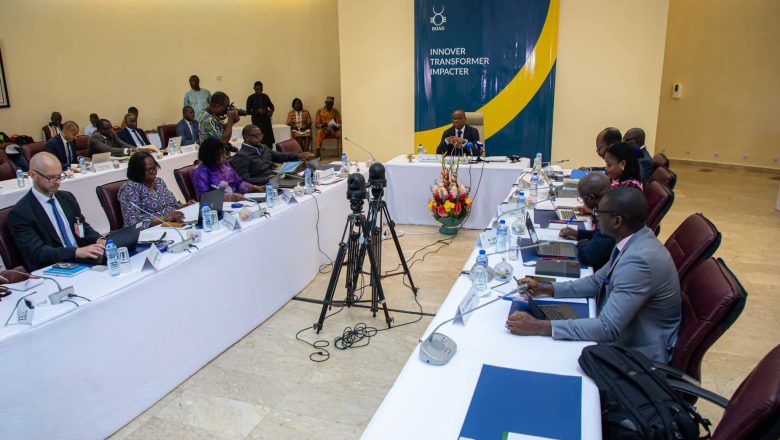
The West African Development Bank (BOAD) announced the approval of two new operations for Niger, amounting to 60.609 billion FCFA. These approvals were made during the bank's 151st ordinary session of its Board of Directors, held in Lomé. Serge Ekué, Director General of BOAD, confirmed the financial commitments, emphasizing the institution's dedication to fostering sustainable development across its member states. The funding is specifically designated to support Niger's critical agricultural and energy sectors, aiming to bolster the nation's productive capacities and improve living conditions.
Agricultural Development Support
The first financing package, totaling 30 billion FCFA, has been earmarked to bolster the intervention capacities of the National Office for Hydro-agricultural Development (ONAHA). This significant allocation aims to enhance ONAHA's operational capabilities in Niger, particularly in the domain of hydro-agricultural development. The funding is intended to support projects that will improve agricultural productivity and water management infrastructure within the country, key elements for a nation like Niger. Strengthening ONAHA's resources is expected to contribute to more efficient management of water resources for agricultural purposes, directly impacting food security and rural livelihoods in Niger. This investment reflects a strategic focus on developing critical infrastructure necessary for sustainable agricultural growth, ensuring better irrigation systems and improved land use practices. The 30 billion FCFA allocation shows BOAD's commitment to enhancing agricultural resilience and output in the face of environmental challenges.
Electricity Production Boost
The second operation, valued at 30.609 billion FCFA, will finance the Project to strengthen electricity production capacities (PRECAP2E) in Niger. This funding from the West African Development Bank (BOAD) is directed towards boosting the nation's energy infrastructure, a vital component for economic growth and social development. The PRECAP2E project specifically involves the deployment of diesel power plants, which will provide a reliable base load for electricity supply. Additionally, the initiative includes the installation of mini solar photovoltaic power plants, which will be equipped with battery storage systems to ensure consistent energy supply, even during periods of low sunlight. This strategic investment aims to enhance Niger's overall electricity production capabilities, diversify its energy mix, and reduce reliance on single energy sources. The combination of thermal and renewable energy sources is designed to provide a more strong and sustainable power grid, addressing the growing energy demands of the country.
BOAD's Regional Impact
During the same 151st ordinary session in Lomé, the West African Development Bank (BOAD) Board approved 11 new operations across West Africa, amounting to a total of 344.577 billion FCFA. These approvals show the bank's broader engagement within the region, extending beyond the specific projects financed in Niger, and highlight its role as a key development financier. The financial institution has been a significant contributor to development initiatives in the member states of the West African Economic and Monetary Union (UEMOA), supporting a wide array of sectors from infrastructure to social projects. Since its establishment in 1973, BOAD's cumulative financing for various projects and programs has reached 10,834.1 billion FCFA. This long-term financial commitment reflects the bank's consistent role in supporting economic and social development throughout the region, contributing to poverty reduction and regional integration.
Bank Leadership and Context
The West African Development Bank's (BOAD) Board of Directors convened its 151st ordinary session in Lomé, a key meeting point for regional financial decisions. During this meeting, led by Director General Serge Ekué, the board reviewed and approved the financing initiatives, showing the institution's ongoing commitment to economic development within its member states. The session provided the framework for the strategic allocation of funds for projects in various sectors, demonstrating BOAD's structured approach to addressing the developmental needs of the UEMOA region. The approval of these significant financial packages reinforces BOAD's mandate to promote balanced development and foster economic integration across West Africa.