Women displaced by insecurity in the Lake Chad basin have established an onion trade in Diffa, Niger, as a means to support their families and reconstruct their lives. These women, comprising both refugees and internally displaced persons, rely on this trade to generate income. The initiative allows them to regain economic stability following the disruptions caused by regional instability. For these women, who are refugees or internally displaced, the onion trade has become a vital pathway to support their families and rebuild their lives after the profound insecurity in the Lake Chad basin. This commercial endeavor provides not only financial sustenance but also a sense of purpose and community in challenging circumstances.
Roots of Displacement
For over a decade, the Diffa region has hosted thousands of individuals displaced by violence. This prolonged period has seen a continuous influx of people seeking safety and stability. Boko Haram and its affiliates have perpetrated this violence across the Lake Chad basin, forcing large-scale population movements. These attacks have impacted Niger, Nigeria, Chad, and Cameroon, leading to significant displacement towards safer areas within the region. The persistent threat posed by these groups has compelled countless families to abandon their homes and livelihoods, creating a complex humanitarian situation. Families fleeing the insecurity have found refuge in several communes of the Diffa region, where local communities have welcomed and housed them. This process has facilitated their gradual integration into the local economy, contributing to the region's demographic and economic landscape. The welcoming stance of the host communities has been key in enabling displaced individuals to begin the arduous process of rebuilding their lives.
Economic Integration Through Commerce
Displaced populations in Diffa have largely integrated into the local economy through various commercial activities. Many have engaged in small commerce, agri-food processing, and other income-generating ventures. These efforts include the sale of agricultural products, providing a key economic lifeline for families affected by insecurity in the Lake Chad basin. The adaptability of these individuals, particularly women, in establishing new forms of economic engagement has been remarkable. The shift towards such activities allows individuals to re-establish livelihoods and contribute to the region's economic fabric. This approach has become a primary method for displaced women, specifically, to support their households and rebuild their lives after fleeing violence. Their involvement in these sectors facilitates a degree of stability and self-sufficiency within the host communities, fostering a sense of normalcy and independence. These diverse commercial undertakings are not merely about survival; they represent a proactive effort to contribute to the economic vitality of their new homes.
Marketplace of Resilience
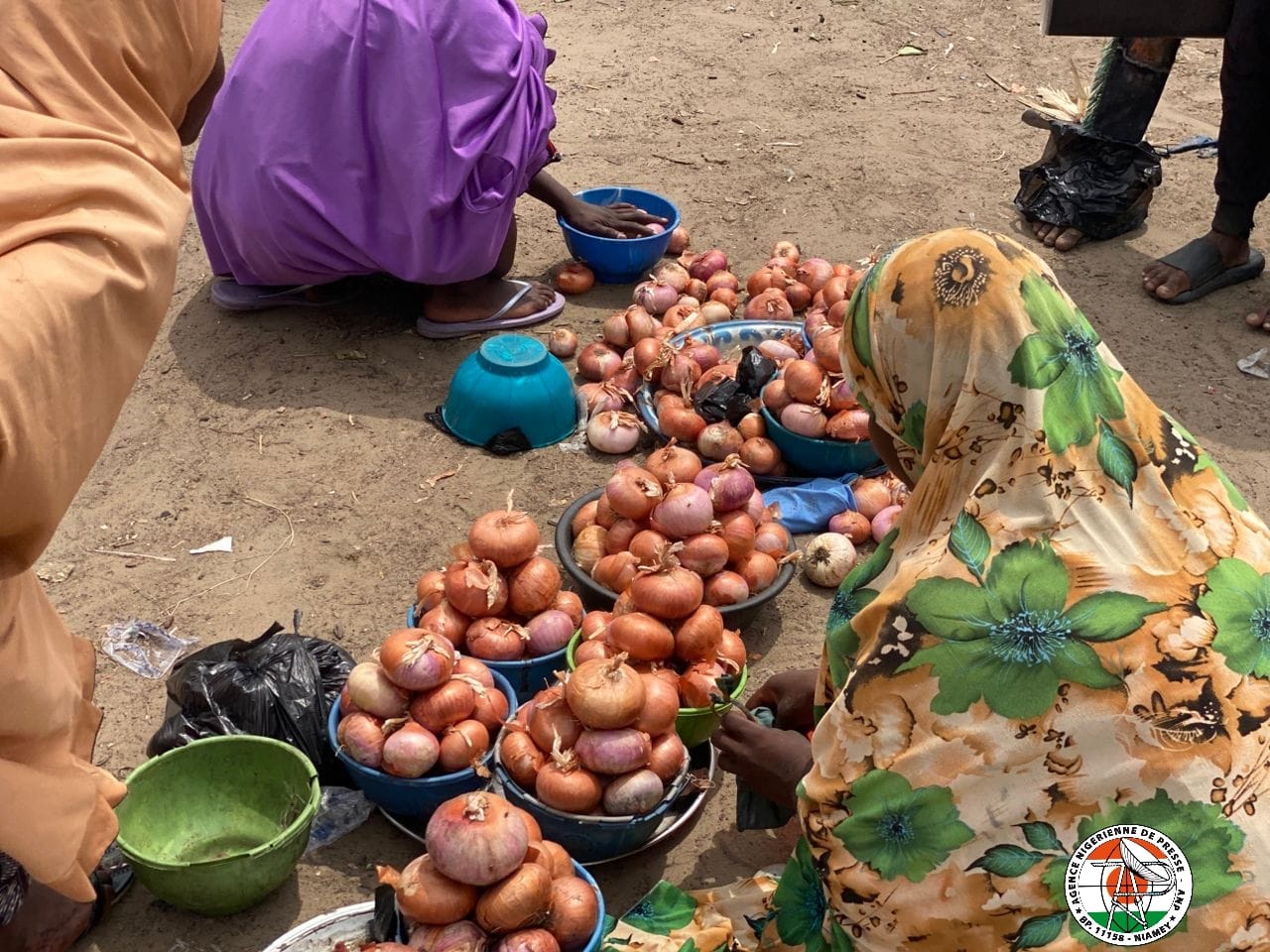
The onion stalls in Diffa's markets represent a dynamic economic activity, showcasing the efforts of displaced populations to rebuild their livelihoods. These vibrant marketplaces serve as key hubs where women, many of whom are refugees and internally displaced persons, engage in commerce. The onion stalls in Diffa's markets visibly demonstrate this dynamic economic activity, bustling with trade and interaction. Their participation in the onion trade has become a significant source of income, enabling them to support their families and contribute to the local economy. This commercial engagement reflects a broader pattern of economic integration within the Diffa region, where displaced individuals utilize various small businesses to regain financial stability. The bustling activity at these stalls shows the resilience of communities adapting to new circumstances and establishing sustainable economic practices. Each transaction at these stalls not only provides income but also reinforces the dignity and self-reliance of the women involved, transforming market spaces into symbols of hope and perseverance against adversity.