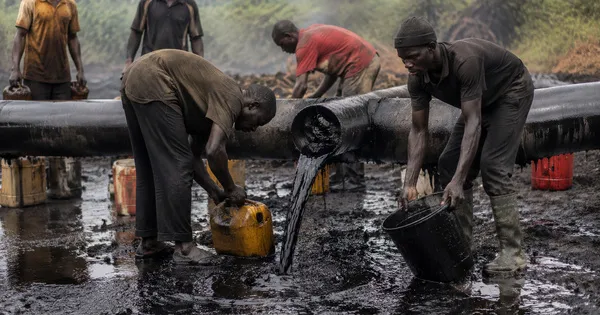
An illegal oil siphoning operation in Nigeria's Rivers State resulted in a tragedy, with dozens feared dead. The incident occurred during an attempt to illicitly extract crude oil, noting the perilous nature of such activities in the region. Several people involved in the siphoning activity are reportedly still missing following the event, according to local sources. The delta du Niger region has previously seen similar incidents involving illegal oil bunkering, showing a persistent challenge for authorities and communities alike.
The Deadly Operation
A local organization has claimed that at least 37 individuals perished after inhaling toxic fumes during an attempt to recover crude oil. The fatalities reportedly occurred at an illegal loading point in Nigeria's Rivers State, a site not sanctioned for any oil extraction. The organization stated that those who died were trying to extract crude oil from the illicit site when they were overcome by the fumes, which are often highly concentrated and lethal in such confined, unregulated environments. This tragic incident adds to the growing concerns over the dangers associated with illegal oil siphoning operations in the region, where makeshift methods often lead to catastrophic outcomes. Local sources indicate that several people involved in the siphoning activity are still unaccounted for following the event, raising fears that the death toll could yet climb. The delta du Niger area has witnessed numerous similar incidents related to illegal oil bunkering in the past, each bringing with it a heavy human and environmental cost.
Widespread Oil Theft Crisis
Oil theft continues to be a significant challenge in Nigeria's Niger Delta region, according to reports from local authorities and environmental groups. This illicit activity is not merely an economic crime but a widespread issue that contributes to substantial economic losses for the country and poses severe risks to local communities and ecosystems. Frequent illegal connections to oil facilities are a primary cause of these devastating incidents. Such unauthorized tapping often leads to destructive fires, widespread environmental pollution that devastates farmlands and fishing waters, and fatal accidents among those involved in the siphoning operations. The dangers are compounded by the volatile nature of crude oil itself and the makeshift, often dangerous, methods used to extract it, creating hazardous conditions for individuals and the surrounding ecosystem. These incidents show the persistent difficulties in securing oil infrastructure across the region, despite ongoing efforts by security forces. The continuous siphoning of crude oil represents a major threat to both human life and environmental stability in the Niger Delta.
Official Response and Investigation
The Nigerian police confirmed the incident and announced the opening of an investigation into the fatal oil siphoning tragedy. This official response follows reports of numerous deaths at an illegal loading point in Rivers State, prompting an urgent need for accountability and prevention. The authorities are expected to examine the circumstances surrounding the fatalities, including the exact cause of death and the operational methods employed by the illegal siphoning ring. The investigation will delve into the broader illicit operation, seeking to identify and apprehend those responsible for organizing and profiting from such dangerous ventures. The phenomenon of oil theft, of which this incident is a part, also costs billions to the Nigerian oil sector annually, severely impacting the nation's revenue. These significant financial losses impact the nation's economy and its capacity to invest in vital public services such as healthcare, education, and infrastructure. The ongoing investigations will likely consider the broader implications of such illegal activities on both human lives and national revenue, aiming to address the systemic issues that enable these tragedies to occur.