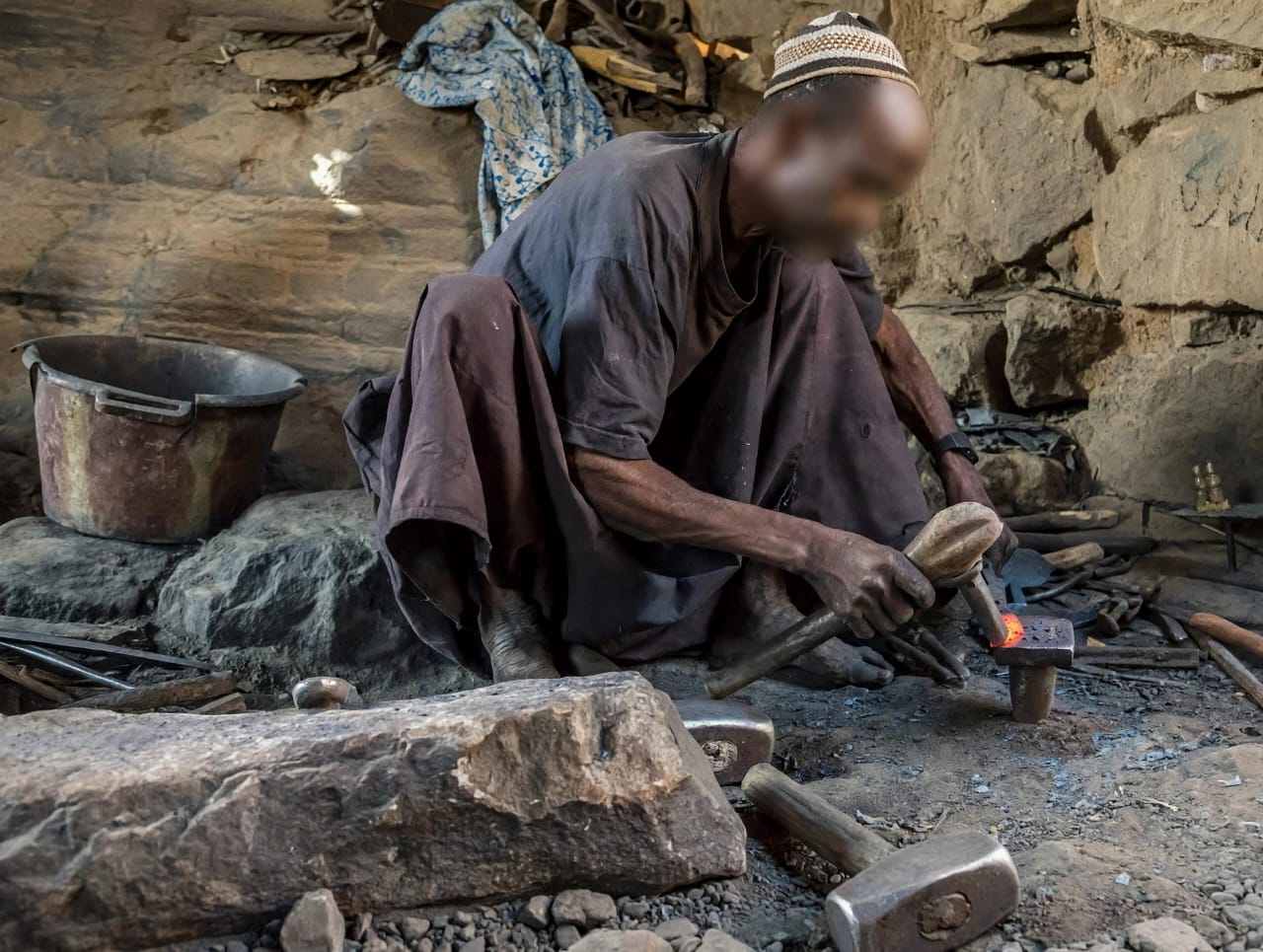
At Niamey's Marché Katako, the rhythmic sound of hammers striking metal and sparks flying from the forge mark the daily work of blacksmiths. Dans un coin du marché Katako de Niamey, les coups de marteau résonnent au rythme du travail du forgeron, tandis que des étincelles jaillissent du feu, painting a vivid picture of their craft. Mahaman, a blacksmith from Bouza, has practiced this trade for 47 years. "Je suis né dans ce métier. J’observais mon père depuis mon enfance avant de commencer à pratiquer," Mahaman stated, adding, "Aujourd’hui, je suis capable de fabriquer tous les objets destinés à l’agriculture. Je n’exerce aucune autre activité en dehors de la forge." He further explained the benefits of his profession: "Grâce à ce métier, j’ai pu me marier avec deux femmes et nourrir mes huit enfants. J’en tire donc beaucoup de bénéfices." The dedication of artisans like Mahaman ensures that essential tools continue to be produced for the local community.
A Master Craftsman's Legacy
Blacksmiths in Niamey are preserving skills passed down through generations, a tradition exemplified by Mahaman. Les forgerons perpétuent un savoir-faire transmis de génération en génération, ensuring the continuity of this vital craft. Mahaman learned forging techniques from his father, starting his apprenticeship at a young age. "Je suis né dans ce métier. J’observais mon père depuis mon enfance avant de commencer à pratiquer," Mahaman stated, adding, "Aujourd’hui, je suis capable de fabriquer tous les objets destinés à l’agriculture. Je n’exerce aucune autre activité en dehors de la forge." Mahaman, who has practiced his trade for 47 years, emphasizes the positive impact of his work on his life. "Grâce à ce métier, j’ai pu me marier avec deux femmes et nourrir mes huit enfants. J’en tire donc beaucoup de bénéfices," he said, noting the economic stability his craft provides. His commitment shows the personal and communal value derived from traditional blacksmithing.
Tools for the Land
Mahaman, a blacksmith in Niamey, specializes in crafting essential agricultural tools, including hoes, dabas, knives, axes, and machetes. Mahaman fabrique des houes, des dabas, des couteaux, des haches, des machettes et divers autres outils de travail destinés à l'agriculture, meeting the specific needs of local farmers. He stated, "Je suis né dans ce métier. J’observais mon père depuis mon enfance avant de commencer à pratiquer. Aujourd’hui, je suis capable de fabriquer tous les objets destinés à l’agriculture. Je n’exerce aucune autre activité en dehors de la forge." This focus on farming implements shows his role in supporting the agricultural sector, which is key for the region's food security. Mahaman also noted the personal benefits of his trade, explaining, "Grâce à ce métier, j’ai pu me marier avec deux femmes et nourrir mes huit enfants. J’en tire donc beaucoup de bénéfices." The demand for blacksmiths' work fluctuates, with the highest volume of orders typically occurring at the beginning of the agricultural season. L'activité du métier de forgeron varie selon les périodes, with farmers preparing their fields.
Challenges and Resilience
The blacksmithing trade in Niamey faces several constraints, including challenges in securing a consistent supply of iron. Le métier de forgeron est confronté à plusieurs contraintes, including the procurement of raw materials. Blacksmiths also contend with competition from industrially produced tools, which often offer alternatives to handcrafted items. Another significant difficulty for artisans is the irregular nature of orders. Demand for their work fluctuates, leading to periods of high activity followed by slower times, making it challenging to maintain a steady income and workflow. These factors collectively present obstacles to the sustained practice and profitability of traditional blacksmithing, yet artisans like Mahaman persist.
Enduring Value
Niamey's blacksmiths, like Mahaman, demonstrate the enduring value of their craft by providing essential agricultural tools to the community. Their traditional skills contribute significantly to local farming practices, ensuring the availability of handmade implements that are often preferred for their durability and specific design. The continued reliance on these artisans notes the lasting importance of their work in the region, despite modern challenges. Their dedication ensures that a vital part of Niamey's cultural and economic fabric remains strong.