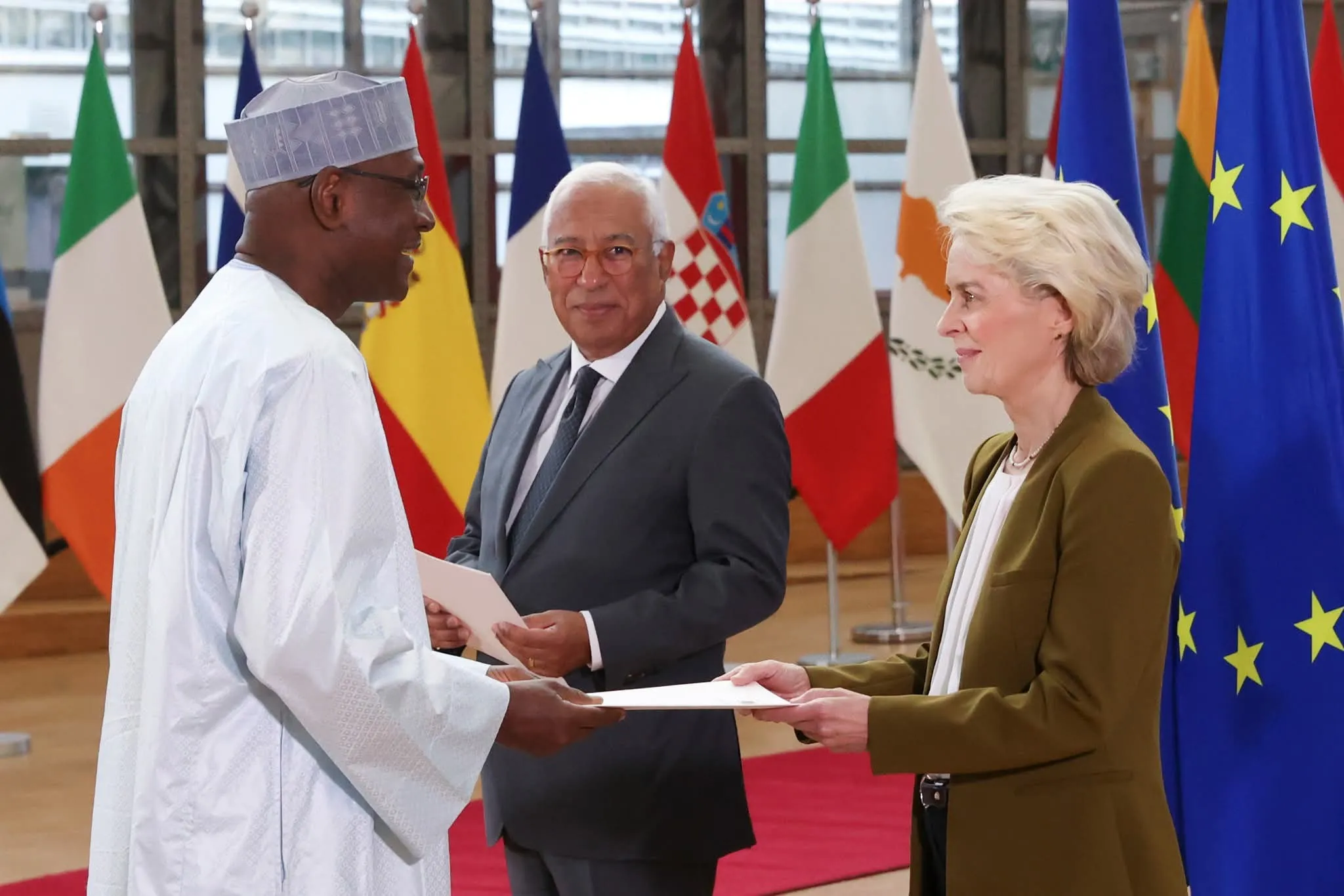
Adamou Moumouni presented his credentials as ambassador extraordinary and plenipotentiary of Niger to the European Union on Thursday, 22 October 2026. These diplomatic documents were formally submitted to the president of the European Council, António Costa, and the president of the European Commission, Ursula von der Leyen. The ceremony in Brussels confirmed the appointment of Moumouni to represent Niger within the institutions of the European Union. The official proceedings concluded the accreditation process for the new ambassador. This formal submission of credentials serves as the primary mechanism for the ambassador to assume his full diplomatic functions and responsibilities. By delivering these documents to António Costa and Ursula von der Leyen, Adamou Moumouni established his official standing within the diplomatic corps operating in Brussels.
Diplomatic Credentials Ceremony Details
Adamou Moumouni participated in a group event alongside eighteen other diplomats during the proceedings in Brussels. These nineteen representatives from different countries presented their credentials to the European Council and European Commission leadership on 22 October 2026. The ceremony served as the formal accreditation point for the delegation of envoys currently arriving to serve within the European Union. Officials organized the event to process the official documentation for all nineteen individuals simultaneously. Adamou Moumouni completed his submission as part of this collective diplomatic intake. The session finalized the requirements for each of the nineteen ambassadors to begin their official tenures representing their respective nations. This process involved the physical handover of documentation to the European Council and European Commission leadership to verify the credentials of each envoy. The nineteen diplomats were processed in a single session, ensuring that all necessary diplomatic protocols were observed for the incoming representatives.
Historical Context of Relations
The European Union suspended its budgetary support and security cooperation with Niamey following the events of 26 July 2023. This policy shift altered the nature of the partnership between the European Union and Niger. The suspension of these specific cooperation frameworks marked a significant change in the diplomatic engagement between the European Union and the authorities in Niamey.
João Cravinho visited Niamey on 20 January 2026 in his capacity as the special representative of the European Union for the Sahel. He engaged in discussions with Nigerien authorities regarding the potential for strengthening dialogue and cooperation between the two sides. This visit by João Cravinho was intended to facilitate a direct exchange of views between the European Union and the leadership in Niamey.
The Nigerien government issued a formal protest in March 2026 regarding a resolution adopted by the European Parliament. This resolution called for the release of Mohamed Bazoum. Officials in Niamey characterized the parliamentary action as interference in the internal affairs of Niger. The protest noted the ongoing friction between the European Parliament and the government in Niamey concerning the situation of Mohamed Bazoum. The formal objection submitted by the Nigerien government showed the sensitivity of the issues currently affecting the bilateral relationship. The diplomatic exchanges following the March 2026 resolution reflected the differing perspectives held by the European Parliament and the Nigerien government regarding the status of Mohamed Bazoum and the broader political situation in the country.