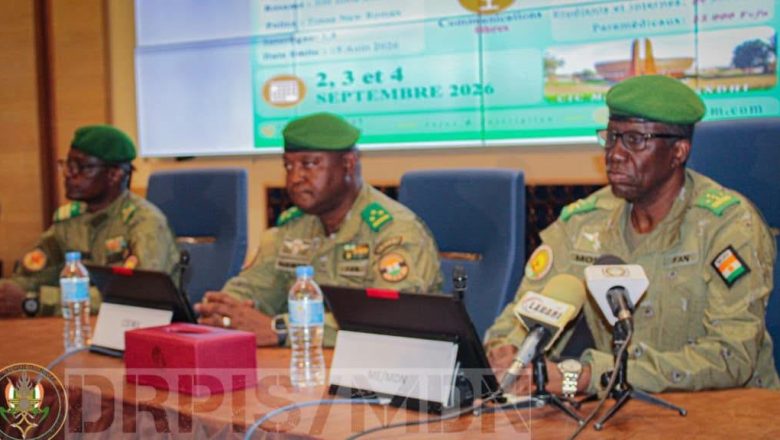
Niamey is launching the second edition of the Journées médico-chirurgicales (Medical-Surgical Days) and the congress of the Réseau sahélien de médecine militaire (Sahelian Network of Military Medicine). These significant events show a concerted effort to enhance Niger's military medical capabilities. The simultaneous launch of both initiatives notes a strategic push towards improving healthcare provision for military personnel and fostering regional collaboration in military medicine. Experts from eight nations, including Russia, Algeria, Italy, Burkina Faso, and Mali, are actively participating in the events, bringing diverse perspectives and specialized knowledge to the discussions and training sessions. Niger's executive is deploying a full program to restructure military health capabilities under the leadership of the head of state, General Abdourahamane Tiani. This ambitious program seeks to fundamentally strengthen the nation's military medical infrastructure and expertise, ensuring a more strong and resilient healthcare system for its armed forces.
Strategic Medical Modernization
The current modernization efforts in Niger's military health sector are specifically designed to meet the evolving demands of contemporary conflict. The primary goal is to design a medical doctrine specifically adapted to new-generation warfare, according to official statements. This forward-looking approach acknowledges the changing nature of military operations and the need for medical responses that are agile, effective, and technologically advanced. As part of this strategic overhaul, the construction of a regional military hospital of reference is nearing completion, promising to significantly upgrade the standard of care available. Concurrently, existing interior health centers are undergoing conversion into Level 2 hospitals to enhance local medical capacity across various regions. This upgrade aims to decentralize advanced medical services and make them more accessible to military personnel stationed outside the capital. Further initiatives include a full modernization of technical platforms, ensuring that medical facilities are equipped with advanced diagnostic and treatment technologies. A concerted effort is also underway to strengthen the staff of anesthesiologist-resuscitators, a critical component for managing severe combat injuries and complex medical cases. These measures are complemented by improvements to medical evacuation chains, ensuring more efficient and rapid transport of personnel from combat zones to medical facilities.
Regional Health Network Vision
The Réseau sahélien de médecine militaire (Sahelian Network of Military Medicine) actively promotes technical cooperation among its member armed forces and their allies. This network aims to foster a truly collaborative environment for military medical advancements across the Sahel region, sharing best practices and resources. The network's activities are key for building collective capacity in a region facing complex security challenges. Member states within the network are working towards establishing a unified medico-surgical response system, a vital step towards harmonizing medical protocols and improving interoperability. This system is designed to effectively manage front-line emergencies, providing key and timely medical support in combat zones where rapid intervention can be life-saving. Additionally, the network's vision includes addressing the health consequences that arise from mass population displacement within the Sahel, ensuring a coordinated and full medical approach to humanitarian crises that often accompany regional conflicts. This holistic approach recognizes the broader impact of instability on public health. The platform also facilitates the transfer of scientific innovations specifically for treating complex trauma related to armed engagements, ensuring that advancements in battlefield medicine are disseminated efficiently among members.
National Sovereignty and Autonomy
The Alliance des États du Sahel (AES) is pursuing a goal of complete autonomy in critical medical areas, according to official statements. This objective includes independently training surgeons and managing health emergencies without external reliance, thereby bolstering national self-sufficiency in a vital sector. The emphasis on self-sufficiency reflects a broader strategic shift among AES member states to enhance national capabilities and reduce dependence on foreign assistance in sensitive sectors like military health. This drive for autonomy is integral to their collective vision for regional stability and sovereign operational capacity within the Sahel, allowing them to control their own medical destiny. This strategic independence is seen as fundamental to safeguarding national interests and ensuring that medical support aligns precisely with national security objectives.
Operational Imperatives
The platform facilitates the transfer of scientific innovations specifically for treating complex trauma related to armed engagements. This focus is critical for enhancing the medical response capabilities of military personnel operating in conflict zones, where injuries are often severe and require specialized care. The initiative aims to ensure that frontline medical teams have access to the latest advancements in battlefield medicine, from surgical techniques to rehabilitation protocols. By sharing advanced research and practical applications, the network contributes directly to improving survival rates and long-term outcomes for soldiers. This continuous learning and adaptation are essential for maintaining a high standard of military medical care in dynamic operational environments.