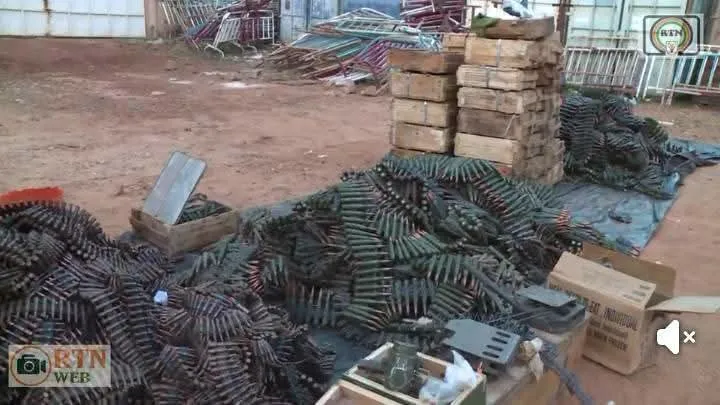
Nigerien security forces (FDS) recovered a substantial military arsenal following operations to quell a mutiny that occurred at Base 101 in Niamey during the night of August 28-29, 2026. The FDS intervened after the uprising, securing the base and confiscating a large cache of weapons. This decisive action by the Nigerien security forces was critical in neutralizing the threat posed by the mutiny and regaining control of vital military assets. The swift response ensured the containment of the situation within Base 101, preventing further escalation. State broadcaster RTN subsequently presented a portion of the seized material during its news broadcast on Wednesday, September 2, 2026, showcasing the extent of the recovered arms. The national television report noted the successful efforts to neutralize the mutiny and secure the military assets involved. The public display served to inform citizens about the outcome of the security operation and the significant quantity of weaponry that had been recovered.
Arsenal Details Unveiled
The recovered material from Base 101 includes 34 Toyota pick-ups, each equipped with various weapons. These vehicles are commonly adapted for military use, often referred to as "technical" vehicles, and their recovery in such numbers indicates a considerable logistical and operational capability among the mutineers. The presence of weaponry mounted on these vehicles suggests an intention for mobile combat operations. Security forces also recovered two light armored vehicles, one of which was found to be destroyed. The damage to one of these armored vehicles points to potential clashes or resistance during the FDS operation to retake the base. The intact vehicle, along with the damaged one, represents a significant asset in military engagements. Several dozen motorcycles were among the seized items. Motorcycles can be used for rapid deployment, reconnaissance, or quick escapes, noting another dimension of the logistical support available to those involved in the uprising. The arsenal further contained 382 AK-47 rifles. This large quantity of assault rifles shows the substantial firepower that was present at the base and subsequently recovered by the FDS. The AK-47 is a widely used and reliable weapon, often favored for its durability and ease of use in various environments.
Among the heavier weaponry, 36 RPG-7 rocket launchers were recovered. These anti-tank weapons are capable of engaging armored vehicles and fortifications, representing a serious threat if deployed. The recovery of such a large number of RPG-7s indicates a well-equipped group. Officials detailed the recovery of 30 BKM machine guns and six 12.7 mm machine guns. The BKM machine guns are typically used for infantry support, providing sustained suppressive fire. The 12.7 mm machine guns, often mounted on vehicles, offer heavy firepower against personnel, light vehicles, and even low-flying aircraft. Additionally, four 14.5 mm cannons were part of the cache. These heavy cannons are formidable weapons, usually mounted on armored vehicles or anti-aircraft platforms, capable of delivering devastating firepower. Their presence signifies a substantial military capability. Long-range precision weapons included four Dragunov sniper rifles. These sniper rifles are designed for accuracy at extended ranges, indicating a capacity for precision engagements. An 82 mm mortar was also secured by the Nigerien security forces. Mortars provide indirect fire support, capable of hitting targets behind cover and delivering explosive ordnance over a wide area. The seized items also comprised 17 automatic pistols and multiple boxes of ammunition. The pistols serve as personal defense weapons, while the extensive ammunition supply ensures sustained combat operations for all recovered firearms.
Recovered Equipment Inventory
The inventory of recovered equipment included several dozen magazines, indicating a substantial supply for the seized firearms. These magazines are essential components for rapid reloading and continuous fire, reinforcing the operational readiness of the recovered weapons. Nigerien security forces also secured various communication equipment during their operations at Base 101. This communication gear is key for coordinating movements, intelligence gathering, and maintaining command and control during military operations, suggesting a structured and organized element within the mutiny. The full recovery efforts followed the mutiny at the Niamey base during the night of August 28-29, 2026. The successful operation by the FDS prevented these significant military assets from falling into unauthorized hands or being used for further destabilization. The FDS intervention led to the neutralization of the uprising and the confiscation of the extensive military cache. This swift and effective action by the security forces was key in restoring order and securing the strategic military installation. State broadcaster RTN displayed a portion of the seized material on Wednesday, September 2, 2026, during its news broadcast, confirming the scope of the recovered arsenal. The broadcast provided visual evidence of the successful operation and the diverse array of weapons and equipment that had been recovered.
Official Justification For Display
Nigerien authorities stated that the public presentation of the recovered arsenal was intended to document the severity of the military crisis. By showcasing the weaponry, officials aimed to transparently communicate the gravity of the situation to the populace and international observers. The display on state broadcaster RTN aimed to inform the public about the scale of the weapons recovered after the mutiny at Base 101 in Niamey. This public disclosure served to reassure citizens that the security forces had successfully addressed a significant threat. Officials sought to show the seriousness of the August 28-29 incident and the extent of the threat it posed. The visual evidence of the recovered arms provided tangible proof of the potential danger averted by the FDS intervention. The exhibition of the confiscated arms and vehicles served as official confirmation of the military assets involved in the uprising. This official confirmation aimed to leave no doubt about the nature and scale of the mutiny and the subsequent security operation. The authorities' decision to display the arsenal publicly was a deliberate act to manage public perception and demonstrate control following the unsettling event.