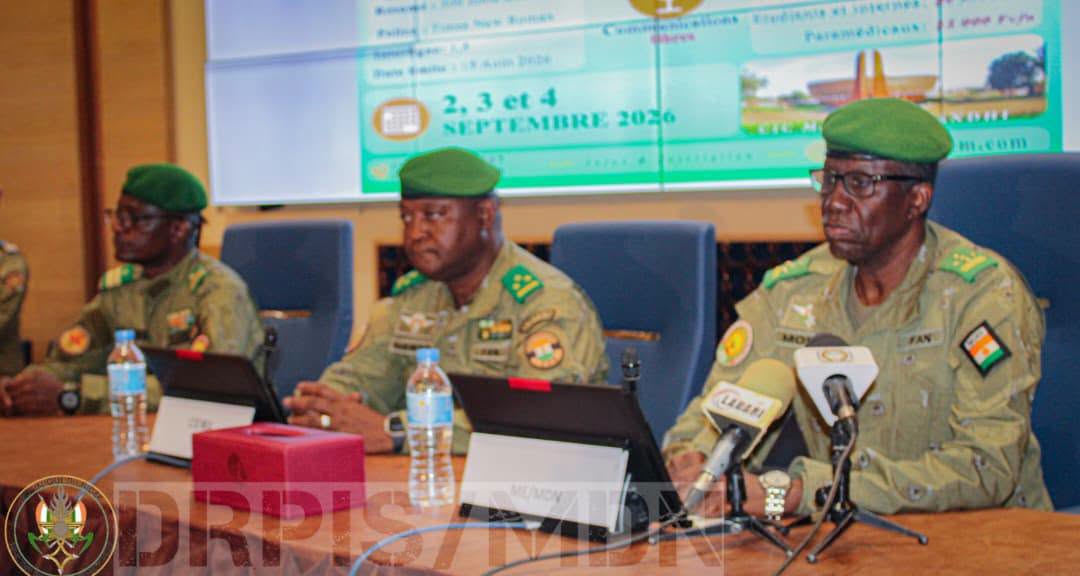
Niamey, Niger – The second medico-surgical days dedicated to the critical care of war-wounded commenced in the capital city of Niamey on Thursday, September 3, 2026. This significant event, a cornerstone for advancing military medical practices, was meticulously organized by the Direction Centrale du Service de Santé des Armées et de l’Action Sociale. The overarching initiative aims to significantly enhance military medical capabilities across the region and foster greater autonomy in managing the complex and often life-threatening injuries sustained on the battlefield. The opening ceremony showed the strategic importance placed on developing strong and self-sufficient military health services, particularly in environments marked by insecurity.
Focus on War-Wounded Care
The central theme guiding the second medico-surgical days is profoundly relevant to the contemporary challenges faced by military forces: "Quelles stratégies face aux urgences sanitaires en situation d’insécurité ? La prise en charge des blessés de guerre," which translates to "What strategies for health emergencies in insecurity situations? The care of war-wounded." This carefully chosen theme directly addresses the critical medical challenges confronting military personnel operating in conflict zones and areas of instability. The event is meticulously designed to serve as a vital forum for participants to engage in a full exchange of experiences, share best practices, and discuss innovative strategies for managing battlefield injuries effectively.
Beyond immediate care, the gathering also aims to facilitate deep reflection on the specific challenges faced by military health services operating in contexts of insecurity and during active military operations. These discussions are expected to cover a wide array of aspects pertinent to emergency medical care, encompassing everything from the key initial response at the point of injury to long-term rehabilitation processes for service members injured in combat. The insights gained and strategies developed during these days are anticipated to have a lasting impact on how military medical personnel approach their vital mission, ultimately enhancing the survival rates and recovery prospects for those wounded in service.
Strengthening Autonomy and Capacity
A testament to its regional and international significance, eight countries are actively participating in these key medico-surgical days: Algeria, Benin, Burkina Faso, Guinea, Italy, Mali, Russia, and Togo. This diverse participation notes a shared commitment to improving military healthcare standards and fostering international cooperation. The Minister of State, Minister of National Defense, General of the Army Salifou Mody, delivered a keynote address, stating unequivocally that these days reflect the resolute will of the Sahelian States Confederation (AES) countries to strengthen their autonomy in military medicine. This emphasis on self-reliance is a strategic imperative for nations seeking to independently manage their defense and security needs.
General Mody further commented that over the past few years, army health services within the participating nations, and particularly in Niger, have considerably strengthened their capacities. This enhancement is not merely theoretical but is backed by tangible progress. Significant investments have been made in modernizing health infrastructure, ensuring that medical facilities are equipped with the latest technology and resources. Concurrently, there has been a continuous focus on the training of health personnel, equipping them with advanced skills and knowledge required for battlefield medicine. Substantial improvements have been implemented in the medical evacuation chain, ensuring that injured personnel receive prompt and efficient transport to higher levels of care. These concerted efforts align with the broader objective of achieving greater self-reliance in managing battlefield injuries and addressing health emergencies within the military context. The participation of multiple nations at this event shows a collaborative approach to enhancing regional medical capabilities, fostering a network of support and shared expertise. The conference serves as an invaluable platform for these nations to share advancements, discuss emerging challenges, and collectively refine strategies aimed at improving military healthcare provision across the board.
Context and Future Outlook
The current medico-surgical days mark the second edition of this vital event, building significantly on the foundational inaugural gathering held in 2024. This continuity demonstrates a sustained commitment to the advancement of military medicine. During his address, the Minister of State, Minister of National Defense, General of the Army Salifou Mody, affirmed the Nigerien authorities' unwavering commitment to the continued reinforcement of the Army Health Service. This steadfast commitment aligns smoothly with the national strategic priorities of Niger, which recognize the health and well-being of its military personnel as critical.
Under the visionary leadership of General of the Army Abdourahamane Tiani, President of the Republic, Head of State, and Supreme Commander of the Armed Forces, strengthening the Army Health Service is considered a top priority for the Ministry of National Defense. This strategic focus aims to ensure strong and full medical support for military personnel, recognizing that a healthy and well-cared-for force is essential for national security. The reiteration of this commitment by the highest authorities shows the long-term vision for a resilient and autonomous military health system capable of meeting any challenge. The ongoing efforts and collaborative spirit evident at these medico-surgical days are poised to significantly contribute to achieving this critical objective, ensuring that military personnel receive the highest standard of care in all circumstances.