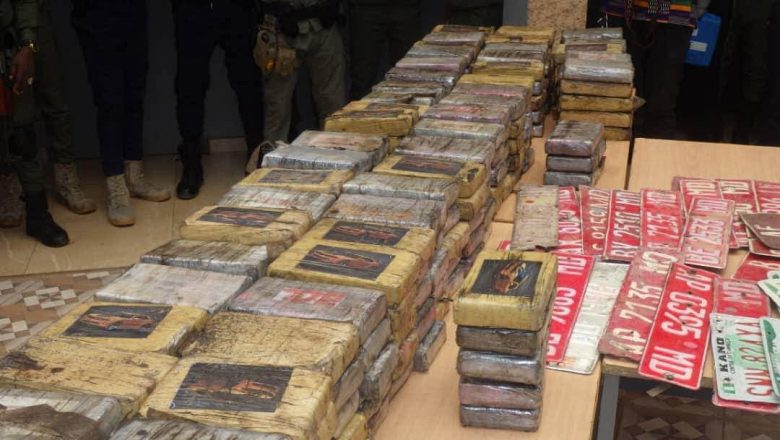
Niger's specialized service, the Office Central de Répression du Trafic Illicite des Stupéfiants (OCRTIS), plays a significant and increasingly critical role in combating international drug trafficking within the Sahel region. Positioned strategically within West Africa, Niger has emerged as a major actor in the regional and international fight against illicit narcotics. The United Nations Office on Drugs and Crime (UNODC) identifies the Sahel as a primary transit corridor for cocaine and other narcotics destined for international markets, noting the strategic importance of Niger's efforts. The Director General of OCRTIS, Aboubacar Issaka Oumarou, has reported substantial seizures, showing the scale of the challenge and the effectiveness of the agency's operations. These seizures include a remarkable 17 tons of cannabis, 214.635 kg and 268.045 kg of cocaine in separate operations, 800,000 ecstasy tablets, and 450,000 pregabalin tablets. The Police Nationale du Niger has consistently reiterated its unwavering commitment to sustained and rigorous efforts against illicit trafficking across the region, recognizing the profound impact of these criminal activities on security and development.
Major Seizures Highlight Operational Prowess
OCRTIS's operational prowess is consistently demonstrated through its impressive record of major drug seizures. Each successful interdiction not only removes significant quantities of illicit substances from circulation but also provides key intelligence for further investigations into transnational criminal networks.
One of the most notable operations occurred on March 2, 2021, when authorities seized an unprecedented 17 tons of cannabis resin in Niamey, the capital city. This massive consignment of cannabis was meticulously tracked, and investigations confirmed its origin in Lebanon. The illicit cargo had transited through the bustling port of Lomé before entering Nigerien territory, with its ultimate destination confirmed as Libya. In connection with this substantial seizure, law enforcement officials arrested thirteen individuals, who were subsequently taken into custody for their alleged involvement in the trafficking operation. The sheer volume of the seized cannabis resin showed the scale of the international drug trade, and the estimated value of this particular cannabis seizure was placed at tens of millions of dollars, representing a significant financial blow to the criminal organizations involved.
In January 2022, OCRTIS operatives achieved another significant victory against drug trafficking, intercepting 214.635 kilograms of cocaine in the remote and vast Agadez region. This operation further noted the agency's reach and capability to operate in challenging environments. The estimated street value of this cocaine seizure exceeded 11 billion FCFA, reflecting the high profitability of cocaine trafficking for criminal syndicates. During the same meticulously planned operation, authorities also confiscated a substantial quantity of 450,000 pregabalin tablets, which are often diverted for illicit use, alongside various handguns, several vehicles modified for clandestine transport, and sophisticated satellite communication equipment, all indicative of the advanced logistical capabilities of the traffickers.
OCRTIS announced yet another highly significant seizure on May 25, 2026, when 268.045 kilograms of cocaine were discovered in Zinder, a major city in south-central Niger. This illicit cargo was found expertly concealed within specially constructed, hidden compartments located underneath a truck's trailer, showcasing the sophisticated methods employed by drug traffickers to evade detection. Investigations into this particular shipment revealed a complex and extensive trafficking route that spanned multiple West African nations. The route included Ghana, Togo, Benin, Nigeria, Niger, and was ultimately destined for Libya, illustrating the transnational nature of these criminal enterprises. Eight people were arrested in conjunction with the May 25, 2026, cocaine seizure, facing charges related to international drug trafficking. This operation represents one of the most substantial cocaine seizures made on Nigerien soil to date, further cementing Niger's critical role in disrupting the flow of narcotics through the Sahel.
Earlier, on September 29, 2025, OCRTIS successfully seized 51.7 kilograms of cocaine in Gaya, a town situated on Niger's southern border with Benin. This seizure, while smaller in volume than the Zinder operation, demonstrated the consistent pressure OCRTIS applies across various entry and transit points within the country.
Dismantling Networks and Evolving Tactics
Beyond individual seizures, OCRTIS has been instrumental in dismantling entire transnational drug networks, thereby disrupting the organizational structures that facilitate illicit trade. These efforts are key for long-term impact on drug trafficking.
On February 9, 2026, a major coordinated operation spanning multiple locations including Illéla, Tahoua, and Niamey resulted in the successful dismantling of a significant transnational drug network. This extensive and meticulously planned effort led to the seizure of a staggering 800,000 ecstasy tablets. The illicit tablets were subsequently valued at nearly 8 billion FCFA, representing an enormous financial blow to the network's operational capabilities and profitability. This operation showed OCRTIS's capacity to conduct complex, multi-jurisdictional investigations and bring down well-established criminal organizations.
Authorities have also targeted other drug networks involved in various illicit substances in recent years, demonstrating a full approach to combating all forms of drug trafficking. In 2018, law enforcement successfully seized 110,000 tramadol tablets in Bitinkodji, effectively interrupting a notable shipment of illicit pharmaceuticals that pose significant public health risks. In 2020, security forces in Niamey meticulously dismantled several networks involved in cannabis trafficking, demonstrating ongoing and adaptive efforts to disrupt various drug routes and supply chains within the capital and surrounding areas.
Drug traffickers operating in the region employ increasingly sophisticated techniques to evade detection by law enforcement agencies. These methods include modifying vehicles with secret compartments, often ingeniously hidden within chassis, fuel tanks, or cargo areas, to clandestinely conceal illicit cargo. Traffickers also heavily utilize advanced satellite phones for covert communication, allowing them to coordinate operations across vast distances without fear of traditional cellular interception. They engage in complex cross-border financial schemes to manage their illicit proceeds, funneling money through various channels to launder funds and finance future operations. These evolving and intricate tactics necessitate continuous adaptation, investment in technology, and enhanced training from law enforcement agencies like OCRTIS to stay ahead of criminal organizations.
OCRTIS's Strategy and International Role
OCRTIS bases its operational framework on a strong combination of intelligence gathering, proactive surveillance, and thorough judicial investigations to effectively combat drug trafficking within the vast and challenging Sahel region. The specialized service has made significant strides in enhancing its capabilities, particularly in the realm of technical investigation, utilizing advanced forensic tools and analytical methods to trace illicit substances and identify key players within criminal networks.
OCRTIS also intensified its international cooperation efforts, forging strong partnerships with regional and global law enforcement bodies. This collaborative approach is critical for addressing the inherently transnational nature of drug trafficking, as illicit supply chains often span multiple countries and continents. By working closely with international partners, OCRTIS facilitates the disruption of these complex supply chains, sharing intelligence, coordinating joint operations, and ensuring that criminals cannot easily escape justice by crossing borders. This commitment to international collaboration shows Niger's dedication to being a responsible and effective partner in the global fight against organized crime and drug trafficking.
