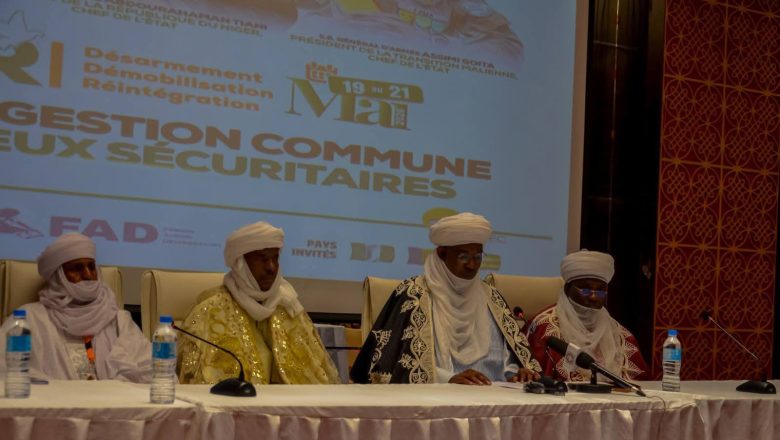
The Alliance des États du Sahel (AES) forum on Disarmament, Demobilization, and Reintegration (DDR) concluded in Niamey on Thursday, May 21, 2026, after a productive three-day session. This significant gathering brought together representatives from the three Alliance states to address critical security challenges facing the region. The forum aimed to harmonize understanding of the current security landscape and design collective responses to the alarming expansion of terrorist armed groups within the AES confederate space. Throughout the discussions, a key focus was placed on developing unified strategies to counter these threats effectively. During the forum, Niger proudly presented its full DDR strategy, which has drew significant attention. Niger's approach is frequently cited as a leading example in the sub-region due to its concrete effectiveness in addressing the multifaceted challenges posed by radicalization and insecurity.
Addressing Root Causes of Extremism and Enhancing Regional Coordination
Discussions at the forum delved deeply into the underlying factors contributing to the rise of extremism. Participants noted that the enrollment of young people by extremist groups is largely fueled by widespread socio-economic fragility, widespread financial precarity, and a significant deficit in basic social services, particularly in peripheral areas. These conditions create fertile ground for recruitment, making it imperative to address them comprehensively. To counter these root causes, participants advocated for the implementation of humanitarian and community-based approaches as key strategies. These approaches are not only intended to address the origins of violent extremism but also to offer viable economic alternatives and pathways to stability for individuals leaving armed groups. By providing tangible opportunities, these programs aim to break the cycle of violence and foster sustainable peace.
While military action by the Security and Defense Forces (FDS) is considered indispensable for preserving territorial integrity and ensuring immediate security, participants unequivocally emphasized that such actions must be accompanied by strong non-kinetic approaches. This dual strategy is designed to tackle both the immediate security threats posed by armed groups and the deeper, underlying factors contributing to radicalization and recruitment. The forum also saw participants reach a consensus on the urgent necessity of strengthening cross-border initiative coordination among the AES member states. This enhanced coordination is deemed absolutely essential for forging a more effective, unified, and resilient response to the complex and evolving challenges posed by extremist expansion across the region. A unified front, sharing intelligence and resources, is considered critical to success.
Niger's Successful DDR Model: A Blueprint for Reintegration
Niger's Disarmament, Demobilization, and Reintegration (DDR) programs have demonstrated remarkable success, with at least 1,000 young people having laid down their arms and transitioned to stable civilian lives. This impressive track record shows the efficacy of Niger's targeted approach. The nation's DDR policy is meticulously designed to incorporate both psychological rehabilitation and vocational training, providing a holistic framework to facilitate the successful reintegration of former combatants into society. Beyond economic and psychological support, the policy rigorously integrates a gender dimension, acknowledging the distinct needs and roles of women and girls in conflict and post-conflict settings. It specifically protects children's rights within its framework, ensuring that vulnerable populations receive appropriate care and support throughout the reintegration process.
The technical implementation of these key processes receives active and invaluable support from key international partners, including the United Nations Development Programme (UNDP) and UNICEF. Representatives from these partner UN agencies, including the UNDP and UNICEF, were present at the forum and commended the high quality of the orientations that were validated during the recent sessions. Their endorsement further notes the strong design and practical applicability of Niger's strategy, which is often noted as a successful example in the sub-region for its full approach to addressing complex security challenges and fostering long-term stability. The collaboration between national authorities and international organizations is a cornerstone of this model's effectiveness.
Harmonizing Regional Responses and Building a Common Doctrine
Participants at the forum consistently emphasized the inherently complex and transnational nature of the threat posed by terrorism. They noted the critical necessity for combined, synchronized efforts from the three Alliance states to effectively counter this widespread danger. These joint endeavors are meticulously intended to align with the overarching political orientations set by their respective heads of state, ensuring a cohesive and unified strategic direction. This coordinated approach seeks to establish a truly unified front against the relentless expansion of terrorist groups across the entire Sahel region, recognizing that no single nation can tackle this challenge alone.
The recommendations meticulously developed during the forum are designed to establish the foundational groundwork for a common Sahelian doctrine concerning the management of surrenders by armed group members. This full doctrine aims to position the successful reintegration of former combatants as a central and indispensable pillar of regional stabilization efforts. By providing clear guidelines and shared best practices, the doctrine seeks to standardize approaches across the AES member states. The strategy shows the profound importance of a harmonized regional response to security challenges, fostering greater cooperation, shared responsibility, and ultimately, a more secure and stable future for the Alliance des États du Sahel. The collective commitment to this doctrine represents a significant step forward in the region's fight against terrorism and its efforts to build lasting peace.