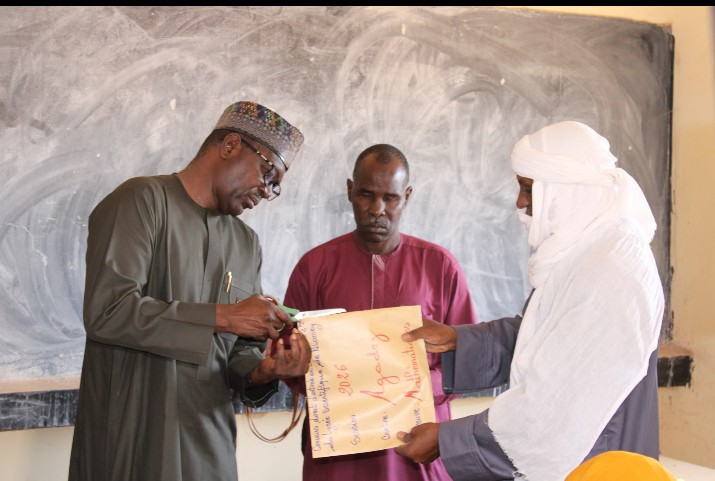
Six students from the Tahoua region, comprising four girls and two boys, began their entrance examinations for the Lycée scientifique de Niamey on Friday, September 4. The competitive session, which officially launched on that date, aims to select candidates for one of the country's most prestigious academic pathways. The Lycée scientifique de Niamey is described as offering a highly regarded educational route for aspiring students, known for its rigorous curriculum and demanding standards. This institution represents a significant opportunity for students aiming for advanced scientific and technical careers.
Rigorous Exam Protocols
A strict protocol has been implemented to maintain the integrity of the national competition for admission to the Lycée scientifique de Niamey. This full set of rules ensures fairness and prevents any form of cheating, upholding the high standards expected of such a key selection process. Participants are required to present formal identification to gain entry to the examination halls. Acceptable forms of identification include a national identity card, a valid passport, or a 2025-2026 school card. These measures are critical to verifying the identity of each candidate and ensuring only registered students participate. Electronic devices such as mobile phones, smartwatches, and programmable calculators are strictly prohibited during the examination period. This ban is enforced to eliminate potential distractions and prevent unauthorized access to information, thereby preserving the integrity and credibility of the examination results.
The first day of exams, Friday, September 4, included several subject evaluations designed to test a broad range of academic skills. Candidates were scheduled for a demanding 2.5 hours of mathematics, a foundational subject for scientific studies. This was followed by a 2-hour French composition assessment, evaluating their linguistic and analytical abilities. The day concluded with a physics-chemistry examination, testing their understanding of core scientific principles. The second day, Saturday morning, will conclude the testing with a full 2-hour evaluation in Sciences de la Vie et de la Terre (SVT), covering biology and geology. This multi-day, multi-subject examination structure is designed to thoroughly assess the intellectual capabilities and foundational knowledge of all prospective students.
Academic Pathway and Goals
The competition serves as a national selection process designed to identify students demonstrating superior reasoning and analytical skills. This rigorous selection ensures that candidates admitted possess the aptitude for advanced scientific studies. The Lycée scientifique de Niamey aims to provide intensive training, preparing its students to become future technical managers and engineers. The institution's curriculum focuses on developing the specialized knowledge and practical abilities required for these demanding professions, contributing significantly to the nation's skilled workforce. By fostering a challenging academic environment, the Lycée prepares students not only for higher education but also for leadership roles in various scientific and technical sectors. The ultimate goal is to equip these young minds with the tools necessary to drive innovation and contribute to national development.
Regional Representation and Trends
The cohort of six students representing the Tahoua region in the Lycée Scientifique entrance exams is predominantly female, with four girls and two boys participating. This composition reflects a modern dynamic in access to Science, Technology, Engineering, and Mathematics (STEM) fields. The increased female representation in such competitive academic pathways notes evolving trends in educational aspirations and opportunities within the region. It shows a growing recognition of the importance of gender equality in STEM education and career development. The selection process for the Lycée Scientifique de Niamey emphasizes identifying students with strong reasoning and analytical skills, irrespective of gender, to cultivate future technical managers and engineers. This commitment to merit-based selection ensures that the most capable students, regardless of their background, are given the opportunity to pursue advanced scientific education and contribute to the nation's future.