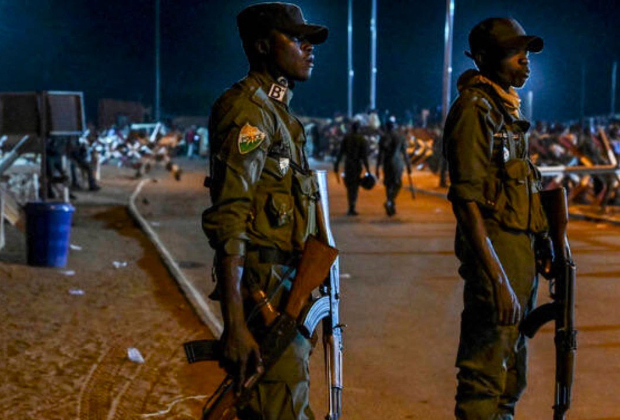
Sustained gunfire and several explosions were heard across parts of Niger's capital, Niamey, early on August 29. The sounds emanated from the city during a period of heightened security concerns, signaling a tense security environment. Bana Wagana Ibrahim stated on Facebook that attackers had targeted Base 101, the military airbase located near the Diori Hamani International Airport. The incident occurred as authorities maintain a strict posture following recent political developments in the West African nation. Security forces were reportedly deployed to the area following the early morning disturbance, though official details remained scarce in the immediate aftermath of the events. The unrest on August 29 marked the third major security incident to affect Niamey this year, showing persistent vulnerabilities within the capital.
Recent Security Incidents
The fighting on August 29 was particularly reported around the area containing Diori Hamani International Airport and a nearby military airbase. This incident is not an isolated event, as the airport and its vicinity have been targets of previous attacks. An al Qaeda-linked group operating in West Africa claimed responsibility for an attack on the airport in June. The claim from the al Qaeda-linked group followed an earlier incident at the same location, indicating a pattern of targeting critical infrastructure.
Five months before the June claim, Islamic State Sahel Province had also claimed an attack against Diori Hamani International Airport. This succession of attacks by different militant factions notes the complex and multifaceted threat landscape confronting Nigerien authorities. The recurring targeting of this critical infrastructure by various extremist groups shows persistent security challenges in the region, affecting both national security and international operations. These previous claims highlight the complex threat landscape faced by Nigerien authorities, involving multiple extremist organizations active in West Africa. The latest events further intensify concerns regarding stability and the safety of key national assets, including vital transportation hubs and government installations.
Political and Regional Context
Niger's military government seized power in a 2023 coup, marking a significant shift in the nation's political landscape. General Abdourahamane Tiani and his forces overthrew President Mohamed Bazoum in July 2023, leading to widespread international condemnation and sanctions from regional and global bodies. The coup further complicated an already precarious security situation in the Sahel region, where Niger remains a critical player in counter-terrorism efforts and regional stability. This political upheaval has reshaped alliances and priorities within the country.
The country, alongside its neighbors Burkina Faso and Mali, continues to confront persistent violence from groups affiliated with al Qaeda and Islamic State. These extremist organizations have exploited existing vulnerabilities, including governance gaps and socio-economic challenges, posing a severe threat to regional stability and civilian populations. The ongoing insurgency has led to significant displacement and humanitarian crises across the Sahel, exacerbating an already fragile situation. The interconnected nature of these threats requires concerted regional and international responses.
In a move reflecting new regional alignments, Niger has opted to join Mali and Burkina Faso in the Alliance of Sahel States (AES). This rival regional alliance was formed in opposition to traditional regional bodies like ECOWAS, which had imposed sanctions and threatened intervention following the coups in these nations. The AES signals a departure from previous security partnerships and a consolidation of military-led governments in the region, aiming to foster mutual defense and economic cooperation among its members. The formation of this alliance indicates a strategic realignment among these three Sahelian states, potentially altering the dynamics of counter-terrorism efforts and regional diplomacy by prioritizing internal regional solutions.
Economic and Strategic Shifts
Authorities in Niger have taken control of assets previously operated by the French nuclear company Orano. This move signifies a broader shift in the nation's control over its natural resources. Niger was an important supplier of uranium to Europe, providing approximately 15 percent of Orano's uranium supply when the company was operating at full capacity, making it a key player in the global uranium market. This development marks a significant shift in the economic landscape and Niger's relationship with former colonial powers and international partners. Last week, the government reassigned uranium permits that were previously held by Orano and GoviEx to companies backed by the Nigerien state, according to an official decree. This move further consolidates state control over key natural resources, indicating a strategic pivot in the nation's economic policy aimed at greater national sovereignty. The reassignment of permits could have broader implications for the global uranium market and Niger's international economic partnerships, potentially reshaping supply chains and investment flows.
Official Response and Outlook
A security source stated that "terrorists" attacked Diori Hamani International Airport and attempted to breach the security perimeter of the presidential complex, indicating a coordinated and ambitious assault. This incident marked the third major security event affecting Niamey this year, noting a concerning trend of escalating threats within the capital. General Abdourahamane Tiani's government has since strengthened ties with Russia, seeking new security and economic partners, and ended its relationship with the regional Economic Community of West African States (ECOWAS), signaling a clear reorientation of its foreign policy. These strategic shifts show a new direction for Niger in its approach to both internal security and international relations.