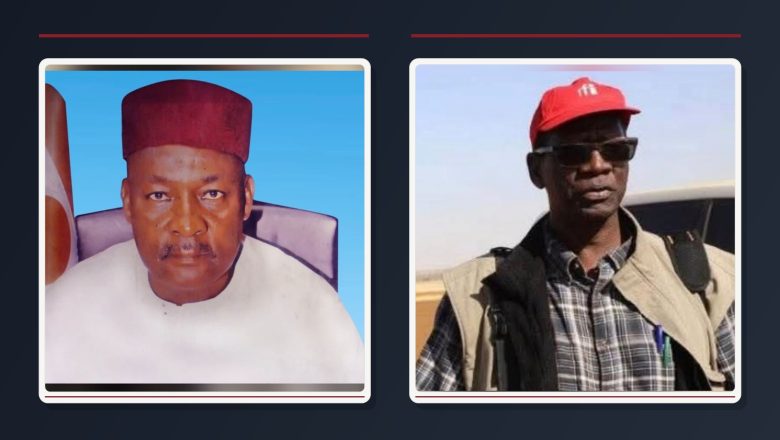
Journalist Moussa Kaka has been missing in Niger since the evening of August 31, according to sources close to the situation. Kaka, a prominent journalist, has been unreachable since that time, raising significant concerns about his whereabouts and safety. His disappearance comes amid a period of heightened political tension and security operations in the West African nation, contributing to an atmosphere of uncertainty and drawing significant attention from international observers concerned about democratic freedoms.
Journalist's Mysterious Disappearance
Moussa Kaka, the director general of the Saraounia group and a correspondent for Radio France Internationale (RFI), has been reported missing. The circumstances surrounding his disappearance remain unclear, fueling speculation and worry among his colleagues and family. Kaka left his office in Niamey around 7 PM on August 31st but never reached his home in the city, which is located in the same urban area. His family subsequently reported his absence to his collaborators, initiating concerns about his whereabouts almost immediately after he failed to return home. This urgent report from his family showed the immediate alarm felt by those closest to him regarding his sudden and unexplained absence.
The lack of communication from Kaka since that evening has intensified fears. Testimonies from various sources suggest that Kaka may have been intercepted on his route between his office and his residence, or that his vehicle disappeared entirely, leaving no trace. This incident marks a deeply troubling development for press freedom in Niger, particularly given Kaka's established profile and his role as a correspondent for Radio France Internationale (RFI), a widely recognized international media outlet. It is not the first time Kaka has faced detention; he was previously arrested and detained for several months in 2007 due to his contacts with the Tuareg rebellion. That prior detention, which lasted for several months, shows a history of challenges for the journalist in his professional capacity, noting the risks associated with his reporting. The current situation, however, is particularly alarming given the complete lack of information regarding his location or condition, which differs significantly from his previous known detention. The international community and press freedom organizations are closely monitoring the situation, calling for transparency and a swift resolution to Kaka's disappearance.
Former Minister's Arrest
In a separate but equally significant development, former Minister of Defense Kalla Moutari was arrested in Dakoro, Maradi region, on September 1st. Mr. Moutari, who previously held key ministerial positions within the Nigerien government, was apprehended around 3 PM that day. The arrest of such a high-profile political figure has sent ripples through the country's political landscape, further exacerbating the prevailing tensions and raising questions about the stability of the political environment.
Mr. Moutari served as Minister of National Defense from 2016 to 2019 during the administration of former President Mahamadou Issoufou. During his tenure as Minister of National Defense, he played a key role in national security matters, overseeing the country's defense strategies during a challenging period for the nation's security. In addition to his defense portfolio, he also held the significant position of Minister of Hydraulics and Sanitation, demonstrating his extensive experience and influence within various government sectors. The circumstances surrounding his arrest remain largely unclear, as Nigerien authorities have not yet issued any public confirmation of his detention. Officials have not provided an explanation for the reasons behind the former minister's apprehension, leaving many questions unanswered about the legal basis for his arrest. This lack of official communication only deepens the mystery surrounding the incident and fuels public speculation. His arrest follows the disappearance of journalist Moussa Kaka, adding to a period of heightened political uncertainty and apprehension in the country. The timing of these events has led to widespread speculation about a potential broader crackdown on political opposition and independent voices.
Broader Context of Repression
The disappearance of Moussa Kaka and the arrest of Kalla Moutari occurred after security events in Niamey on August 28th and 29th, suggesting a period of intensified actions by authorities targeting various individuals. These incidents appear to be part of a broader pattern of repression and control. Prior to these recent events, Ibro Chaibou, editor-in-chief of Saraounia TV, was released on August 28th. Mr. Chaibou had been held for nearly ten months before his release, noting the prolonged nature of detentions faced by media professionals in the country and the significant period of time individuals can spend in custody without clear charges. His detention was part of a broader crackdown that also saw two other Nigerien journalists released in July. Those journalists had also been detained for several months in connection with the same case as Mr. Chaibou, indicating a concerted effort by authorities to silence certain voices through extended periods of detention. The release of these journalists in July, after enduring months of detention, offered a brief moment of relief, but the subsequent disappearance of Kaka and arrest of Moutari have overshadowed any potential positive shift. The sequence of these events notes a challenging and increasingly restrictive environment for media and political figures in Niger, where fundamental freedoms appear to be under considerable pressure. The ongoing situation calls for urgent attention from human rights organizations and international bodies to ensure due process and protect the rights of journalists and political figures.