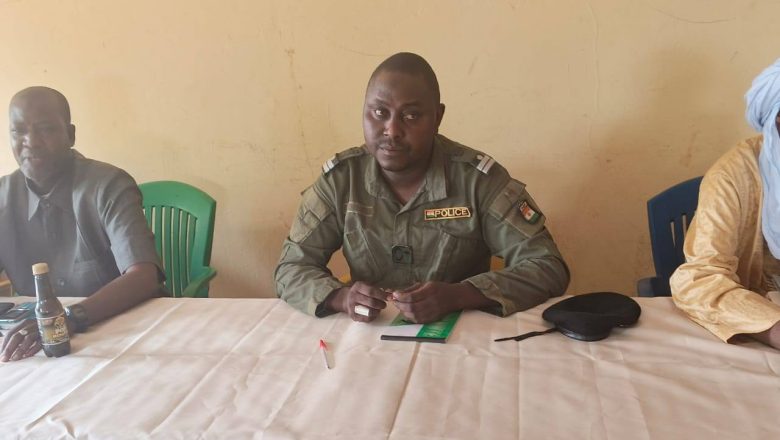
A significant meeting took place on Sunday at the Kao town hall, bringing together a diverse group of stakeholders. Representatives from key local organizations, including the Scouts, the Communal Youth Council (CCJ), the CNSP Support Committee, and several local associations, gathered to discuss critical issues facing their community. The meeting, a key forum for local engagement, was held under the impetus of the Delegate Administrator, police officer Ayouba Ibrahim Abarchi. His initiative set the stage for a productive dialogue aimed at empowering the region's younger generation.
During the discussions, participants expressed their strong determination to influence the future of their commune, noting a collective desire for proactive community involvement. The youth articulated a clear ambition: to be architects of a national refoundation anchored firmly in the territory, according to attendees present at the gathering. This initiative shows a collective effort to engage local youth meaningfully in shaping both regional and national development pathways, ensuring their voices are heard and their ideas contribute to tangible progress. The gathering at the Kao town hall served as a platform for these young leaders to articulate their vision for a more prosperous and well-governed future for Kao and the nation.
Challenges and Concrete Proposals
Participants at the meeting engaged in an in-depth discussion, identifying several pressing challenges that impede local progress and youth development. These issues included a widespread lack of resources for structured activities, which often limits the scope and impact of youth initiatives. Difficulties in mobilization were also noted, indicating a need for more effective strategies to engage the broader youth population. Participants pointed to weak associative governance as a significant hurdle, suggesting that local organizations require better frameworks for management and accountability. A critical concern raised was the scarcity of economic opportunities within the community, which contributes to unemployment and limits prospects for young people.
In response to these identified issues, participants put forth a series of concrete and actionable proposals. One key suggestion was the creation of a multi-purpose youth center, envisioned as a central hub for various activities, training, and community engagement. They also proposed strengthening leadership and associative management capacities among local youth, recognizing that effective leadership is key for driving change. Another significant proposal focused on establishing agro-pastoral entrepreneurship workshops. These workshops aim to foster economic development by equipping young people with practical skills in agriculture and livestock farming, thereby creating new avenues for income generation and self-sufficiency. To ensure sustained collaboration and impact, participants advocated for the formalization of a partnership framework with the communal administration. These full proposals aim to address the identified challenges systematically and lay a strong foundation for both local and national development efforts, ensuring youth are at the forefront of these initiatives.
Roadmap for Action
A collective roadmap emerged from the extensive discussions, outlining several key initiatives designed to address local challenges systematically and effectively. These initiatives include a thorough mapping of existing local skills, which would help identify human resources and expertise within the community that can be leveraged for development projects. Another key step proposed is the pooling of logistical resources more efficiently, ensuring that available assets are utilized to their maximum potential across various community projects. The roadmap also emphasizes organizing awareness campaigns focused on promoting peace and social cohesion within the community, recognizing that a stable and harmonious environment is fundamental for progress. Additionally, a significant component of the roadmap proposes the creation of micro-projects explicitly designed to generate income for local residents, thereby stimulating the local economy and empowering individuals.
The youth participants demonstrated a profound awareness of the climatic and economic challenges confronting Kao. Their discussions reflected a clear understanding of the environmental and financial pressures facing their community. Consequently, they expressed a readiness to invest their energy and creativity in adapted solutions aimed at mitigating these issues. Proposed solutions include the adoption of sustainable agriculture practices, which would enhance food security and reduce environmental impact. They also noted the importance of improved livestock farming techniques to boost productivity and economic returns for pastoralists. The youth committed to various reforestation projects, reflecting a deep commitment to environmental preservation and the long-term ecological and economic resilience for the area.
Call for Authority Commitment
The youth participants from Kao are now calling for the establishment of a clear action calendar and measurable commitments from the local authorities. Their full proposals, which include the creation of a much-needed multi-purpose youth center and the establishment of agro-pastoral entrepreneurship workshops, require official endorsement and substantial support to move forward from conceptualization to implementation. The young people emphasized the critical need for concrete steps from the administration to effectively implement the suggested initiatives. This appeal shows their desire for a truly collaborative approach, where their innovative ideas are not only heard and acknowledged but also translated into tangible projects with clear timelines and accountability mechanisms. The participants seek to ensure that their dedicated efforts towards local refoundation and national development receive the necessary institutional backing to achieve lasting impact and bring about meaningful change for the community of Kao.