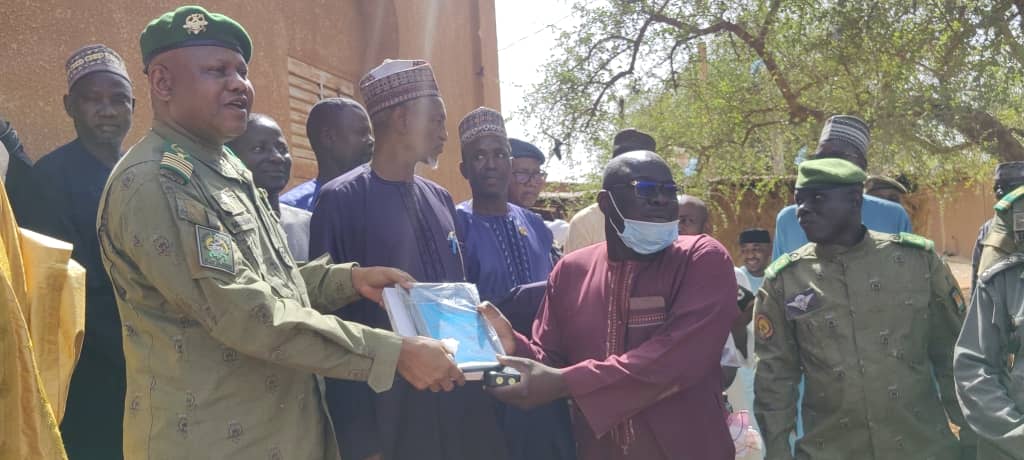
A significant workshop, dedicated to exploring and defining the key roles and responsibilities of territorial collectivities in the realm of Technical and Vocational Education and Training (TVET), was successfully convened in Maradi. The event, which marked a key moment for local governance and skills development, took place on Saturday, May 9, 2026. This important gathering was meticulously organized by the Ministry of Technical and Vocational Education and Training, showing the national government's commitment to strengthening vocational education at the local level. The chosen venue for this high-level discussion was the well-appointed meeting room of the former Regional Council of Maradi, providing a fitting historical and administrative backdrop for deliberations on regional development.
The workshop was presided over by the esteemed Minister of Technical and Vocational Education and Training, Professor Farmo Moumouni, whose presence noted the strategic importance of the discussions. His leadership ensured that the proceedings remained focused on practical outcomes and policy alignment. A diverse group of key stakeholders participated, including Administrators Delegate from the communes of Diffa, Maradi, and Zinder. These local administrators represent the direct interface between government policy and community needs, making their involvement indispensable. The primary objective of this full gathering was to meticulously define and clarify the specific contributions that these local government bodies are expected to make towards the development and effective implementation of TVET policies and programs across their respective regions. This collaborative approach aims to ensure that TVET initiatives are tailored to local contexts and effectively serve the needs of the communities.
Key Discussion Topics
The workshop in Maradi delved into a series of critical areas concerning the enhancement and strategic deployment of TVET across the region. Discussions were strong and focused on practical solutions for foundational elements of vocational training. A major point of deliberation involved the construction, maintenance, and management of school infrastructure. Participants recognized that strong and well-equipped facilities are a fundamental aspect of providing effective technical and vocational training, directly impacting the quality of education and the learning environment for students. Ensuring these facilities are not only built but also sustainably maintained and efficiently managed was a key takeaway from these discussions.
Another critical theme that drew significant attention was the financing of training initiatives. The workshop explored various sustainable models for allocating resources to TVET programs, acknowledging that adequate and consistent funding is essential for the long-term success and expansion of vocational education. Innovative approaches to securing and managing funds were discussed, aiming to create a more resilient financial framework for TVET. Participants also meticulously examined the management of training centers, with a clear objective to optimize their operational efficiency and elevate their educational quality. This included discussions on administrative best practices, resource allocation within centers, and strategies for continuous improvement in teaching methodologies and student support services.
A central theme that resonated throughout the workshop was the key adaptation of training curricula to meet the specific needs of the local labor market. This emphasis shows the importance of aligning skills development with the evolving economic demands of the region, ensuring that graduates possess competencies directly relevant to available employment opportunities. The goal was to bridge the gap between educational output and industry requirements, thereby enhancing employability.
The key role of youth apprenticeship was thoroughly scrutinized, with a strong emphasis on strengthening practical learning opportunities for young people. This included exploring ways to expand apprenticeship programs, improve their quality, and increase participation from both students and local businesses. The workshop recognized apprenticeships as a vital pathway for hands-on skill acquisition and early career integration. In addition to this, the workshop explored full strategies for the empowerment and successful integration of young graduates into the workforce. This aimed to ensure their smooth and productive transition from education to employment, addressing challenges such as job placement, entrepreneurship support, and continued professional development. The article detailing these insightful discussions was published on May 9, 2026, at 15:57, providing timely information on these important deliberations.
Ministerial Initiative and Vision
Minister Professor Farmo Moumouni profoundly emphasized the significance of the workshop, noting it as a landmark event. He noted that this marked the first instance a ministry specifically responsible for technical and vocational training had engaged so directly and comprehensively with territorial collectivities. This unprecedented level of engagement signals a strategic shift towards decentralized implementation and greater local ownership of TVET programs. The Minister articulated his expansive vision for the sector, describing it not merely as an educational pathway but as "a means of emancipation, empowerment and integration of young people, as well as an economic lever and a factor of development." This powerful statement encapsulates the multi-faceted benefits he foresees from a strong TVET system, positioning it as fundamental to both individual prosperity and national progress. This initiative, therefore, profoundly shows the ministry's objective to foster closer, more effective, and mutually beneficial collaboration with local governance bodies, recognizing their indispensable role in localized development.
He further elaborated on the Ministry's broader and overarching mission, which he unequivocally stated is "to offer quality technical and vocational education and training, geared towards modernity, which meets the needs of the labor market." This declaration is a clear articulation of the government's unwavering commitment to aligning educational outcomes with the dynamic demands of the national economy. The aim is to meticulously produce a highly skilled and adaptable workforce, fully prepared for the contemporary challenges and opportunities presented by both local and global markets. This resolute focus on quality and market relevance is central to the Ministry's strategic direction, ensuring that TVET remains pertinent and impactful. The Minister's full vision extends to ensuring that every training program is not only academically sound but also practically applicable, equipping graduates with the competencies most sought after by employers. This strategic alignment is key for fostering economic growth and reducing youth unemployment across the nation.
The workshop in Maradi formed an integral part of a larger and more extensive engagement, as Minister Professor Farmo Moumouni is currently undertaking a four-day working mission within the Maradi region. His personal presence at the workshop and his extended visit to the region signal a direct and hands-on ministerial involvement in assessing and enhancing TVET infrastructure and programs at the local level. This full mission allows for invaluable direct interaction with local administrators, educators, and other key stakeholders, thereby facilitating the gathering of firsthand insights into regional needs, existing capacities, and specific challenges. The Minister's tour is strategically designed to ensure that national TVET policies are not merely formulated at a central level but are effectively translated into concrete, impactful local action, leading to tangible improvements in vocational education delivery and outcomes throughout the Maradi region. This direct engagement is expected to foster a stronger sense of partnership and shared responsibility in advancing the TVET agenda.
Context and Significance
The full article detailing the workshop's discussions and the Minister's forward-looking vision has already recorded 7 views since its publication, indicating initial interest in these vital developments. Readers can anticipate a focused engagement with the material, as the report has an estimated reading time of 6 minutes, allowing for a thorough absorption of the information presented. This engagement reflects the growing recognition of TVET's importance in national development. The outcomes of this workshop and the Minister's ongoing mission are expected to lay a strong foundation for enhanced collaboration between central government initiatives and local administrative efforts. By empowering territorial collectivities to take a more active role in TVET, the Ministry aims to create a more responsive, relevant, and effective vocational education system that directly contributes to youth employment, economic diversification, and sustainable regional development. The ongoing dialogue and strategic planning initiated at this workshop are key steps towards realizing a future where vocational training is a powerful engine for progress and prosperity across all regions.