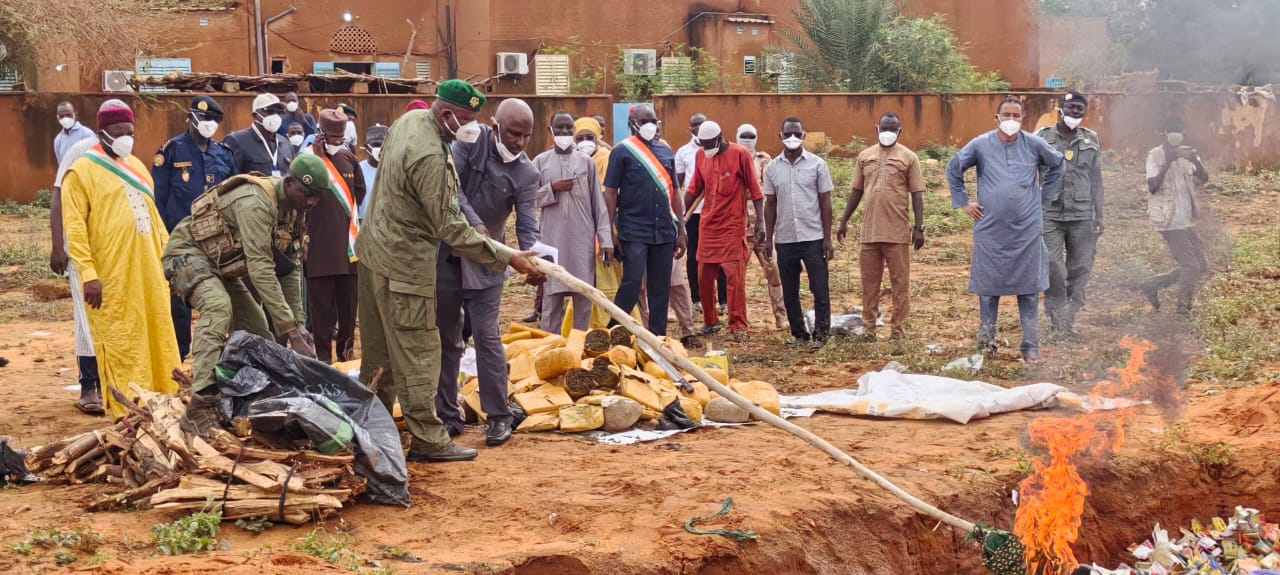
An important quantity of seized drugs was incinerated on Saturday, July 11, 2026, in the courtyard of the Tribunal de Grande Instance of Tahoua. This public and official setting showed the gravity of the event and the commitment of regional authorities to combating illicit drug trafficking. The controlled destruction of the illicit substances took place as part of ongoing efforts against drug trafficking in the region, sending a clear message to criminal networks. The ceremony was attended by the Governor of the Tahoua Region, Colonel-Major Souleymane Amadou Moussa, whose presence noted the high-level governmental support for these anti-narcotics initiatives.
Extensive Quantities Destroyed in Public Ceremony
The drug destruction operation involved a substantial volume of illicit substances, according to official records, reflecting significant seizures by law enforcement. The sheer scale of the drugs incinerated points to the persistent challenges posed by drug trafficking routes that traverse the region. The quantity incinerated included a massive 554.912 kilograms of cannabis, representing a considerable disruption to the supply chain of this widely abused substance. This bulk seizure was further complemented by other forms of cannabis packaging, indicating a variety of methods employed by traffickers to distribute their illicit goods. Authorities also destroyed 454 cornets of cannabis, which often represent smaller, ready-to-distribute quantities. Further detailing the cannabis seizures, the operation disposed of 102 boules of cannabis, along with 86 briques of the same substance, showcasing the diverse formats in which cannabis is prepared for transport and sale. The destruction of these varied forms of cannabis signifies a full effort to eliminate the drug from circulation, regardless of its packaging.
The incineration also targeted a significant amount of pharmaceutical drugs diverted for illicit use, a growing concern for public health and safety. These substances, originally intended for medical purposes, are frequently misused for their psychoactive effects or sold on the black market. Among these were 43,198 tablets of exol, a medication often misused for its psychoactive effects, contributing to a range of health issues for users. Another large quantity involved 7585.6 units of Tramadol, a powerful opioid painkiller whose abuse can lead to severe addiction and overdose. The authorities also destroyed 129.572 tablets of diazepam, a benzodiazepine commonly known for its sedative properties, which is frequently sought after for its calming effects but carries a high risk of dependence. The inclusion of these pharmaceutical drugs notes the dual challenge faced by authorities in controlling both illegal narcotics and the diversion of legitimate medicines.
Harder drugs, known for their high potency and severe addictive potential, were also part of the destroyed inventory, demonstrating the breadth of substances intercepted. The operation eliminated 4 grams of crack cocaine, a highly addictive stimulant, alongside 12 individual doses of crack, suggesting that both bulk supplies and street-ready forms were seized from traffickers. The destroyed items included 120 boxes of exoplan, another pharmaceutical product that has been identified as being misused. An extensive number of benzhexol tablets, totaling 43,240, were also incinerated; benzhexol is often abused for its anticholinergic effects. The process concluded with the destruction of 8249 tablets of rohypnol, a potent sedative and hypnotic drug, commonly known as a "date rape" drug due to its ability to cause memory loss and incapacitation. The variety and volume of drugs reflect the breadth of illicit trafficking intercepted by law enforcement in the region, showing the complex nature of the fight against narcotics.
Diverse Narcotics Incinerated, From Cannabis to Synthetics
The incinerated quantity of illicit substances included 5667 capsules of progaline, according to official records. Progaline, another pharmaceutical substance, is often diverted for its psychoactive properties, contributing to the illicit drug trade. Authorities also destroyed 179 tablets of bromazepam as part of the controlled burning operation; bromazepam is a benzodiazepine that, like diazepam, is frequently misused for its sedative effects. Among the pharmaceuticals, 14,829.1 tablets of pregabalin were incinerated. Pregabalin is a medication used for neuropathic pain and epilepsy, but it has increasingly become a drug of abuse due to its euphoric effects when taken in high doses. The presence of such a large quantity of diverted pharmaceuticals shows the ongoing challenge of preventing legitimate medicines from entering the black market.
A significant volume of synthetic drugs was also destroyed, illustrating the evolving landscape of drug trafficking. These substances are often produced in clandestine laboratories and can pose unpredictable and severe health risks to users. Authorities disposed of an alarming 1,055,000 tablets of ecstasy, a stimulant and hallucinogenic drug that is popular in recreational settings but carries serious risks, including hyperthermia, dehydration, and cardiovascular complications. The operation further targeted 8.2 grams of methamphetamine, a highly addictive central nervous system stimulant with devastating effects on users' health. Ten ampoules of pentazocine were also included in the destruction; pentazocine is an opioid pain reliever that is subject to abuse. The incineration process also involved three reconditioned bags containing a mix of pharmaceutical products and other narcotic substances, indicating attempts by traffickers to conceal or combine different types of illicit goods. Additionally, 50 packaging papers specifically used for cannabis were destroyed by the authorities, eliminating materials that could be used in future drug distribution efforts. The full nature of the destruction notes the authorities' commitment to tackling all facets of the drug trade.
OCRTIS's Anti-Drug Efforts Yield Significant Results
The Office Central de Répression et du Trafic Illicite des Stupéfiants (OCRTIS) was responsible for seizing the illicit substances that were subsequently incinerated in Tahoua. This central office, dedicated to the repression of illicit drug trafficking, plays a key role in intercepting narcotics and psychotropic drugs circulating within the region. The successful accumulation of such a vast and varied consignment of drugs for destruction is a testament to the diligent work and strategic operations carried out by OCRTIS personnel. This operation notes OCRTIS's ongoing efforts to combat the entry and distribution of illegal drugs, which often traverse international borders and regional transit points.
The seized consignment, which included various types of cannabis, pharmaceutical drugs, and hard narcotics, represents the cumulative results of the agency's enforcement activities over a period of time. It reflects their success in disrupting multiple drug trafficking networks and preventing these harmful substances from reaching communities. The destruction event shows the direct impact of OCRTIS's work in removing these harmful substances from circulation and disrupting trafficking networks, thereby protecting public health and safety. Their actions contribute significantly to public health and security by targeting the supply chain of illicit drugs, reducing their availability, and deterring future trafficking attempts. The public incineration serves not only as a disposal method but also as a powerful symbol of the government's unwavering resolve to combat drug-related crime and its detrimental effects on society.