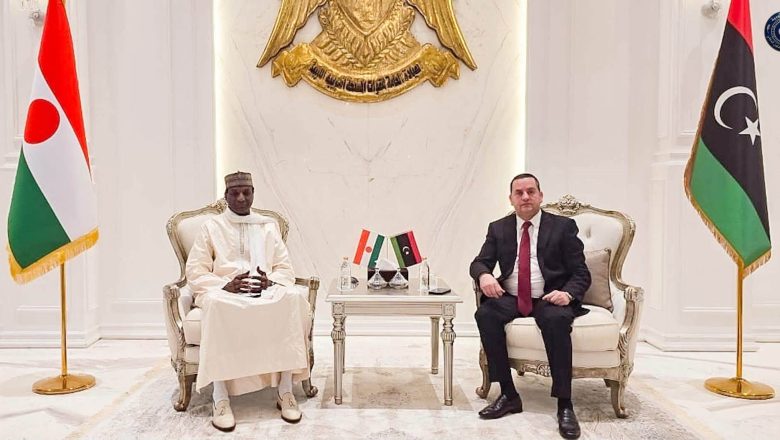
Prime Minister of Niger Ali Mahamane Lamine Zeine concluded a mission in Benghazi, Libya, on 2 November 2026. The official visit, which reached its conclusion on November 2, 2026, served as the primary venue for high-level bilateral coordination. During the visit, Niger and the Libyan authorities in the East signed an accord-cadre de coopération stratégique. This framework agreement establishes a formal basis for collaboration between the two parties. The diplomatic engagement marks a development in relations between Niamey and the administration based in Cyrénaïque. Officials finalized the agreement following the discussions held by Ali Mahamane Lamine Zeine during his time in the city. The signing ceremony signifies the commitment of both governments to pursue the objectives outlined in the strategic cooperation framework.
High Level Diplomatic Meetings
Ali Mahamane Lamine Zeine held formal consultations with the commander-in-chief of the Libyan Armed Forces, Marshal Khalifa Haftar, and General Saddam Haftar during his mission. The Prime Minister of Niger met with the commander-in-chief of the Libyan Armed Forces, Marshal Khalifa Haftar, and General Saddam Haftar to discuss the scope of the new bilateral relationship. These discussions provided the political foundation for the subsequent signing of the strategic cooperation framework. The meetings involved senior security officials from both nations, focusing on the specific security and economic parameters required to implement the new bilateral accord.
Provisions within the agreement outline a primary focus on stabilizing shared border areas between the two countries. The agreement focuses on stabilizing shared border areas, neutralizing transnational armed groups, and facilitating interregional economic trade. Security planners intend to use this framework to neutralize transnational armed groups operating across the region. Economic cooperation serves as the third pillar of the document, with specific clauses included to facilitate interregional economic trade. Officials from both delegations stated that these measures aim to create a more predictable environment for commerce and movement along the border corridor.
Members of the Nigerien delegation also conducted field inspections of infrastructure and university construction projects currently underway in the region. The Nigerien delegation inspected infrastructure and university construction projects managed by the Fonds pour le développement et la reconstruction de la Libye. The Fonds pour le développement et la reconstruction de la Libye manages these development sites. Ali Mahamane Lamine Zeine reviewed the progress of these installations on 2 November 2026 to assess the technical capabilities of the Libyan entities involved in the reconstruction efforts. The inspection visit allowed the Nigerien government to evaluate potential models for future collaborative infrastructure development under the newly signed strategic agreement. This review of site progress provided the Nigerien leadership with direct insight into the operational capacity of the institutions tasked with executing large-scale construction within the territory. The delegation’s assessment of these projects is expected to inform the logistical planning for future cooperative efforts between the two governments.