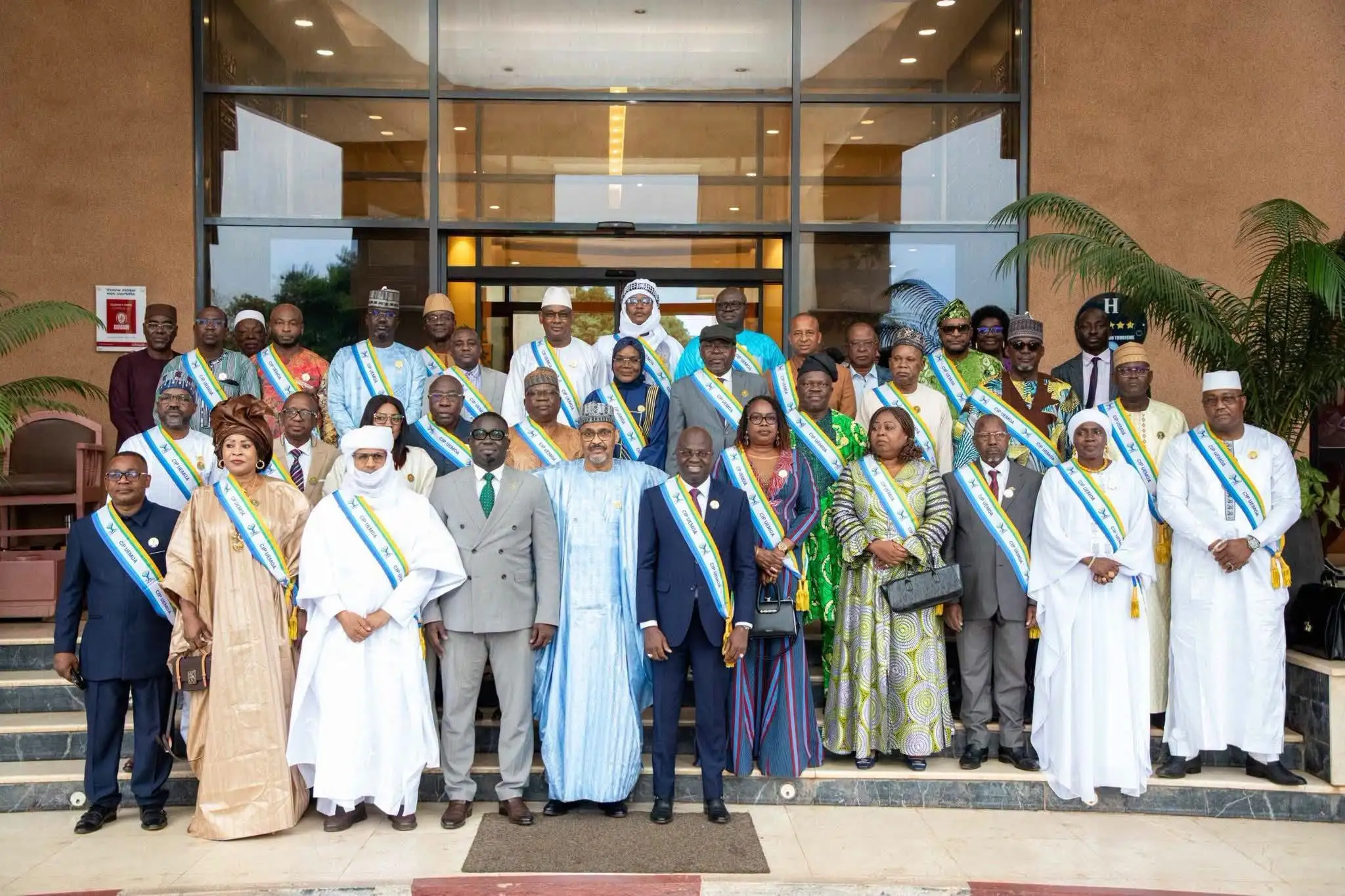
Niger is participating in the 40th extraordinary session of the Interparliamentary Committee of the West African Economic and Monetary Union (UEMOA), which began on September 7, 2026. The session, a significant gathering for regional parliamentary dialogue, is being held in Bamako and is scheduled to conclude on September 11, 2026. This engagement marks Niger's continued involvement in key regional parliamentary discussions, showing its commitment to multilateral frameworks even as new alliances emerge. The Interparliamentary Committee serves as a vital forum for legislative coordination and oversight within the UEMOA bloc.
Committee Agenda and Scope
Parliamentarians gathered in Bamako for this extraordinary session are set to examine issues concerning the Interparliamentary Committee's operational framework and its communication strategy. The discussions aim to address the effective functioning of the committee within the broader West African Economic and Monetary Union (UEMOA) context. This session focuses on internal mechanisms designed to enhance the committee's role and its outreach across member states, ensuring its relevance and efficacy in regional governance. The agenda reflects a concerted effort to strengthen parliamentary oversight and improve the flow of information among UEMOA members. Following the conclusion of the parliamentary meeting in Bamako, a subsequent workshop is scheduled to take place from September 14 to 16. This workshop will concentrate on democratic control tools, providing further training and discussion on mechanisms for parliamentary oversight, thereby reinforcing the legislative capacities of member states.
Regional Dual Membership
Niger, Mali, and Burkina Faso are actively engaged in deepening the institutional framework of the Confederation of Sahel States (AES). This development signifies a growing regional alignment among these nations, fostering closer political and security cooperation. Concurrently, Niger, Mali, and Burkina Faso maintain their membership in the Union économique et monétaire ouest-africaine (UEMOA), indicating a dual affiliation with different regional blocs. UEMOA serves as a common monetary area, providing a significant framework for various economic activities across its member states. It plays a key role in facilitating capital circulation and establishing banking regulations within the region, ensuring financial stability and integration. UEMOA is a major mechanism for state financing and promoting economic integration among its members, noting its foundational importance to their economies and the livelihoods of their populations. The organization's established structures support trade, investment, and development initiatives, which are vital for the economic resilience of its members.
Strategic Implications for Niger
For Niamey, participation in these bodies confirms that the construction of the Confederation of Sahel States (AES) does not signify an immediate rupture with all regional organizations to which Niger belongs at this stage. This engagement suggests a strategic approach by Niger to maintain its presence and influence within established economic and monetary frameworks while simultaneously advancing the new Sahel alliance. The ongoing involvement in UEMOA sessions, even as AES solidifies its institutional construction, notes a complex diplomatic approach. Niamey's continued presence in these forums allows for the possibility of navigating its evolving regional affiliations without completely disengaging from long-standing economic partnerships that provide critical stability and resources. This dual participation shows a considered approach to regional integration during a period of significant geopolitical shift in the Sahel, balancing new strategic alignments with existing economic imperatives.