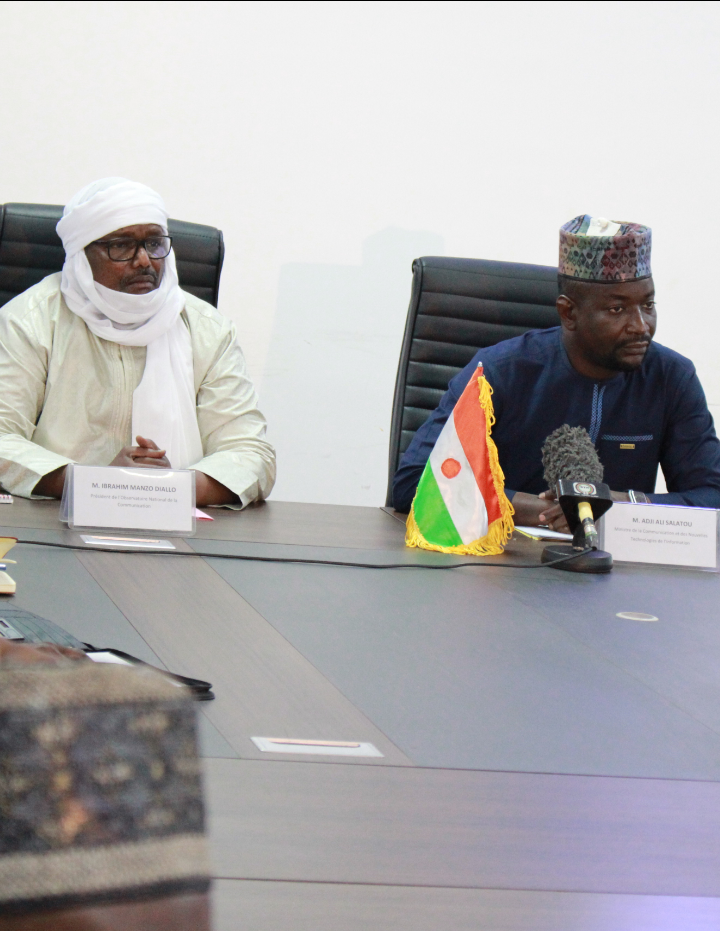
Nigerien authorities convened a significant meeting with media representatives on Wednesday, September 2, 2026, at the Ministry of Communication and New Technologies of Information in Niamey. This gathering, held in the nation's capital, brought together key figures to discuss the prevailing media landscape. The primary objective of the meeting was to address the information ecosystem in the aftermath of specific events that had transpired in Niamey on the night of Friday, August 28 to Saturday, August 29, 2026. Representatives from various media organizations were present at the meeting, showing the collaborative intent of the discussions regarding the current informational climate.
Monitoring and Initial Observations by the ONC
In response to the recent developments, the National Communication Observatory (ONC) initiated and conducted a full monitoring effort of media content. This monitoring period spanned from August 28 to September 1, 2026, aiming to capture a detailed snapshot of information dissemination during a critical time. During this intensive period, the ONC made several key observations regarding the flow and nature of information.
The first significant observation made by the ONC was the exceptional intensity of information circulating in the hours immediately following the events that transpired. This heightened informational activity indicated a rapid response from various media channels and a strong public demand for updates. This surge in communication marked a significant initial finding for the observatory, noting the immediate impact of the events on the national information landscape.
A second key observation from the ONC concerned the effects of an information vacuum that emerged during the crisis. The observatory noted that when official or verified information was scarce, this vacuum had the detrimental effect of displacing public demand for information towards alternative sources. These alternative sources were frequently characterized as anonymous, unprofessional, or potentially malicious, posing challenges to the integrity of public discourse. This shift showed the importance of timely and credible information dissemination during periods of uncertainty.
The third observation from the ONC noted a notable divergence in how the events were characterized across different media outlets. Official communication channels within Niger described the occurrences as a "mouvement d'humeur," which translates to a mood movement or an expression of discontent. This terminology suggested an interpretation rooted in internal sentiment. In stark contrast, international media organizations frequently employed stronger terms such as "mutinerie" (mutiny) or "tentative de coup d'Etat" (attempted coup d'état) to characterize the situation. This significant discrepancy in terminology presented a key point of analysis for the authorities addressing the information ecosystem, reflecting differing perspectives and interpretations of the events.
Regulator's Role and Responsibilities Clarified
The meeting was notably attended by M. Adji Ali Salatou, the Minister of Communication, and M. Ibrahim Manzo Diallo, who serves as the President of the National Communication Observatory (ONC). Their presence showed the official nature and importance of the discussions. The stated objective of the gathering, as articulated by the authorities, was multifaceted: to observe, analyze, and ultimately contribute to the improvement of the national information and communication ecosystem. This holistic approach aimed to foster a healthier and more reliable media environment.
During the session, M. Ibrahim Manzo Diallo took the opportunity to outline the ONC's regulatory philosophy, emphasizing its core principles and operational boundaries. He explicitly stated that the regulator's function is not to impose a singular narrative or to hinder journalists from conducting their essential work. "le rôle de régulateur n’est ni de dicter un récit unique, ni d’empecher les journalistes d’enqueter, d’interroger, d’analyser où de rendre compte," M. Diallo stated, clarifying the ONC's stance against censorship or prescriptive reporting. This statement aimed to reassure media professionals about the observatory's commitment to journalistic freedom.
He further elaborated on the positive and constructive role of the ONC, explaining that its responsibility is to help ensure public information is as reliable, verified, balanced, and compliant with professional standards as possible. "Il est de contribuer à ce que l’information mise à la disposition du public soit aussi fiable, vérifiée, équilibrée et conforme aux règles professionnelles que possible," he added, showing the commitment to journalistic integrity and accuracy. This proactive approach seeks to elevate the quality of information available to the public without stifling independent inquiry.
Analysis of Crisis Information Flow Across Platforms
The National Communication Observatory's (ONC) monitoring efforts were extensive, extending across a broad spectrum of media outlets to capture the full scope of information dissemination during the crisis. This full surveillance included traditional media outlets, such as radio and television broadcasts, alongside online news platforms, which have become increasingly influential. Crucially, the monitoring also encompassed principal digital social media platforms, recognizing their significant role in contemporary information flow. This multi-platform approach allowed the ONC to gather a holistic understanding of how news and narratives were being shaped and shared.
The ONC's fourth key observation noted the significant and dual role played by social networks during the period of intense informational activity. These platforms were identified as powerful accelerators for both the rapid spread of verified information, enabling quick updates and official communications to reach a wide audience, and, conversely, for the proliferation of disinformation during the critical period. The observatory's analysis showed how quickly narratives, both accurate and misleading, could form and spread across these digital channels, posing unique challenges for information management and public understanding. This observation reinforced the complex nature of modern information ecosystems, particularly during times of crisis.