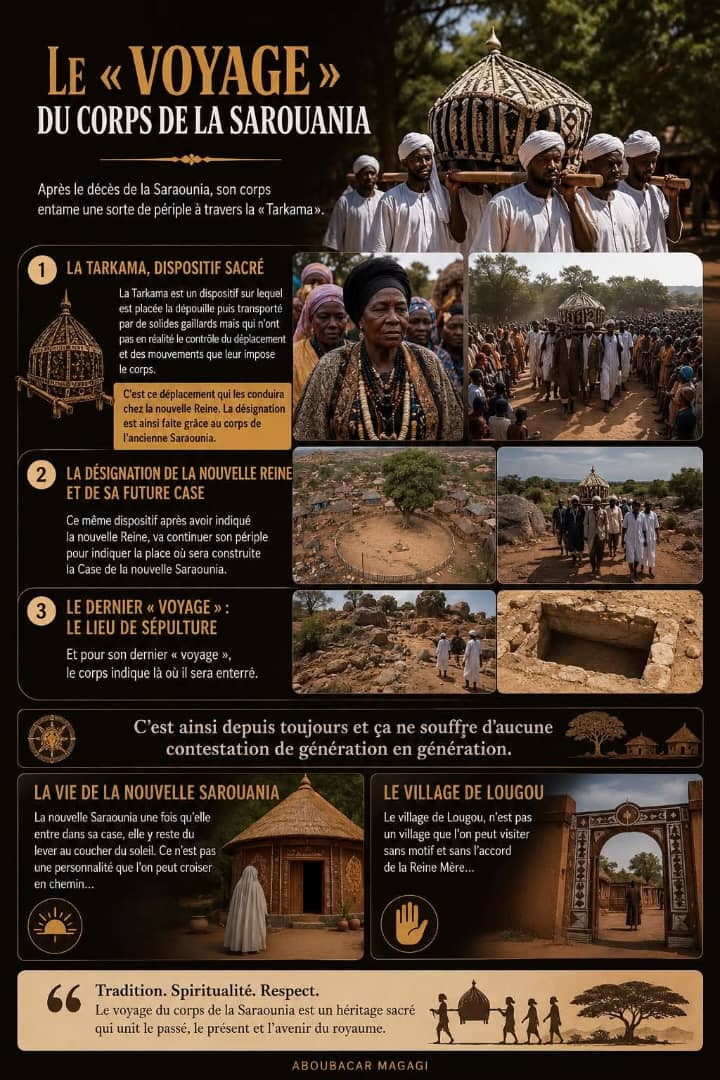
In Niger, the Azna community of Lougou vests moral and spiritual authority in its Saraouniya, who is considered a guarantor of social cohesion and customary justice within the community. This esteemed spiritual leader plays a key role in maintaining order and tradition among the Azna people. The selection process for this vital leader involves specific rituals following the death of an incumbent, ensuring a smooth transition of spiritual power. On the day of the deceased Saraouniya's burial, her body is placed on a wooden litter known as Tarkama, signifying a key step in the traditional succession rites observed by the Azna people. This ancient practice shows the profound respect and spiritual significance attributed to the Saraouniya.
The Saraouniya's Sacred Role
The origin of the Saraouniya, the spiritual leader of the Azna community in Lougou, dates back to immemorial times, according to community tradition. This deep historical root emphasizes the enduring nature of the institution within the Azna culture. The first Saraounia, according to tradition, was named Erkassa and is said to have originated from Daoura in neighboring Nigeria, establishing a foundational narrative for the lineage. Azna legend further associates the Saraounia with Baoura, her son-in-law, a pairing that forms a mystical power believed to contribute to social cohesion within the community. This legendary connection notes the spiritual and communal importance of the Saraouniya's role, extending beyond mere leadership to encompass a mystical guardianship. This historical and legendary framework solidifies the Saraouniya's revered position, making her an indispensable figure in the social and spiritual fabric of the Azna people. Her authority is not merely administrative but deeply ingrained in the community's ancestral beliefs and practices.
The Tarkama Succession Rite
Among the Azna community, the selection of a new Saraouniya is determined by the deceased spiritual leader through a ritual known as the Tarkama. This unique succession process for the Saraouniya throne in Lougou is characterized by neither inheritance nor election, instead relying solely on the will of the departed Saraouniya. This method ensures that the successor is chosen through spiritual guidance rather than worldly influence or familial ties.
During the rite, the Tarkama, a wooden litter carrying the body of the deceased Saraouniya, is said to direct the four men bearing it. The movements of the Tarkama are interpreted as the will of the departed leader, guiding the community in their most important decision. The Tarkama guides them towards either the home or the person designated as the future Saraouniya, marking the individual chosen to inherit the spiritual mantle. This designation is a moment of profound spiritual significance for the entire community. Beyond selecting the successor, the Tarkama also indicates the precise location for constructing the new Saraouniya's hut, which will serve as her traditional palace and the center of her spiritual authority. The Tarkama designates the ultimate burial site for the body of the deceased leader, completing the cycle of spiritual passage. The individual chosen as the successor can originate from Lougou itself or from any other part of the broader Azna community, demonstrating that spiritual merit transcends geographical boundaries. This intricate ritual ensures that the transition of leadership is guided by ancient traditions and spiritual conviction, upholding the sanctity of the Saraouniya's role.
Dedication and Legacy
Intaya Kahiya was designated as the 18th Saraouniya on Sunday, July 12, 2026, following the traditional Tarkama ritual in Lougou, Niger. Her selection marks a continuation of the spiritual leadership within the Azna community, embodying the enduring power of their ancestral practices. This event was a significant moment for the community, reaffirming their faith in the Tarkama ritual as the legitimate means of succession.
Once designated, the new Saraouniya is understood to abandon all personal ties and possessions. This includes severing connections with her family and relinquishing all previously owned belongings. This practice shows a complete dedication to her mission as the spiritual leader, focusing entirely on her sacred duties to the community. Her life becomes solely devoted to the role, transcending individual identity in favor of communal responsibility. This profound sacrifice notes the immense spiritual commitment required of the Saraouniya, who dedicates her entire being to the well-being and spiritual guidance of the Azna people. Her life becomes a living embodiment of the community's values and spiritual aspirations, ensuring the continuity of their traditions and cohesion.