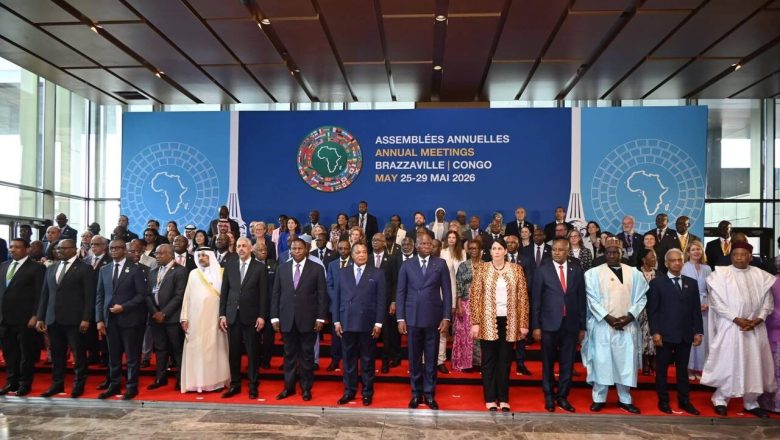
The African Development Bank (AfDB) is scheduled to hold its 2026 annual meetings at the Kintélé Conference Center in Brazzaville. The event comes as the Bank's financing strategy is under scrutiny, particularly its portfolio for 2019-2025. The Alliance for Food Sovereignty in Africa (AFSA) is criticizing the AfDB's financing strategy, raising significant concerns about its direction. This period's financing approach directs the majority of its funding towards globalized value chains and large companies, a strategy that has drawn criticism regarding its impact on local agricultural development and food sovereignty across Africa. The AfDB's role as the continent's largest financier in the agricultural sector amplifies the importance of these discussions, as its investment strategies have broad implications for food systems across African nations.
AFSA's Core Criticisms
The Alliance for Food Sovereignty in Africa (AFSA) has voiced criticisms regarding the African Development Bank's (AfDB) financing strategy. AFSA, a pan-African network, bases its critique on findings from three recent studies concerning the bank's investment patterns. These studies form the foundation of their concerns regarding the bank's investment choices and their alignment with sustainable agricultural development.
The organization asserts that the AfDB's approach to "climate-smart" finance is being misdirected. AFSA specifically points out that these funds are being utilized to support intensive industrial models and monoculture across the continent. This funding strategy is a central concern for AFSA, which advocates for food sovereignty and agroecological practices. AFSA argues that labeling these industrial projects as 'climate-smart' is misleading, as they often contribute to environmental degradation and undermine local food systems rather than enhancing resilience.
Colonial Echoes and Land Use
The Institute for Poverty, Land and Agriculture Studies (PLAAS) at the University of the Western Cape contests the argument that Africa possesses "available" or "underutilized" land suitable for large agro-industrial zones. This perspective challenges the framing often used to justify large-scale agribusiness expansion, which can lead to land grabs and displacement of local communities. Smallholder farmers currently manage nearly 80% of agricultural land across sub-Saharan Africa. These farmers are responsible for producing 80% of the food consumed within the region. This notes their critical role in food security and land stewardship, contrasting with the narrative of vast, unproductive land waiting for industrial development. PLAAS emphasizes that these existing land uses are productive and vital, and that large-scale industrial agriculture often overlooks the embedded social and ecological values of these lands.
AFSA's Proposed Solutions
The Alliance for Food Sovereignty in Africa (AFSA) presented a four-point roadmap to the African Development Bank (AfDB) governors, outlining concrete steps for a more equitable and sustainable agricultural financing approach. AFSA's proposed solutions include establishing a specific fund within the Feed Africa program. This fund would be dedicated to supporting low-input agricultural systems, soil regeneration initiatives, and the valorization of traditional seeds. Such a fund would provide key financial backing for practices that are environmentally sound and culturally appropriate.
The organization also calls for an immediate cessation of financing for intensive monocultures currently labeled as "climate-smart" projects. AFSA argues that redirecting these funds away from industrial models is essential for promoting genuine climate resilience and food security.
A key demand within AFSA's roadmap is for total transparency from the AfDB. This includes the full publication of final beneficiaries for all financed projects and assurances that customary land rights are respected. This transparency is key for accountability and to prevent potential abuses of power or displacement of indigenous communities. Additionally, AFSA's roadmap advocates for the protection of peasant seed systems across the continent, recognizing their importance for biodiversity, local adaptation, and food sovereignty. These proposals aim to redirect the AfDB's agricultural financing towards more sustainable and community-centered approaches, ensuring that development benefits local populations and ecosystems.
Broader Implications and Context
The African Development Bank (AfDB) has emerged as the continent's largest financier in the agricultural sector. This significant role positions the bank at the forefront of agricultural development discussions, making its investment strategies particularly influential across African nations. The criticisms from AFSA and the findings from PLAAS show a growing debate about the direction of agricultural development in Africa. Stakeholders are increasingly calling for a shift from industrial, export-oriented agriculture to more localized, agroecological systems that prioritize food sovereignty and environmental sustainability. The upcoming 2026 annual meetings in Brazzaville are expected to be a critical forum for these discussions, as civil society organizations continue to press the AfDB to re-evaluate its financing priorities and embrace a more inclusive and sustainable vision for Africa's agricultural future.