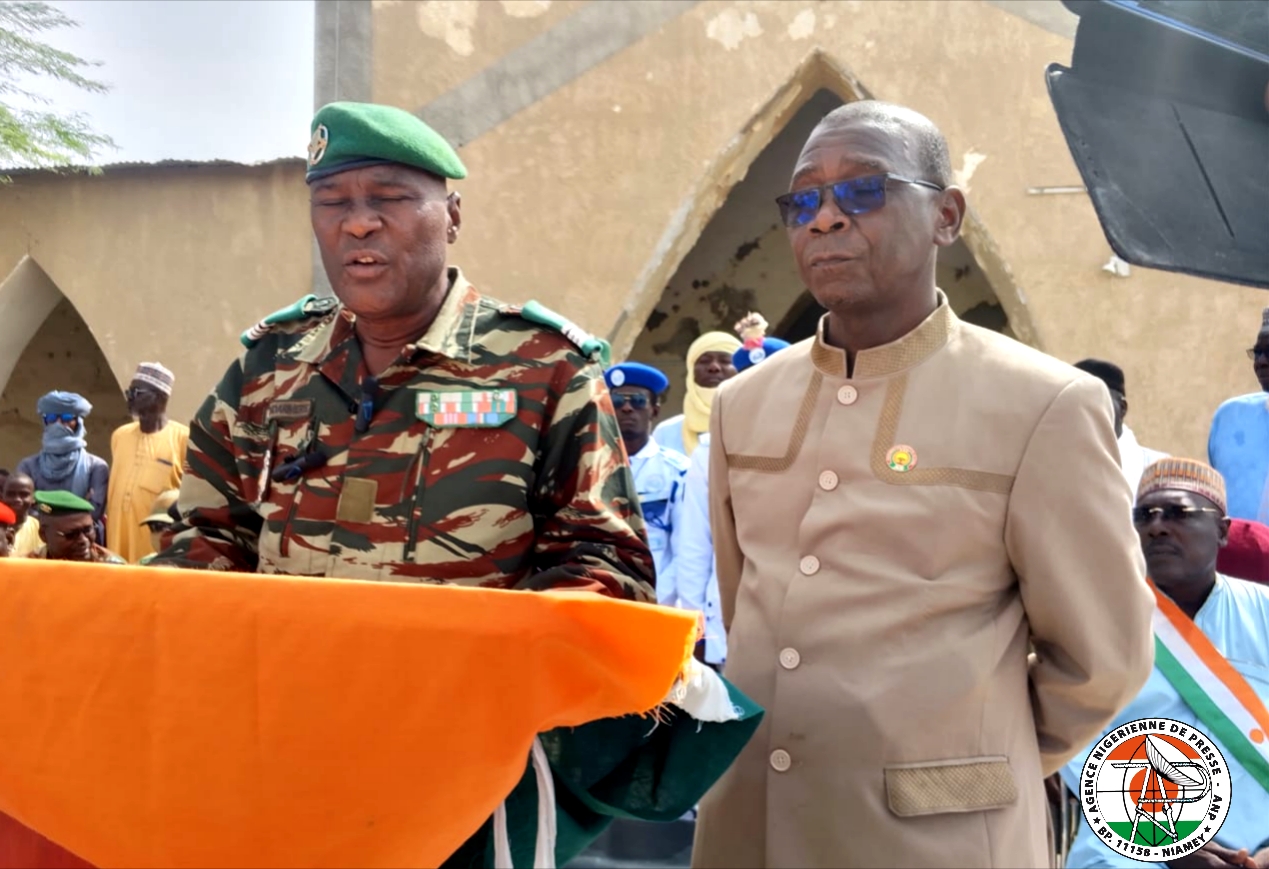
The Chief of Staff of the Army is currently conducting an inspection mission of troops stationed in Agadez. The purpose of the visit is to assess the operational readiness and welfare of military personnel in the region. This inspection is part of a broader commitment to ensuring the effectiveness of defense forces in key strategic areas. The ongoing mission notes the continuous efforts of military leadership to maintain a high state of preparedness across all units, particularly those deployed in geographically challenging and strategically vital locations. This proactive approach is fundamental to national security and the protection of national interests against various threats.
Mission Objectives and Scope
The current inspection mission undertaken by the Chef d’État-Major de l’Armée de Terre in Agadez is primarily focused on evaluating the operational capabilities of military units stationed in the region. This visit aims to ensure that defense forces are adequately prepared to address existing and potential security challenges. The scope of the inspection includes a review of troop welfare, logistical support, and the overall state of readiness. This full assessment is designed to provide a detailed understanding of the military's effectiveness in a strategically important area. The article detailing this mission is categorized under 'Sécurité', indicating its direct relevance to national security matters and defense strategy. The classification notes the importance placed on military operations and the protection of national interests. The Chef d’État-Major de l’Armée de Terre's itinerary involves direct engagement with personnel, observations of training exercises, and evaluations of equipment and infrastructure. This hands-on approach is intended to gather firsthand information key for informed decision-making regarding troop deployment and resource allocation. The objective is to identify any gaps in operational readiness and to implement measures that enhance the military's capacity to maintain stability and respond to various threats. The mission shows a commitment to continuous improvement within the armed forces, ensuring that units are not only present but also fully capable of executing their duties. This systematic review is a standard practice in military leadership, aimed at fostering a strong and responsive defense posture. The emphasis on 'Sécurité' reflects the broader governmental priority of safeguarding the nation.
The inspection delves into the morale and living conditions of the soldiers, recognizing that troop welfare is intrinsically linked to operational effectiveness. Addressing concerns related to housing, medical services, and recreational facilities forms a critical component of the Chef d’État-Major de l’Armée de Terre's agenda. Ensuring adequate logistical support, from fuel and ammunition to food and water, is also under scrutiny, given the remote and demanding environment of Agadez. The assessment extends to the efficacy of communication systems and command structures, vital for coordinated operations across vast distances. By personally observing and interacting with the troops, the Chief of Staff gains invaluable insights that cannot be gleaned from reports alone, enabling a more nuanced understanding of the challenges faced on the ground. This direct engagement also serves to boost troop morale, demonstrating leadership's commitment to their well-being and mission success. The findings from this inspection will inform future strategic planning, resource allocation, and policy adjustments to optimize the military's presence and capabilities in the Agadez region and beyond. The full nature of this inspection reflects a strategic imperative to maintain a flexible, adaptable, and highly capable military force ready to meet evolving security demands.
Strategic Importance of Agadez
Agadez, a city in central Niger, holds significant strategic importance due to its geographical location and its role as a regional hub. Situated at the crossroads of major trans-Saharan trade routes, Agadez has historically served as a critical node for commerce and cultural exchange. Its position makes it a key transit point connecting West Africa with North Africa, influencing both economic and security dynamics across the Sahel region. This historical significance has evolved into a modern-day strategic imperative, as control over Agadez translates into considerable influence over regional stability and economic flows.
The city's strategic value is further amplified by its proximity to several national borders and its location within a vast, often challenging desert environment. This geographical reality has made Agadez a focal point for various activities, including legitimate trade, but also illicit trafficking routes for goods, weapons, and migrants. The control and stability of Agadez are therefore considered essential for regional security and for efforts to counter transnational threats. The expansive and largely unpatrolled desert stretches around Agadez provide fertile ground for illicit activities, making the city a critical choke point for interdiction efforts. Effective monitoring and control of these routes from Agadez are key to disrupting the networks that fuel instability across the Sahel.
For military operations, Agadez provides a key base for projection and logistics. The presence of military installations in the area allows for rapid response capabilities against security challenges emanating from porous borders and the expansive desert landscape. These challenges include armed groups, banditry, and other destabilizing elements that operate across the Sahel. Maintaining a strong military presence in Agadez is seen as vital for deterring such activities and for protecting national interests. The airbase in Agadez, for instance, serves as a vital platform for aerial surveillance and reconnaissance missions, extending the reach of security forces over vast distances. Ground forces operating from Agadez can conduct patrols and interdiction operations, disrupting illicit flows and engaging hostile elements.
The Chef d’État-Major de l’Armée de Terre's inspection of troops in Agadez shows the government's recognition of the area's strategic significance. Such visits are intended to ensure that military units stationed there are adequately equipped, trained, and prepared to fulfill their mission in a complex operational environment. The effectiveness of these forces in Agadez directly impacts the broader security architecture of the country and the stability of the Sahel. The city's role as a gateway to the desert regions also necessitates significant resources for surveillance and interdiction operations, noting its critical function in national defense strategy. The sustained military presence in Agadez is not merely about territorial control but about projecting stability and security throughout a region prone to various forms of illicit activity and armed insurgency. The long-term security of the nation hinges significantly on the capabilities and readiness of forces deployed in this key strategic location. The ability to project power and maintain order from Agadez is a testament to the nation's commitment to safeguarding its sovereignty and contributing to regional peace.
Operational Environment and Challenges
The operational environment in Agadez presents a complex array of challenges for military forces stationed in the region. The vastness of the desert terrain, combined with its harsh climatic conditions, significantly impacts logistical operations and troop deployment. Temperatures can reach extreme highs, and the scarcity of water sources necessitates extensive planning for resupply and sustainment. The expansive and often unpatrolled borders surrounding Agadez contribute to a dynamic security landscape, facilitating the movement of various groups across national lines. These natural and geographical impediments add layers of complexity to military planning and execution, demanding specialized training and equipment. The extreme heat can lead to equipment malfunctions and heat-related illnesses among personnel, requiring strong medical support and acclimatization protocols.
Security challenges in the area are multifaceted, primarily driven by the presence of armed groups operating within the broader Sahel region. These groups engage in activities such as illicit trafficking, including weapons, drugs, and human smuggling, which exploit the porous borders and remote areas. The mobility of these actors, often utilizing off-road vehicles, complicates surveillance and interdiction efforts by conventional military units. The arid environment also provides natural cover and makes tracking difficult, requiring specialized training and equipment for effective counter-insurgency and border security operations. The ability of these groups to blend into the vast desert landscape and leverage local knowledge poses a significant challenge to traditional military tactics. Countering these threats requires not only advanced technology but also strong intelligence gathering capabilities and a deep understanding of local dynamics.
The local population in Agadez and its surrounding areas also faces economic vulnerabilities, which can be exacerbated by security instability. Military operations must therefore consider the humanitarian impact and strive to maintain positive relations with communities, whose cooperation is often vital for intelligence gathering and maintaining local security. The Chef d’État-Major de l’Armée de Terre's inspection likely takes into account these complex interactions, seeking to understand how military activities intersect with civilian life and regional stability. Building trust and fostering cooperation with local communities are critical for long-term success in counter-insurgency and stabilization efforts. Without the support of the populace, military operations can become significantly more challenging, making community engagement a strategic imperative. This involves humanitarian aid, infrastructure development, and ensuring that military actions do not inadvertently harm civilian populations or disrupt their livelihoods.
Infrastructure limitations represent another significant operational hurdle. Road networks are often underdeveloped or non-existent outside urban centers, impeding rapid movement and the transportation of heavy equipment. Communication networks can be unreliable in remote desert areas, affecting command and control capabilities. These factors necessitate self-sufficient units and strong communication systems to ensure operational effectiveness. The presence of improvised explosive devices (IEDs) in some areas further complicates ground movements, requiring specialized mine-clearing capabilities and heightened vigilance from troops. The Chef d’État-Major de l’Armée de Terre's visit is expected to assess the adequacy of current resources and strategies in addressing these persistent and evolving threats within the challenging Agadez operational zone. The inspection will likely evaluate the effectiveness of current counter-IED measures and the training provided to troops for detecting and neutralizing these threats. The lack of reliable infrastructure places a premium on the logistical self-sufficiency of deployed units, requiring extensive pre-planning and strong supply chains. The insights gained from this high-level inspection will be instrumental in formulating enhanced strategies and allocating necessary resources to overcome these multifaceted operational challenges, thereby strengthening the military's capacity to secure the Agadez region effectively.