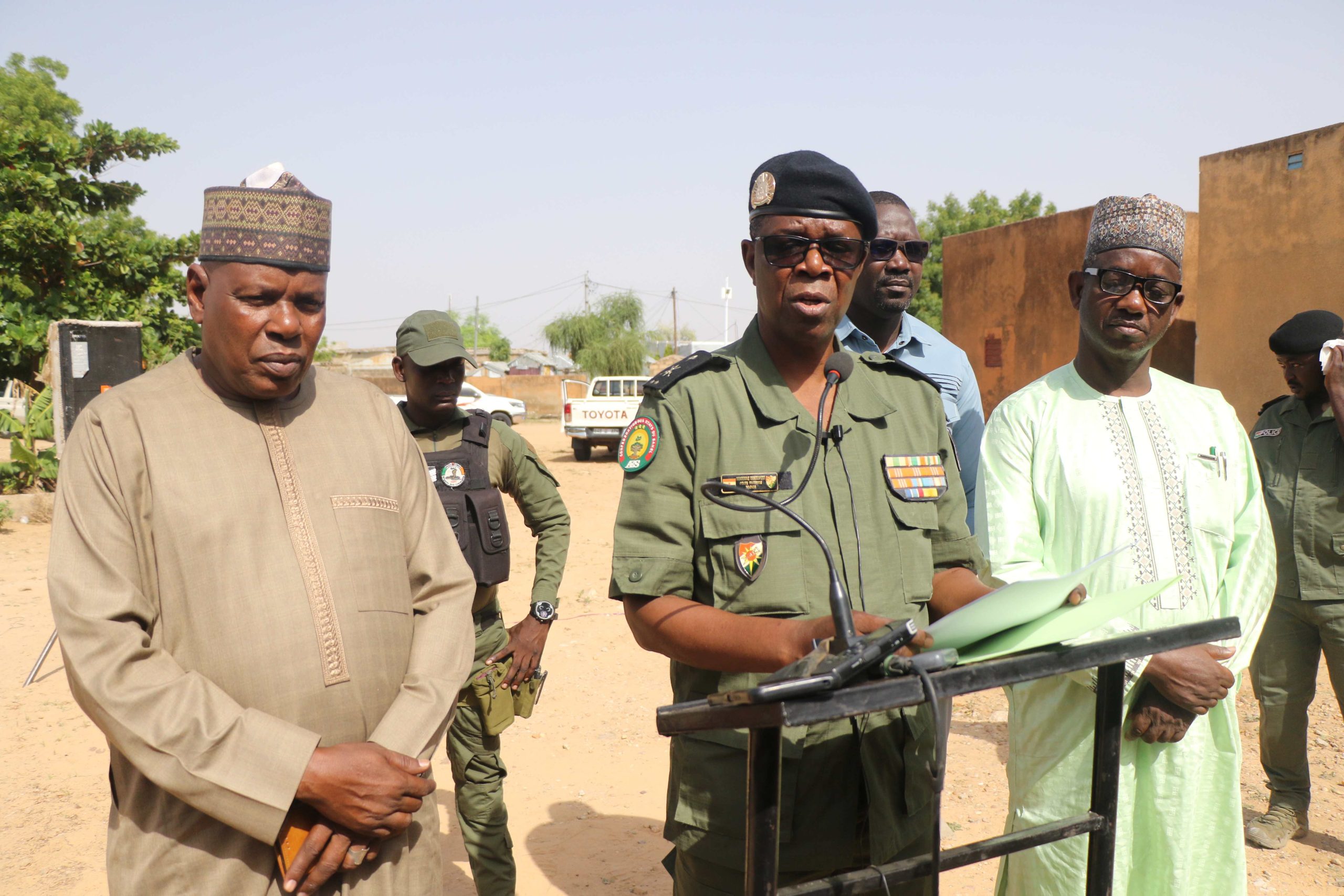
Minister Alio Daouda, a government official, recently observed significant overcrowding within prison facilities. The observation was made during a visit, drawing attention to the challenging conditions faced by the correctional system. This situation shows the pressures on the justice system and the need for efficient processes to manage inmate populations. The Minister's direct engagement with the issue notes a governmental commitment to addressing systemic problems that impact both the human rights of detainees and the operational effectiveness of the state's carceral infrastructure.
Minister's Observations on Overcrowding
Minister Alio Daouda, during his recent visit to correctional facilities, noted the significant issue of prison overcrowding. The official's observations noted the challenging conditions prevalent within the nation's carceral system. This situation, according to Daouda, shows the persistent pressures on the broader justice system and emphasizes the critical need for more efficient processes to manage inmate populations effectively. His assessment comes amid ongoing discussions regarding judicial reforms and the capacity of existing infrastructure to handle the current number of detainees. The Minister's firsthand account provides a stark picture of the realities faced by both inmates and correctional staff, bringing a key perspective to policy debates.
Daouda's visit brought particular attention to the discrepancies between the designed capacity of prisons and their actual occupancy rates. The Minister observed firsthand the strain placed on resources, including sanitation, healthcare, and basic living spaces, due to the high number of inmates. This scenario often leads to deteriorating conditions that can impede rehabilitation efforts and raise concerns about human rights standards within the facilities. The sheer volume of individuals housed in spaces originally intended for far fewer creates an environment where basic needs are difficult to meet, and the potential for tension and unrest increases. The Minister emphasized that these conditions are not conducive to the goals of a modern correctional system, which aims not only for punishment but also for the possibility of reintegration into society. He stressed that maintaining human dignity, even within the confines of incarceration, is critical for a just society.
The visit to the facilities served as a direct examination of the practical challenges faced by prison administrators and staff. Daouda engaged with officials on the ground to understand the root causes of the overcrowding, which are often multifaceted, involving slow judicial processes, insufficient infrastructure development, and a high rate of pre-trial detention. These factors combine to create a bottleneck in the justice system, where individuals spend extended periods awaiting legal resolution, exacerbating the overcrowding problem. He stressed that addressing the immediate concerns of overcrowding requires a full approach that looks beyond just building new facilities. Instead, it necessitates a review of judicial procedures, an acceleration of trial timelines, and an exploration of alternative sentencing options where appropriate. Such a holistic strategy is considered vital for long-term sustainability and effectiveness.
Daouda's remarks also touched upon the long-term implications of sustained overcrowding, including potential security risks and the increased burden on public finances. The constant strain on resources diverts funds that could otherwise be used for improving conditions, staff training, or rehabilitation programs. He indicated that the government is committed to finding sustainable solutions to these systemic issues. The Minister's observations are expected to inform upcoming policy discussions aimed at reforming the justice system to ensure it operates more fairly and efficiently, ultimately reducing the pressure on correctional facilities and upholding the principles of justice for all individuals within the system. His visit serves as a catalyst for renewed efforts to tackle this complex challenge.
Call for Justice System Reform
Minister Alio Daouda called for a more efficient justice system, emphasizing its key role in alleviating the persistent issue of prison overcrowding. The call shows a broader governmental commitment to judicial reform, aiming to streamline processes and ensure timely justice. Daouda articulated that the current state of correctional facilities, marked by significant overpopulation, is a direct consequence of systemic inefficiencies within the justice apparatus. He noted that a swift and equitable legal process is not only fundamental to human rights but also essential for the practical management of inmate populations. An overburdened justice system inevitably leads to an overburdened prison system, creating a cycle of inefficiency and compromised conditions.
The Minister's demand for efficiency extends to various stages of the judicial pipeline, including investigations, trials, and the implementation of sentencing. He indicated that delays at any point contribute to the backlog of cases, leading to prolonged pre-trial detentions and, consequently, increased pressure on prison infrastructure. These delays can stem from a variety of factors, including insufficient investigative resources, administrative bottlenecks, or a shortage of judicial personnel. Daouda stressed the need for judicial actors, including judges, prosecutors, and legal aid professionals, to work collaboratively towards accelerating case resolution while upholding due process. This collaborative effort is seen as key for ensuring that justice is not only served but also delivered in a timely manner.
Addressing the root causes of overcrowding, Daouda suggested that a more efficient system would reduce the number of individuals awaiting trial for extended periods. This would involve a re-evaluation of legal procedures to identify bottlenecks and implement solutions that expedite proceedings without compromising fairness. The goal is to minimize the time individuals spend in pre-trial detention, especially for those cases that could be resolved more quickly. The Minister also pointed to the potential for alternative sentencing options, which could further ease the burden on correctional facilities by providing non-custodial resolutions for certain offenses. Such measures, he argued, would allow prisons to focus on their core mandate of rehabilitation for those who genuinely require incarceration, rather than being overwhelmed by a diverse population that includes minor offenders.
Daouda's advocacy for a reformed and more efficient justice system is presented as a cornerstone of the broader strategy to address the challenges observed in the nation's prisons, including those in Diffa. He conveyed that a well-functioning judicial system is not merely about managing numbers but about upholding the principles of justice, ensuring public safety, and promoting the reintegration of individuals into society. The Minister's remarks signal an impetus for full changes that are expected to influence policy decisions and resource allocation within the justice sector moving forward. This proactive stance aims to create a more responsive and humane system for all.
Broader Context of Prison Conditions
The challenges outlined by Minister Alio Daouda are not unique to a single facility but reflect a broader pattern within the nation's correctional system. Across various regions, prisons often contend with capacities that significantly exceed their design limits. This situation frequently leads to degraded living conditions, including inadequate sanitation, insufficient medical care, and a lack of space for basic daily activities. The constant struggle to provide even fundamental services in an overcrowded environment compromises the health and well-being of inmates and creates significant operational difficulties for staff. Such environmental factors can exacerbate existing health issues among inmates and contribute to a decline in overall well-being within the prison population. The lack of proper ventilation, access to clean water, and sufficient medical personnel are common complaints in these strained facilities.
The conditions also pose significant obstacles to rehabilitation efforts. Overcrowded facilities struggle to provide adequate educational programs, vocational training, or psychological support, which are key for preparing individuals for reintegration into society. When resources are stretched thin simply to manage the daily logistics of a large inmate population, specialized programs often become secondary or are impossible to implement effectively. Without these resources, the cycle of reoffending can be perpetuated, undermining the long-term goals of the justice system. The operational strain on prison staff is another critical consequence, as they are tasked with managing a disproportionately large number of inmates with limited resources, potentially compromising security and the humane treatment of those in custody. Staff burnout and a reduced capacity to engage effectively with inmates further compound the challenges.
The pressure on correctional facilities is often directly linked to the efficiency of the judicial process. Delays in investigations, prolonged pre-trial detentions, and slow court proceedings contribute substantially to the inmate population. Many individuals remain incarcerated for extended periods awaiting trial, even for minor offenses, adding to the burden on the system without a final legal determination. This not only swells prison numbers but also represents a significant cost to the state and a profound impact on the lives of those detained who may ultimately be found innocent or receive non-custodial sentences. Addressing these systemic issues requires a multi-faceted approach that considers not only the physical infrastructure of prisons but also the procedural aspects of the justice system that influence inmate numbers. The minister's observations show the interconnectedness of these factors in shaping the overall conditions within the nation's prisons and highlight the urgent need for full reform.
Path Forward and Potential Solutions
Minister Alio Daouda has emphasized that addressing prison overcrowding requires a full and multi-faceted strategy. He stressed the importance of accelerating judicial processes to reduce the number of pre-trial detainees, which currently places significant strain on correctional facilities like those in Diffa. This acceleration involves improving investigative techniques, optimizing court schedules, and ensuring that legal aid is readily available to expedite case progression. Daouda advocated for legislative reforms that would allow for increased use of alternative sentencing options, such as community service or electronic monitoring, for non-violent offenders. Such measures aim to decrease reliance on incarceration for minor offenses, thereby freeing up capacity for more serious cases and allowing individuals to contribute to society while serving their sentences.
Daouda noted the need for investment in modernizing judicial infrastructure and training legal personnel to improve efficiency. This includes updating court technologies, digitizing records, and providing ongoing professional development for judges, prosecutors, and administrative staff. A well-trained and equipped judiciary is better positioned to handle caseloads effectively and reduce delays. He indicated that a more streamlined justice system would not only alleviate overcrowding but also enhance the overall fairness and speed of legal proceedings. Implementing these changes, according to Daouda, is essential for ensuring that correctional facilities can fulfill their mandate of rehabilitation and operate within humane standards. The proposed solutions represent a significant step towards creating a justice system that is both effective and equitable, capable of addressing the current challenges while building resilience for the future.