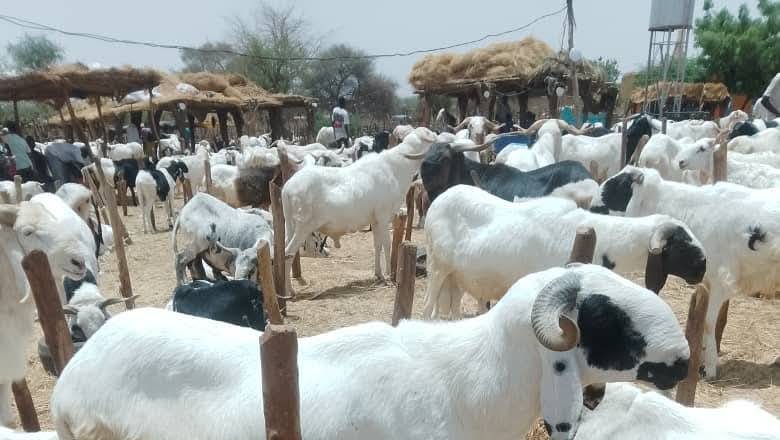
Niamey roads and markets are currently experiencing an influx of livestock trucks as Eid al-Adha approaches. Trucks of livestock are visibly lining the roads and markets throughout Niamey in the days leading up to the significant religious observance. This abundance of animals comes as Nigerien households face peak pressure on their purchasing power ahead of Tabaski, making the financial strain particularly acute. The situation notes a significant challenge for families preparing for the annual religious festival, as the cost of essential goods and sacrificial animals continues to rise.
Sheep Market Prices Detailed
Sheep prices in Niamey for the upcoming Tabaski holiday range from 85,000 to 450,000 FCFA. This wide range reflects the diverse offerings available to consumers, from smaller animals to prime specimens. The entry-level price bracket for sheep suitable for sacrifice, often sought by families on tighter budgets, is between 80,000 FCFA and 100,000 FCFA. These animals meet the basic requirements for the religious observance. For those seeking slightly larger or higher-quality livestock, mid-range animals are currently priced from 120,000 FCFA to 200,000 FCFA in the capital's markets. These sheep typically offer a better balance of size and cost. At the top end of the market, larger, high-end sheep are available for purchase at prices ranging from 250,000 FCFA to 450,000 FCFA, reflecting the varying quality and size of livestock on offer and catering to buyers with greater financial capacity. Despite the visible supply of animals, these price points present a considerable hurdle for many households.
Broader Economic Pressures
The cost of essential food items has also seen significant increases, adding to the financial strain on households across Niamey. This broader inflation exacerbates the challenges faced by families as they prepare for Tabaski. Dried chili peppers, a staple ingredient in Nigerien cuisine and an integral part of daily meals, have experienced a particularly sharp 50% price surge within a single week. This rapid escalation in price directly impacts the daily budgets of consumers. For instance, a 100 kg bag of these peppers, which previously sold for 20,000 FCFA just a week prior, now costs a substantial 30,000 FCFA. This dramatic increase notes the volatility in the food market. Consumers are now paying 1,000 FCFA for a 'tia' (approximately 800 grams) of dried chili peppers, a significant amount for a common household item. This reflects the broader economic pressures coinciding with the Tabaski preparations in Niamey, making it harder for families to afford both festive and everyday necessities.
Buyer Frustration Evident
The 2026 Tabaski edition is marked by a return to high price increases for sheep, contributing to evident frustration among buyers in Niamey. Many residents express concern over the escalating costs, which appear to be a recurring issue during this period. This situation complicates preparations for the annual religious festival, as many households find the costs challenging to meet within their budgets. The significant price hikes are affecting the ability of families to acquire animals for sacrifice, a central component of the Eid al-Adha celebration that holds deep cultural and religious importance. This trend follows previous years where similar economic pressures have impacted consumers, creating a sense of déjà vu for many. The current market dynamics mean that despite an apparent abundance of livestock lining the roads and markets, the financial barrier remains substantial for many residents seeking to observe the holiday traditions fully. The combination of high sheep prices and rising food costs presents a formidable challenge for Niamey's households as they approach one of the year's most important celebrations.