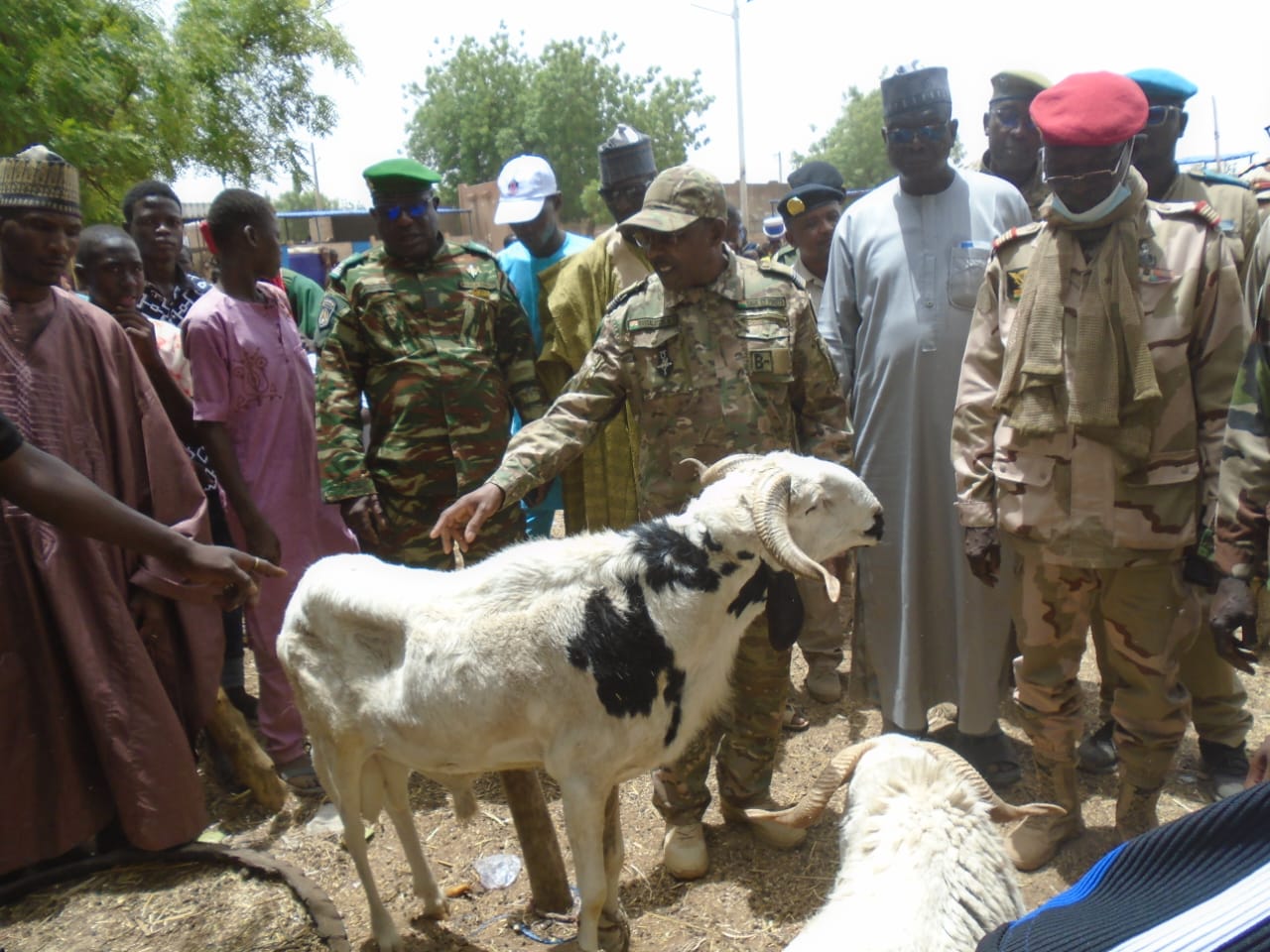
Colonel Massalatchi Mahaman Sani, the Governor of Zinder, visited the grand cattle market in Zinder on Thursday, May 21, 2026. The visit occurred as part of an assessment ahead of the upcoming Tabaski holiday. This proactive measure by the regional administration aimed to ensure the smooth functioning of the livestock trade during one of the most significant periods for animal sales. Located within the 1st Communal District of Zinder, the market serves as a central hub for livestock transactions in the region, drawing traders and buyers from across the area. Governor Sani's assessment focused intently on the market's operations and conditions, gathering information pertinent to the significant increase in animal sales anticipated before Tabaski. His objective was to gain a full understanding of the market's readiness and capacity to handle the heightened demand.
Official Delegation Inspects Market
Colonel Massalatchi Mahaman Sani's visit to the Zinder grand cattle market included a high-level delegation of regional officials, showing the importance of the inspection. Accompanying the Governor were the Regional Secretary General and delegated administrators, forming a strong team dedicated to assessing the market's readiness. The Representative of the Sultan of Damagaram was also part of the official group inspecting the market, signifying the collaborative effort between administrative and traditional authorities. This collective assessment aimed to thoroughly evaluate market conditions and operations in anticipation of the Tabaski holiday, a period traditionally marked by a substantial increase in livestock transactions. The delegation's presence showed the importance placed on ensuring a smooth, well-regulated, and fair market environment during this peak season for animal sales in Zinder. Their joint inspection covered various aspects, from infrastructure to vendor practices, all geared towards facilitating an orderly market.
Market Conditions and Price Monitoring
The visit aimed to inquire about livestock availability and the evolution of prices, critical factors for the upcoming festive period. Colonel Massalatchi Mahaman Sani, Governor of Zinder, focused on understanding the current state of the market in preparation for the Tabaski holiday period. This assessment specifically included evaluating the supply of various livestock types, such as sheep, goats, and cattle, and closely monitoring price fluctuations for animals destined for sacrifice. Authorities sought to gauge market dynamics to ensure stability and accessibility for buyers during the increased demand associated with the religious observance. The Governor and his delegation gathered information directly from market operators and traders, engaging in discussions to understand their challenges and projections. This proactive approach is intended to identify potential challenges related to supply or pricing ahead of the festive season, allowing for timely interventions if necessary. The objective was to secure a full overview of the livestock market's operational capacity and pricing structure, ensuring that the local population can access animals at fair prices. The Governor's engagement with market stakeholders aimed to foster transparency and address any concerns proactively.
Tabaski Festival Context
The Governor's assessment occurred just days before the commencement of the Tabaski festival, noting the urgency and strategic timing of the visit. Tabaski, also known as Eid al-Adha, is a significant Islamic holiday observed globally, commemorating Prophet Ibrahim's willingness to sacrifice his son as an act of obedience to God. During this sacred period, Muslim families traditionally sacrifice an animal, usually a sheep, goat, cow, or camel, to honor this profound act of devotion. The ritual sacrifice involves distributing the meat among family, friends, and those in need, emphasizing charity and communal solidarity. This annual observance drives a substantial increase in demand for livestock across markets like Zinder's, making the availability and pricing of animals a critical concern for both authorities and the public. The timing of Colonel Massalatchi Mahaman Sani's visit aimed to preemptively address any potential issues related to supply or affordability that might arise during this peak period of consumption and trade, ensuring a peaceful and well-provisioned celebration for the community. The Governor's timely intervention sought to mitigate any market disruptions and guarantee stable conditions for all participants.