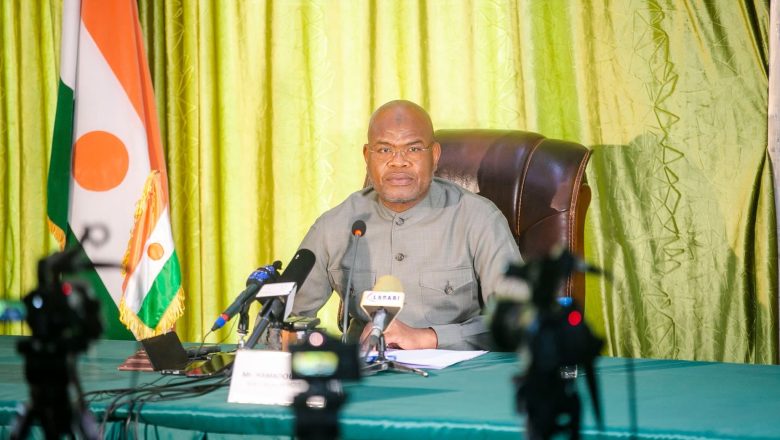
The Nigerien government announced on Wednesday in Niamey that the Kafra oil block in the country's north holds an estimated 2.5 billion barrels of prospective resources. This significant estimate was provided by the government, marking the first detailed public assessment of the block's potential. A prospective study conducted in 2023 on the northern part of the block estimated this potential. Minister Hamadou Tini stated that the project would apply the local content law, emphasizing the government's commitment to ensuring local benefits from the development. The Kafra project is also positioned as a key initiative for cooperation with Algeria, which is a historical partner through its national oil company, Sonatrach. This collaboration notes the strategic importance of the project for both nations, fostering regional energy ties.
New Exploration Program Details
The exploration campaign, initiated on August 13, 2026, involves plans to drill four exploration wells over a two-year timeframe. This ambitious program shows the intensified efforts to further delineate and confirm the hydrocarbon potential within the Kafra block. Authorization for the exploration program extends until July 3, 2028, providing a clear timeline for the planned drilling activities. The first of these wells has been designated Kafra Sud-Est 1, indicating a specific focus area within the larger block for initial drilling operations. An extension for the exploration authorization was granted this year to specifically encompass the new drilling program, reflecting ongoing regulatory support for the project's advancement. The Kafra block itself spans an area of 11,467 square kilometers, according to official figures, making it a substantial area for exploration and potential development. This vast expanse necessitates a full exploration strategy to accurately assess its resources.
Historical Context of Exploration
Initial exploration work in Niger's northern desert region began in the 1970s, laying the groundwork for subsequent discoveries. Historical drillings were conducted at Séguédine 1 in 1974 and Tiffa 1 in 1975, marking some of the earliest efforts to identify hydrocarbon resources in the area. These early ventures provided key preliminary data, even if they did not immediately lead to commercial production. The continuous interest in the region over decades notes the perceived geological promise of the northern desert.
A significant development in the region's oil exploration history occurred with the involvement of Sipex, a subsidiary of the Algerian group Sonatrach, starting in 2005. Sipex has since been instrumental in gathering geological data within the Kafra block. The company acquired and interpreted approximately 2,205 kilometers of 2D seismic lines and 760 square kilometers of 3D seismic data as part of its ongoing efforts. This extensive data collection contributed to a more full understanding of the block's subsurface geology, providing detailed insights into its structural and stratigraphic features. The use of both 2D and 3D seismic technology allowed for a multifaceted approach to imaging the subsurface, enhancing the accuracy of resource estimations. Following these seismic surveys, Sipex proceeded with further drilling activities. Two exploration wells were drilled in the Kafra block in 2018 and 2019, adding to the historical record of exploration in the area and contributing to the assessment of its hydrocarbon potential. These drilling operations were critical for validating the interpretations derived from seismic data and confirming the presence of hydrocarbons. The long-term engagement of Sipex, a subsidiary of a national oil company from a historically significant energy producer like Algeria, shows the strategic importance and perceived value of the Kafra block.
Resource Estimates and Caveats
The project framework for the Kafra oil block underwent an update in 2022, refining the operational and developmental parameters for the site. This update reflects the evolving understanding of the block's geology and the strategic planning required for its potential development. Separately, confirmed discoveries within the block have led to an evaluation of proven and probable reserves (2P), which stand at approximately 255 million barrels since 2018. This figure represents hydrocarbons that are considered commercially recoverable with reasonable certainty, based on existing technical and economic conditions. These 2P reserves are a key metric for evaluating the commercial viability of the project and are derived from detailed reservoir characterization and production tests.
The Kafra site also reportedly contains a distinct heavy oil deposit. This specific accumulation is estimated to hold around 168 million barrels. Heavy oil deposits often require specialized extraction techniques but can represent substantial additional resources. These resource estimates contribute to the overall understanding of the block's potential, differentiating between confirmed recoverable reserves and other identified deposits. The distinction between prospective resources, proven and probable reserves, and heavy oil deposits provides a full picture of the various categories of hydrocarbons present. The updated project framework and ongoing assessments aim to provide a full picture of the block's hydrocarbon resources, guiding future investment and development decisions. The government's announcement of 2.5 billion barrels in prospective resources for the northern part of the block, alongside these established reserves and deposits, paints a promising outlook for Niger's energy sector.